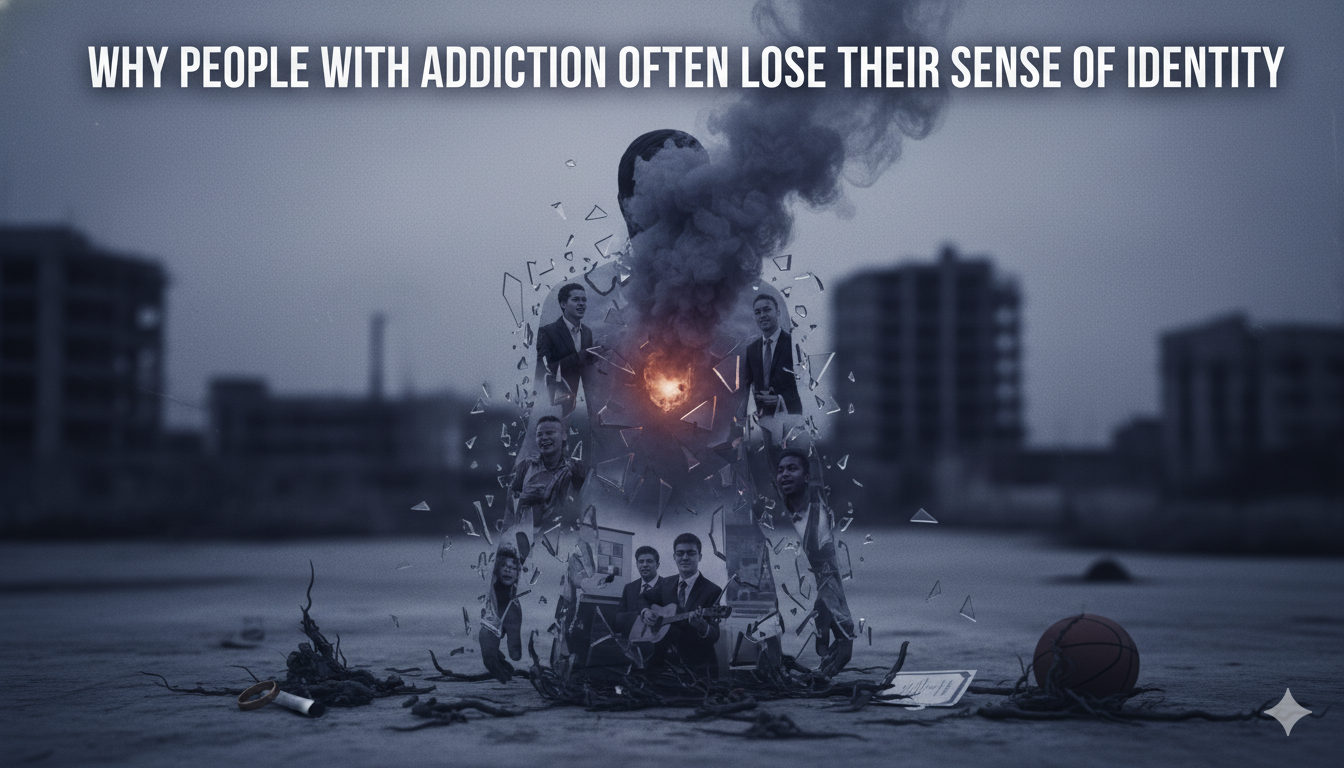
One of the quieter but deeply painful effects of addiction is how gradually it can affect a person’s sense of identity. For many individuals, addiction does not only affect physical health or daily routines. Over time, it can slowly affect confidence, emotional connection, relationships, personal goals, and the ability to recognize who they once were before substance use became part of everyday life. Families often describe this change in emotional ways. Some say the person feels emotionally distant or unfamiliar. Others feel as though addiction slowly replaced the version of someone they used to know.
For many individuals struggling with addiction themselves, the experience can feel equally confusing internally. Some begin feeling emotionally disconnected from their values, interests, routines, or personal direction altogether. This is one reason a damaged sense of identity can become emotionally overwhelming during long-term addiction.
How Addiction Slowly Changes a Person’s Sense of Identity
Many people imagine addiction as a sudden dramatic transformation. In reality, emotional and behavioral changes usually happen gradually over time. At first, substances may only seem connected with temporary relief, social situations, emotional escape, or stress management. But as addiction becomes more severe, routines and priorities often begin shifting around substance use itself.
Sleep patterns change. Emotional reactions become less stable. Relationships become strained. Hobbies disappear. Personal goals lose momentum. Daily life may slowly narrow into cycles of stress, secrecy, emotional exhaustion, and temporary relief. During this process, many people slowly lose parts of themselves without fully realizing how much has changed.
Some individuals stop engaging in activities they once cared deeply about. Others become emotionally withdrawn, disconnected from family, or uninterested in personal growth. Over time, addiction may begin shaping not only behavior, but also a person’s sense of identity. According to the National Institute of Mental Health, addiction can significantly affect emotional behavior and psychological functioning over time.
Emotional Survival Starts Replacing Personal Identity
One reason addiction affects a person’s sense of identity so strongly is because emotional survival behaviors slowly begin replacing healthier emotional functioning. Many individuals struggling with addiction spend large amounts of emotional energy trying to:
- avoid withdrawal
- manage emotional instability
- escape stress
- suppress emotional pain
- hide personal struggles
- maintain temporary emotional relief
As these survival patterns become stronger, other parts of life often receive less emotional attention. Personal interests, creativity, emotional goals, relationships, self-care, and long-term planning may slowly become emotionally secondary compared to simply getting through each day. For some individuals, life starts feeling emotionally repetitive and disconnected. Instead of feeling like themselves, they begin feeling controlled by routines and emotional cycles they no longer fully understand.
Understanding the emotional effects of addiction can also help explain why many individuals begin feeling emotionally disconnected during long-term substance use. You can also read our article on Why Addiction Makes People Feel Emotionally Empty to better understand how addiction gradually affects emotional wellbeing.
Shame Often Deepens Identity Problems
Shame plays a major role in how addiction affects emotional identity and self-worth. Many individuals struggling with addiction already feel disappointed in themselves long before others fully recognize the extent of the problem. Broken promises, emotional instability, financial stress, damaged relationships, or repeated failed attempts to stop using substances may gradually affect self-respect over time.
As shame increases, some people stop seeing themselves as capable, trustworthy, emotionally stable, or valuable anymore. This emotional shift can become dangerous because identity strongly influences behavior. When people repeatedly begin believing negative things about themselves, hopelessness often becomes stronger.
Instead of thinking: “I’m struggling with addiction,”
some individuals slowly begin believing: “This is just who I am now.”
That emotional surrender can make recovery feel even more difficult psychologically.
Relationships Often Reflect Identity Changes
One reason families notice addiction-related identity changes so clearly is because relationships often change alongside emotional functioning. People who were once emotionally open may become withdrawn. Individuals who were previously dependable may become emotionally unavailable or unpredictable. Communication patterns change, emotional reactions become less stable, and trust may slowly weaken over time. In many cases, addiction creates emotional distance not because love completely disappears, but because emotional exhaustion, shame, secrecy, and survival behaviors begin dominating daily life.
Some individuals stop recognizing themselves inside their own relationships. Others avoid emotional closeness because confronting how much has changed feels emotionally painful or overwhelming. This emotional disconnect can affect both the person struggling with addiction and the people around them deeply.
Understanding relationship changes during addiction can also help explain why emotional isolation becomes common during long-term substance use. You can also read our article on Why Addicted People Push Away the People Who Care About Them to better understand the emotional patterns behind addiction-related isolation.
Recovery Often Requires Rebuilding a Sense of Identity Slowly
One of the less discussed parts of recovery is how emotionally confusing sobriety can feel after addiction has shaped daily life for a long period of time. For many individuals, substances became connected not only with emotional relief, but also with routines, coping patterns, social identity, and psychological familiarity. Once those patterns disappear, some people begin asking emotionally difficult questions:
- Who am I without addiction?
- What do I enjoy anymore?
- How do I manage emotions differently?
- What kind of life do I actually want now?
This rebuilding process can feel emotionally uncomfortable at first. Recovery often requires people to reconnect with parts of themselves that became neglected during addiction. Therapy, structured rehabilitation, emotional support, healthier routines, and gradual self-reflection all help individuals slowly rebuild emotional stability and a healthier sense of identity over time.
Understanding what emotional adjustment inside recovery environments looks like can also help explain why rehabilitation focuses on more than sobriety alone. You can also read our article on What Is It Really Like Inside a Rehabilitation Center? to better understand how recovery environments support emotional healing and personal rebuilding.
Losing a Sense of Identity Does Not Mean Someone Is Beyond Recovery
One of the most important things families and recovering individuals should understand is that losing a sense of identity during addiction does not mean someone is permanently lost emotionally. Addiction can deeply affect emotional functioning, self-worth, motivation, relationships, and behavior over time. But many individuals gradually reconnect with healthier parts of themselves during recovery. This process usually happens slowly rather than instantly.
Emotional stability, communication, confidence, routines, self-respect, and healthier coping patterns often rebuild gradually through treatment, therapy, rehabilitation, support, and consistency over time. Many recovering individuals eventually describe sobriety not only as stopping substance use, but as slowly reconnecting with themselves again.
Frequently Asked Questions
Can addiction change someone’s personality?
Addiction can affect emotional behavior, communication, coping patterns, priorities, and relationships over time, which may make someone seem emotionally different from before.
Why do people with addiction lose their sense of identity?
A damaged sense of identity often develops gradually as emotional survival patterns, shame, isolation, and addiction-related routines begin replacing healthier emotional functioning.
Does recovery help rebuild identity?
Yes. Recovery, therapy, emotional support, rehabilitation, and healthier routines can help individuals gradually reconnect with emotional stability and rebuild a healthier sense of identity over time.
Why does shame affect addiction recovery so strongly?
Shame can reduce self-worth, increase hopelessness, and make individuals feel emotionally trapped or incapable of change, which may complicate recovery further.
Is identity loss during addiction permanent?
Not necessarily. Many individuals slowly rebuild confidence, emotional stability, relationships, and a healthier sense of identity during long-term recovery. Addiction often affects much more than physical health alone. Over time, it can gradually reshape emotional behavior, relationships, routines, confidence, and a person’s sense of identity itself.
Many individuals struggling with addiction begin feeling disconnected not only from other people, but also from themselves. With recovery, emotional support, therapy, rehabilitation, and healthier coping strategies, many people gradually begin reconnecting with emotional stability and rebuilding a healthier sense of self again.