Many families believe the hardest part of addiction recovery ends once someone stops using drugs or alcohol physically. Sleep slowly improves, appetite begins returning, and the individual may appear calmer and more stable than before. At that stage, families often feel hopeful that the addiction itself has finally ended. But this is also where one of the biggest misunderstandings about addiction treatment begins.
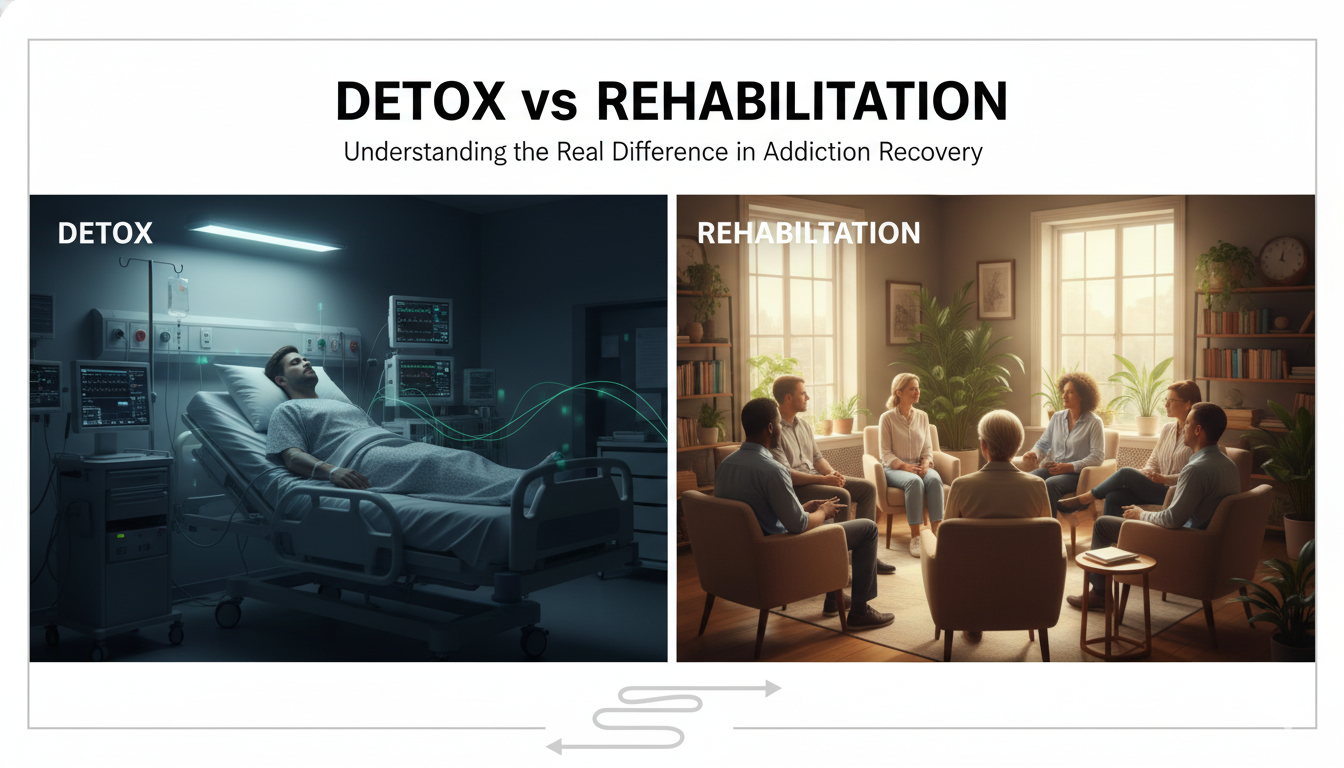
Detox and rehabilitation are not the same thing, even though people often use the terms interchangeably. Detox mainly focuses on helping the body recover physically after substance use, while rehabilitation addresses the emotional, psychological, and behavioral patterns that continue long after substances leave the system.
Understanding this difference is important because many individuals return to substance use shortly after detox when deeper emotional recovery has not yet been addressed.
Why Detox Alone Is Often Misunderstood
One reason detox is misunderstood is because physical complications are usually the most visible part of addiction. Families witness anxiety, restlessness, insomnia, physical weakness, or emotional instability and naturally assume these struggles represent the entire addiction itself. In reality, addiction often extends far beyond physical dependence.
For many individuals, substances gradually become connected with emotional survival. Drugs or alcohol may begin functioning as a way to manage stress, emotional pain, loneliness, trauma, anger, or emotional emptiness. Over time, substance use stops being only recreational and starts becoming psychologically comforting.
This is why someone may complete detox successfully while still feeling emotionally overwhelmed internally. Understanding how addiction develops emotionally and behaviorally can help explain why detox alone is not always enough for long-term recovery. You can also read our detailed guide on What Is Addiction?.
What Happens During Medical Detox?
Medical detox is usually the first stage of treatment for substance dependence. Its purpose is to help the body safely adjust after drugs or alcohol are stopped, especially when the body has become heavily dependent on substances over time.
Depending on the type of substance being used, a person may experience intense cravings, sweating, nausea, mood instability, physical discomfort, emotional distress, irritability, or severe restlessness. In more serious cases, medical supervision becomes necessary to manage health risks safely.
During detox, healthcare professionals focus primarily on stabilization, safety, monitoring, and helping the individual move through the physical adjustment phase in a controlled environment.
For many people, detox can feel emotionally intense because substances are no longer available to suppress stress or emotional discomfort. Once the body begins stabilizing physically, unresolved emotions often start surfacing more clearly.
Why Detox Alone Is Rarely Enough
One of the biggest reasons relapse happens after detox is because detox does not fully address the psychological side of addiction. A person may become physically sober while still struggling with emotional triggers, cravings, stress, trauma, depression, shame, loneliness, or unhealthy coping patterns. Without emotional recovery and behavioral support, many individuals eventually return to the same emotional cycle that contributed to substance use in the first place.
This is often the stage where families become confused. From the outside, the person may appear physically better, yet emotionally they may still feel unstable, mentally exhausted, or vulnerable to old behavioral patterns. Addiction can continue affecting emotional regulation, cravings, decision-making, and stress response even after physical recovery begins. Learn more in our article The Science of Addiction: How Drugs Rewire the Brain.
What Rehabilitation Actually Focuses On
Rehabilitation focuses on helping individuals understand and change the deeper emotional and behavioral patterns behind addiction. This usually involves therapy, emotional support, relapse prevention planning, behavioral counseling, structured routines, psychiatric care when needed, and developing healthier coping mechanisms that support long-term recovery.
Unlike detox, rehabilitation is not simply about removing substances from the body. It is about helping people rebuild emotional stability, improve self-awareness, strengthen decision-making, repair relationships, and develop healthier ways of responding to stress and emotional pain. For many individuals, rehabilitation becomes the first time they begin understanding how deeply addiction affected their emotional wellbeing and daily functioning over time.
Recovery Involves Emotional Healing Too
One of the most overlooked parts of addiction recovery is emotional healing. Many individuals entering recovery carry unresolved trauma, chronic stress, anxiety, grief, shame, depression, or emotional loneliness that continues affecting them long after substances are removed physically. If these emotional struggles remain untreated, recovery may gradually begin feeling emotionally exhausting.
This is why rehabilitation often focuses heavily on emotional regulation, communication skills, stress management, psychological awareness, and healthier daily routines instead of sobriety alone.
Recovery is rarely a single moment where everything suddenly improves. For most individuals, it becomes a gradual rebuilding process involving emotional healing, behavioral change, mental stability, and learning how to live without depending on substances to cope with life difficulties.
Why Rehabilitation Helps Reduce Relapse Risk
Long-term rehabilitation helps reduce relapse risk by helping individuals recognize emotional triggers before they become overwhelming. Therapy and structured recovery support can help people better understand:
- what situations increase cravings
- how emotional stress affects recovery
- which environments become triggering
- how unhealthy coping patterns develop
- how to respond differently during emotional difficulty
Rehabilitation also helps individuals rebuild healthier routines, reconnect with supportive relationships, improve emotional awareness, and strengthen coping strategies that do not depend on substances. Families are often surprised to realize that recovery involves much more than simply staying away from drugs. Long-term healing usually requires emotional, behavioral, social, and psychological adjustments that take time and consistent support.
Frequently Asked Questions
Is detox the same as rehabilitation?
No. Detox focuses mainly on physical stabilization, while rehabilitation addresses the emotional, psychological, and behavioral aspects of addiction recovery.
How long does medical detox usually last?
Detox duration varies depending on the substance being used, the severity of addiction, and the individual’s physical health. In many cases, the process may last several days to a few weeks.
Why do many people relapse after detox?
Many individuals relapse because emotional triggers, cravings, trauma, stress, or unhealthy coping patterns remain unresolved after physical recovery begins.
Does rehabilitation include therapy?
Yes. Rehabilitation programs often include psychological therapy, relapse prevention support, emotional recovery strategies, and behavioral counseling.
Can someone recover without rehabilitation?
Some individuals may stop substance use independently, but professional rehabilitation often provides structured support that significantly improves long-term recovery outcomes.
Detox can be an important first step in addiction treatment, but lasting recovery usually requires much more than physical stabilization alone. Addiction often affects emotional wellbeing, coping mechanisms, relationships, behavior patterns, and mental health in ways that continue long after substances leave the body.
Understanding the difference between detox and rehabilitation can help individuals and families approach recovery with more realistic expectations and stronger awareness of what long-term healing actually involves. With professional rehabilitation, emotional support, therapy, and structured recovery care, individuals can begin rebuilding healthier and more stable lives beyond addiction.
About the Author
Ayesha Maheen — Clinical Psychologist
Ayesha Maheen is a Clinical Psychologist working in the field of mental health, addiction rehabilitation, emotional wellbeing, and behavioral recovery support. Her work focuses on psychological healing, relapse prevention, emotional regulation, and helping individuals and families better understand the long-term impact of substance abuse and mental health challenges. She is affiliated with Jadeed Rifah Rehabilitation and Care Center, where she contributes to rehabilitation awareness, psychological support, and recovery-focused mental health education.
Reviewed & Managed By
Rao Mubeen Hassan — Managing Director
Rao Mubeen Hassan serves as the Managing Director at Jadeed Rifah Rehabilitation and Care Center, overseeing rehabilitation awareness initiatives, organizational management, and community outreach related to addiction recovery and mental health support. His work focuses on strengthening rehabilitation services, promoting recovery awareness, and improving access to professional support for individuals and families struggling with substance abuse, behavioral challenges, and psychological difficulties in Pakistan.