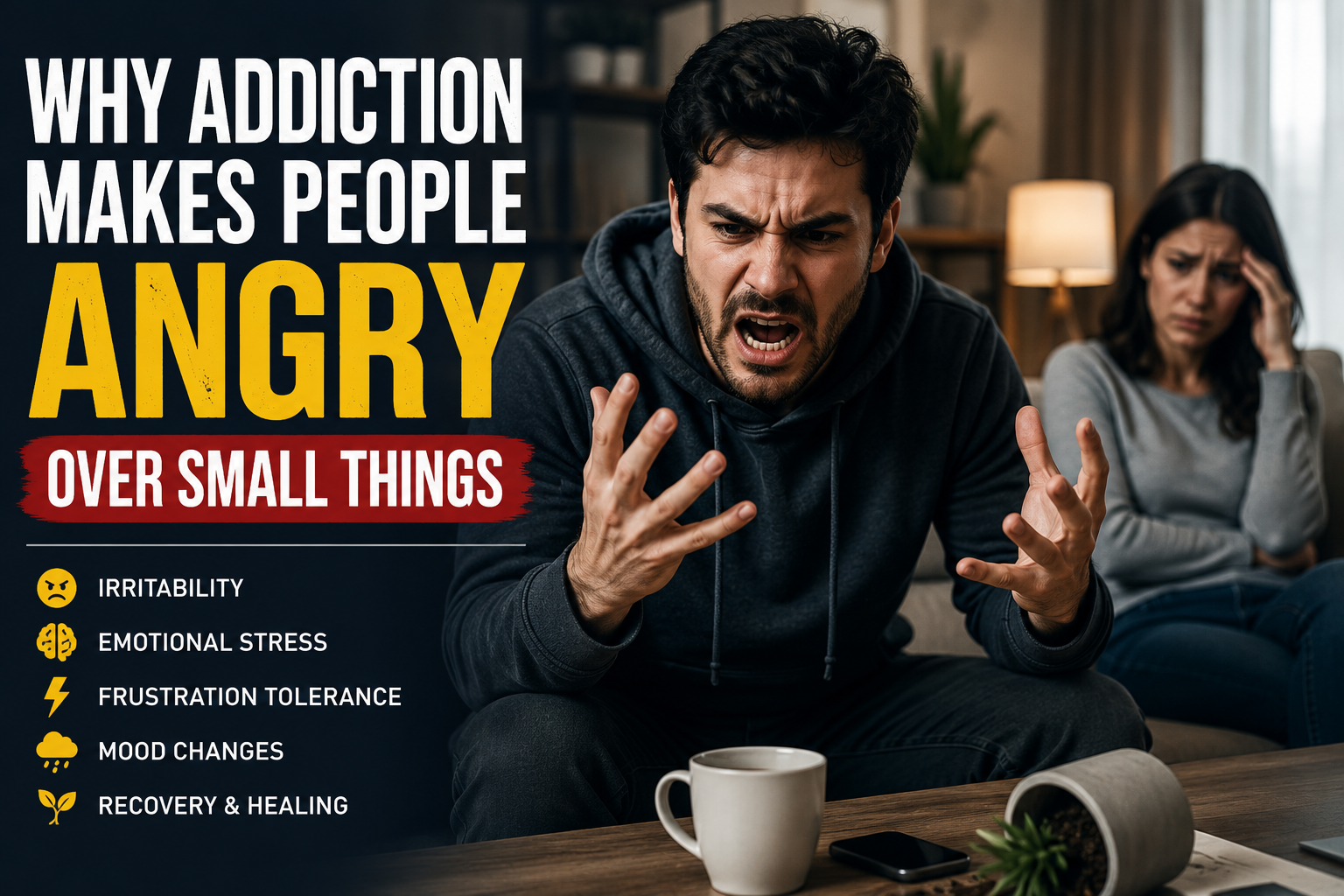
One of the most noticeable emotional changes many families observe during addiction is increased anger and irritability over ordinary situations. Some individuals begin reacting strongly to small problems, become frustrated more easily, lose patience quickly, or seem emotionally overwhelmed by situations they previously handled calmly.
Many people struggling with addiction also notice these changes internally. Some individuals become angry over small things even when they do not fully understand why their emotional reactions feel stronger or harder to control than before. Over time, addiction may gradually affect emotional regulation, stress tolerance, communication, and overall emotional balance in daily life.
Understanding why addiction makes people angry over small things can help families and recovering individuals better recognize the emotional and psychological effects addiction may create over time. According to the National Institute of Mental Health, addiction can affect emotional wellbeing, stress regulation, behavior, and overall mental health functioning.
Addiction Can Increase Emotional Irritability
One reason addiction may cause people to become angry over small things is because emotional stress gradually becomes harder to manage internally. Many individuals struggling with addiction experience pressure related to emotional exhaustion, unhealthy routines, physical stress, mental overwhelm, or difficulty coping with daily responsibilities consistently. Over time, emotional tolerance may become weaker, making ordinary frustrations feel emotionally heavier than before. Small inconveniences, delays, misunderstandings, or stressful situations may suddenly trigger stronger emotional reactions. For many individuals, these changes happen gradually rather than suddenly.
Stress and Frustration Often Build Internally
Another reason people become angry over small things during addiction is because emotional frustration often builds internally over long periods of time. Some individuals feel emotionally overwhelmed by stress, financial problems, damaged routines, communication difficulties, personal struggles, or emotional instability. When emotional pressure remains unresolved for too long, frustration may eventually appear through irritability or anger.
In many cases, the anger itself is not only about the immediate situation happening externally. Instead, emotional stress may already be building internally long before the emotional reaction becomes visible.
Understanding emotional pressure during addiction can also help explain why many individuals gradually begin feeling emotionally exhausted internally over time. You can also read our article on Why Addiction Makes People Feel Emotionally Empty to better understand the emotional effects addiction may create over time.
Relationships Often Become More Emotionally Sensitive
Another major reason addiction increases irritability is because relationships often become emotionally complicated during long-term substance use. Communication problems, emotional distance, stress, guilt, misunderstandings, or damaged trust may gradually increase emotional sensitivity inside relationships. Some individuals become defensive more easily, while others react emotionally before fully thinking through situations calmly.
Over time, ordinary conversations may begin turning into arguments more quickly than before. Families often feel confused because the individual may appear emotionally different compared to earlier stages of life.
Understanding relationship changes during addiction can also help explain why emotional conflict often becomes more noticeable over time. You can also read our article on Why Addicted People Push Away the People Who Care About Them to better understand how addiction affects emotional connection and communication.
Lack of Healthy Routine Can Affect Emotional Control
Healthy routines often play an important role in emotional stability. During addiction, sleep schedules, eating habits, stress management, communication patterns, and daily structure may gradually become more unstable. Over time, emotional control may become more difficult when both physical and mental wellbeing are affected together.
Some individuals also experience exhaustion, poor concentration, physical stress, or emotional overwhelm that reduces patience throughout the day. This may increase emotional reactions even during relatively small situations.
Recovery Often Helps Emotional Balance Improve Again
One important thing many individuals and families notice during recovery is that emotional stability often improves gradually over time. Recovery is not only about stopping substance use physically. Many individuals also begin rebuilding healthier routines, communication patterns, emotional regulation, physical health, and stress management skills during recovery. Therapy, rehabilitation, emotional support, healthier habits, structured recovery environments, and reduced stress may all help individuals regain healthier emotional balance gradually.
Recovery often happens slowly rather than instantly. For many individuals, becoming calmer, more patient, and emotionally stable again becomes one of the clearest emotional signs of recovery progress. Learning why addiction may cause people to become angry over small things can help families better understand the emotional side of addiction and recovery.
Emotional Stability Can Improve During Recovery
Many recovering individuals worry that emotional irritability or anger may never fully improve. However, emotional healing often becomes more noticeable as recovery continues. Better routines, healthier sleep, therapy, emotional support, reduced stress, physical recovery, and structured rehabilitation may all help emotional stability improve gradually over time. Patience and consistency often become important parts of this process.
Frequently Asked Questions
Why does addiction make people angry easily?
Addiction may increase emotional stress, frustration, irritability, exhaustion, and difficulty managing emotions, making small situations feel more overwhelming.
Can addiction affect emotional control?
Yes. Addiction may gradually affect stress regulation, emotional balance, patience, communication, and overall emotional wellbeing.
Why do people with addiction react strongly to small problems?
Emotional stress, exhaustion, unhealthy routines, frustration, and psychological pressure may gradually reduce emotional tolerance over time.
Does recovery help emotional stability improve?
For many individuals, therapy, emotional support, structured rehabilitation, and healthier routines help emotional balance improve gradually during recovery.
Is irritability common during addiction recovery?
Yes. Some individuals experience temporary irritability, emotional sensitivity, or frustration during recovery as the body and mind gradually adjust.
Addiction often affects much more than substance use alone. Over time, emotional stress, frustration, unhealthy routines, and psychological pressure may gradually make people become angry over small things more easily. With recovery, therapy, healthier routines, emotional support, and structured rehabilitation, many individuals slowly begin rebuilding emotional stability, healthier communication, and better emotional control again.
About the Author
Ayesha Maheen — Clinical Psychologist
Ayesha Maheen is a Clinical Psychologist working in the field of mental health, addiction rehabilitation, emotional wellbeing, and behavioral recovery support. Her work focuses on psychological healing, relapse prevention, emotional regulation, and helping individuals and families better understand the long-term impact of substance abuse and mental health challenges. She is affiliated with Jadeed Rifah Rehabilitation and Care Center, where she contributes to rehabilitation awareness, psychological support, and recovery-focused mental health education.
Reviewed & Managed By
Rao Mubeen Hassan — Managing Director
Rao Mubeen Hassan serves as the Managing Director at Jadeed Rifah Rehabilitation and Care Center, where he oversees rehabilitation awareness initiatives, organizational management, patient support coordination, and community outreach related to addiction recovery and mental health services. His work focuses on strengthening rehabilitation programs, promoting recovery awareness, improving access to professional support, and helping individuals and families better understand the long-term emotional, psychological, and social impact of substance abuse and behavioral health challenges in Pakistan.