Many people use the words “habit” and “addiction” interchangeably, but they are not the same thing. While both involve repeated behaviors, there are important differences between a habit and an addiction that can affect a person’s health, relationships, decision-making, and overall quality of life. Understanding the difference between a habit and an addiction can help individuals recognize unhealthy patterns earlier and make informed decisions about seeking support when needed.
Some habits are harmless and even beneficial. Addiction, however, often continues despite negative consequences and can gradually affect multiple areas of life. Learning how habit and addiction differ is an important step toward understanding addiction more clearly. According to the National Institute of Mental Health, addiction can significantly affect behavior, decision-making, emotional wellbeing, and daily functioning.
What Is a Habit?
A habit is a behavior that becomes automatic through repetition. People develop habits in many areas of life. Brushing teeth, exercising, checking messages, drinking morning tea, or following a daily routine are common examples of habits. Habits usually develop because they make daily life easier and more predictable.
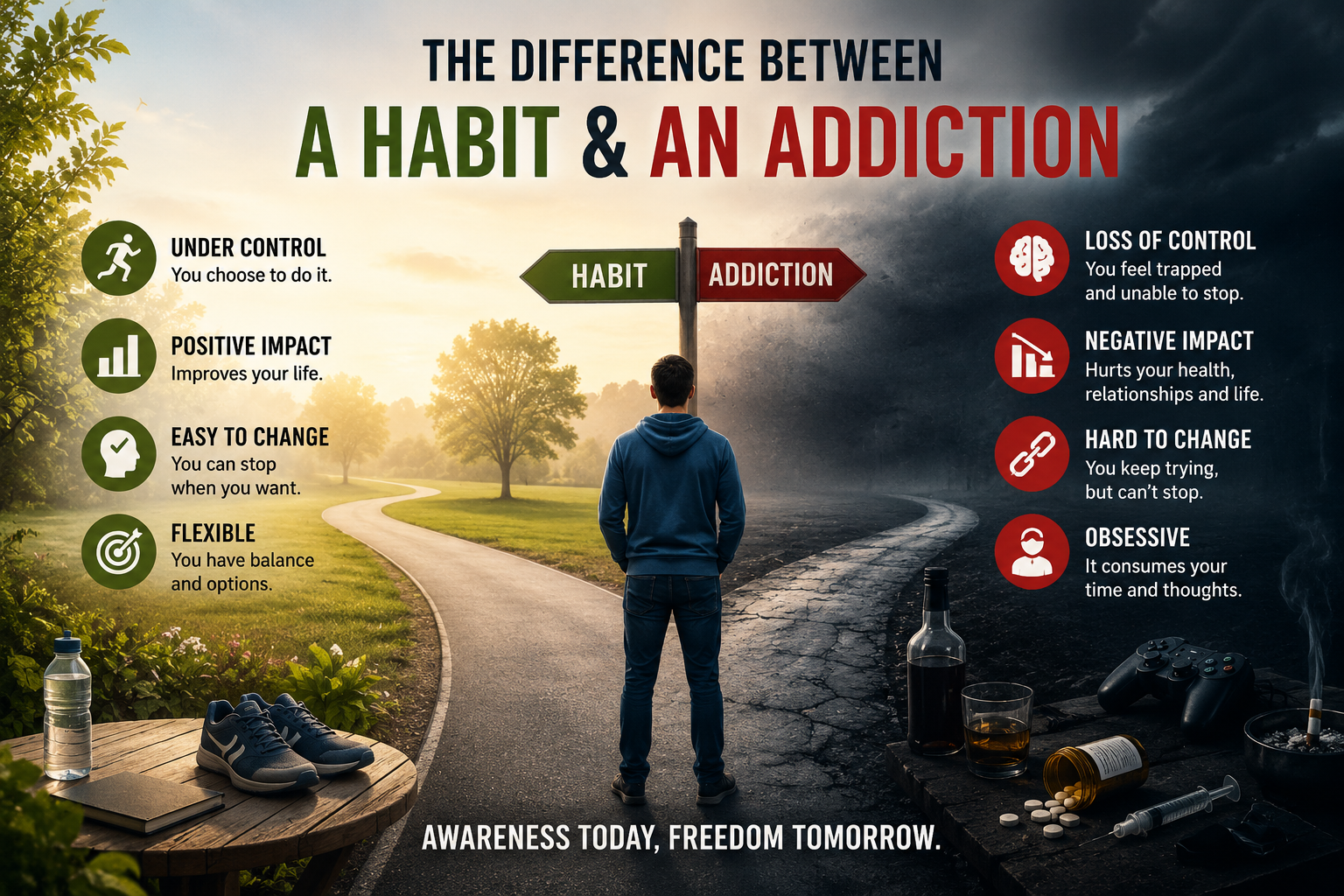
Importantly, most habits can be changed with effort and conscious decision-making. A person may find it difficult to break a habit initially, but they generally remain capable of controlling the behavior when necessary. This ability to maintain control is one of the key differences between a habit and an addiction.
What Is an Addiction?
Addiction involves a stronger and more harmful pattern of behavior. Unlike ordinary habits, addiction often continues even when the individual recognizes that serious problems are developing. These problems may affect physical health, emotional wellbeing, relationships, education, employment, finances, or daily responsibilities.
A person struggling with addiction may repeatedly attempt to reduce or stop the behavior but find it difficult to maintain long-term control. Over time, addiction may become increasingly important in daily life while other priorities begin receiving less attention. This loss of control is one of the most significant characteristics that separates addiction from ordinary habits.
Control Is a Major Difference Between Habit and Addiction
One of the clearest ways to understand the difference between a habit and an addiction is to look at control. With a habit, individuals generally remain capable of deciding when to engage in the behavior and when to stop. With addiction, control often becomes much more difficult.
Some individuals continue the behavior despite wanting to stop. Others repeatedly promise themselves they will quit but struggle to follow through consistently. This does not mean the person lacks motivation or intelligence. Addiction often affects behavior in ways that make change significantly more challenging.
Addiction Often Continues Despite Consequences
Another important difference between a habit and an addiction involves consequences. A habit may be inconvenient at times, but addiction frequently continues even when negative outcomes become obvious.
For example, addiction may contribute to:
- relationship difficulties
- declining physical health
- financial problems
- reduced work performance
- academic struggles
- emotional distress
Despite recognizing these consequences, many individuals continue engaging in the behavior. This pattern often creates confusion for both the individual and their family members.
Why People Sometimes Confuse Habits and Addictions
Many addictive behaviors begin as ordinary choices or repeated habits. Over time, however, the behavior may become more frequent, more important, and more difficult to control. Because the transition often happens gradually, people may not immediately recognize that the situation has become more serious. Some individuals continue describing the behavior as “just a habit” long after it has begun affecting important areas of life. Understanding the difference between a habit and an addiction can help people identify warning signs earlier and seek support before problems become more severe.
Can a Habit Become an Addiction? In some situations, yes. Not every habit becomes an addiction. However, certain repeated behaviors may gradually become more difficult to control over time.
This is especially true when the behavior begins serving as a primary way of coping with stress, emotional difficulties, or personal challenges. As the behavior becomes more central to daily life, the risk of developing addiction may increase. Recognizing these changes early can make intervention and recovery easier.
Recovery Begins With Awareness
One of the most important steps in recovery is recognizing when a behavior has moved beyond a simple habit. Many individuals seek help only after addiction begins affecting multiple areas of life. However, early awareness can help people make healthier decisions before serious consequences develop.
Professional support, therapy, rehabilitation programs, and family involvement may all play important roles in helping individuals regain control and build healthier routines. Understanding habit and addiction more clearly allows people to approach recovery with greater awareness and confidence.
Frequently Asked Questions
What is the main difference between a habit and an addiction?
The main difference is control. Habits are generally easier to change, while addiction often continues despite negative consequences and repeated attempts to stop.
Can a habit become an addiction?
Yes. Some repeated behaviors may gradually become more difficult to control and eventually develop into addiction.
Does addiction always involve substances?
No. Addiction may involve substances or certain behaviors that become difficult to control and begin affecting daily life.
Why do people struggle to stop addictive behaviors?
Addiction often affects decision-making, behavior patterns, and daily functioning, making long-term change more difficult than simply breaking a habit.
Can professional treatment help addiction?
Yes. Therapy, rehabilitation programs, professional support, and structured recovery plans often help individuals regain control and build healthier lifestyles.
Understanding the difference between a habit and an addiction can help individuals recognize unhealthy patterns before they become more serious. While habits are a normal part of everyday life, addiction often involves loss of control and continued behavior despite harmful consequences. With awareness, support, therapy, and professional treatment when necessary, many individuals can successfully address addiction and build healthier, more balanced lives.
About the Author
Ayesha Maheen — Clinical Psychologist
Ayesha Maheen is a Clinical Psychologist specializing in mental health, addiction rehabilitation, behavioral recovery, and psychological wellbeing. She is dedicated to helping individuals and families understand the emotional, behavioral, and social impact of addiction while promoting evidence-based recovery and mental health awareness. Through her work at Jadeed Rifah Rehabilitation and Care Center, she contributes to rehabilitation education, psychological support, relapse prevention awareness, and community mental health initiatives.
Reviewed & Managed By
Rao Mubeen Hassan — Managing Director
Rao Mubeen Hassan is the Managing Director of Jadeed Rifah Rehabilitation and Care Center. He oversees rehabilitation services, recovery awareness programs, organizational operations, and community outreach initiatives focused on addiction treatment and mental health support. His work is dedicated to improving access to professional rehabilitation services, strengthening recovery programs, and helping individuals and families better understand the challenges of addiction and long-term recovery.