When people think about addiction, they often imagine someone whose life has completely fallen apart. However, addiction does not always look the way many people expect. Some individuals continue working, supporting their families, maintaining relationships, and fulfilling responsibilities while privately struggling with substance use.
This is often referred to as high-functioning addiction. Because these individuals may appear successful and responsible on the surface, the warning signs are frequently overlooked by family members, friends, coworkers, and even the individuals themselves.
Understanding high-functioning addiction can help people recognize concerns earlier and seek support before the situation becomes more serious. According to the National Institute of Mental Health, addiction can affect behavior, decision-making, emotional wellbeing, and overall daily functioning.
What Is High-Functioning Addiction?
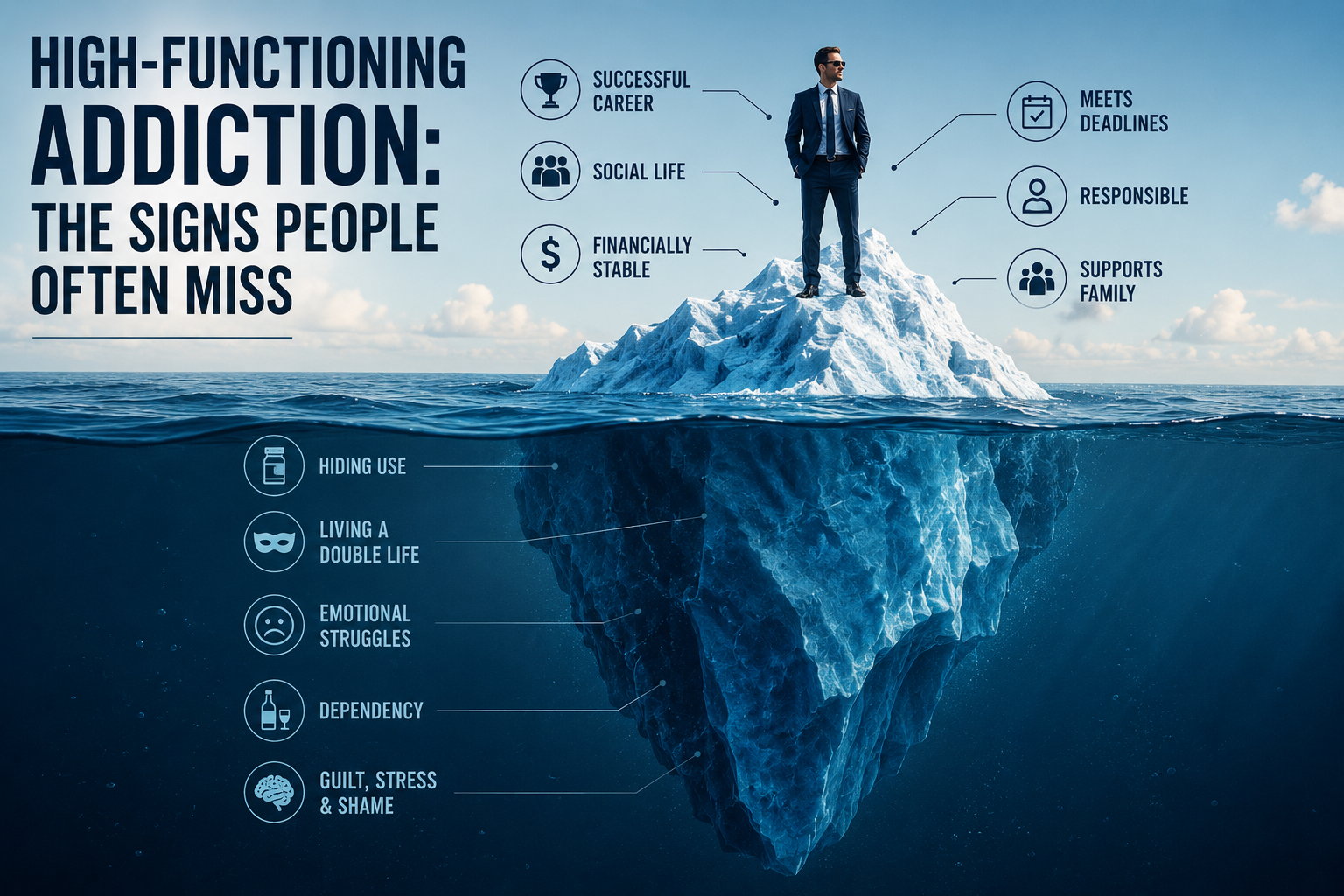
High-functioning addiction refers to a situation where an individual continues managing many areas of daily life while struggling with addiction. They may:
- maintain employment
- attend social events
- meet family responsibilities
- perform well academically
- appear emotionally stable
Because these responsibilities are still being managed, people often assume there is no serious problem. However, outward success does not always reflect what is happening internally. Many individuals with high-functioning addiction experience increasing emotional stress, secrecy, dependency, and difficulty controlling substance use over time.
Why High-Functioning Addiction Is Often Missed
One reason high-functioning addiction is difficult to identify is that many people associate addiction with visible crisis. When someone continues showing up for work, paying bills, or caring for their family, concerns about addiction may not immediately arise. This creates a dangerous misconception that addiction only exists when daily life completely collapses. In reality, addiction can develop long before major consequences become obvious. As a result, many individuals delay seeking treatment because they believe their situation is still under control.
Common Signs of High-Functioning Addiction
Although every individual is different, several warning signs may suggest that substance use is becoming more serious. Some people begin experiencing:
- increasing secrecy about substance use
- using substances more frequently than before
- difficulty relaxing without substances
- making excuses for continued use
- hiding the extent of their consumption
- becoming defensive when questioned
- prioritizing substance use over personal wellbeing
These signs may appear gradually, making them easy to dismiss initially. Over time, however, they often become more noticeable.
Success Does Not Eliminate Addiction
One of the biggest myths about addiction is that successful people cannot be addicted. Many professionals, business owners, students, and highly accomplished individuals struggle with addiction while continuing to achieve external success. Because they appear productive, others may overlook behaviors that would raise concerns in different situations.
This misunderstanding sometimes prevents people from recognizing the seriousness of their substance use. Addiction is not defined by income, education, career status, or social standing. It is defined by the growing impact substance use has on a person’s life and ability to maintain control.
High-Functioning Addiction Can Affect Relationships
Even when responsibilities are being maintained, relationships often begin showing signs of strain. Family members may notice changes in communication, emotional availability, reliability, or trust. Some individuals become more withdrawn, defensive, or secretive as addiction progresses. Others may spend increasing amounts of time focused on obtaining, using, or recovering from substances. These changes can gradually create emotional distance within important relationships.
Understanding relationship challenges can also help explain why addiction often affects communication over time. You can also read our article on <a href=”https://jadeedrifah.com/why-people-with-addiction-become-secretive/”>Why People With Addiction Become Secretive</a> to better understand how addiction influences behavior and trust.
Why People Delay Seeking Help
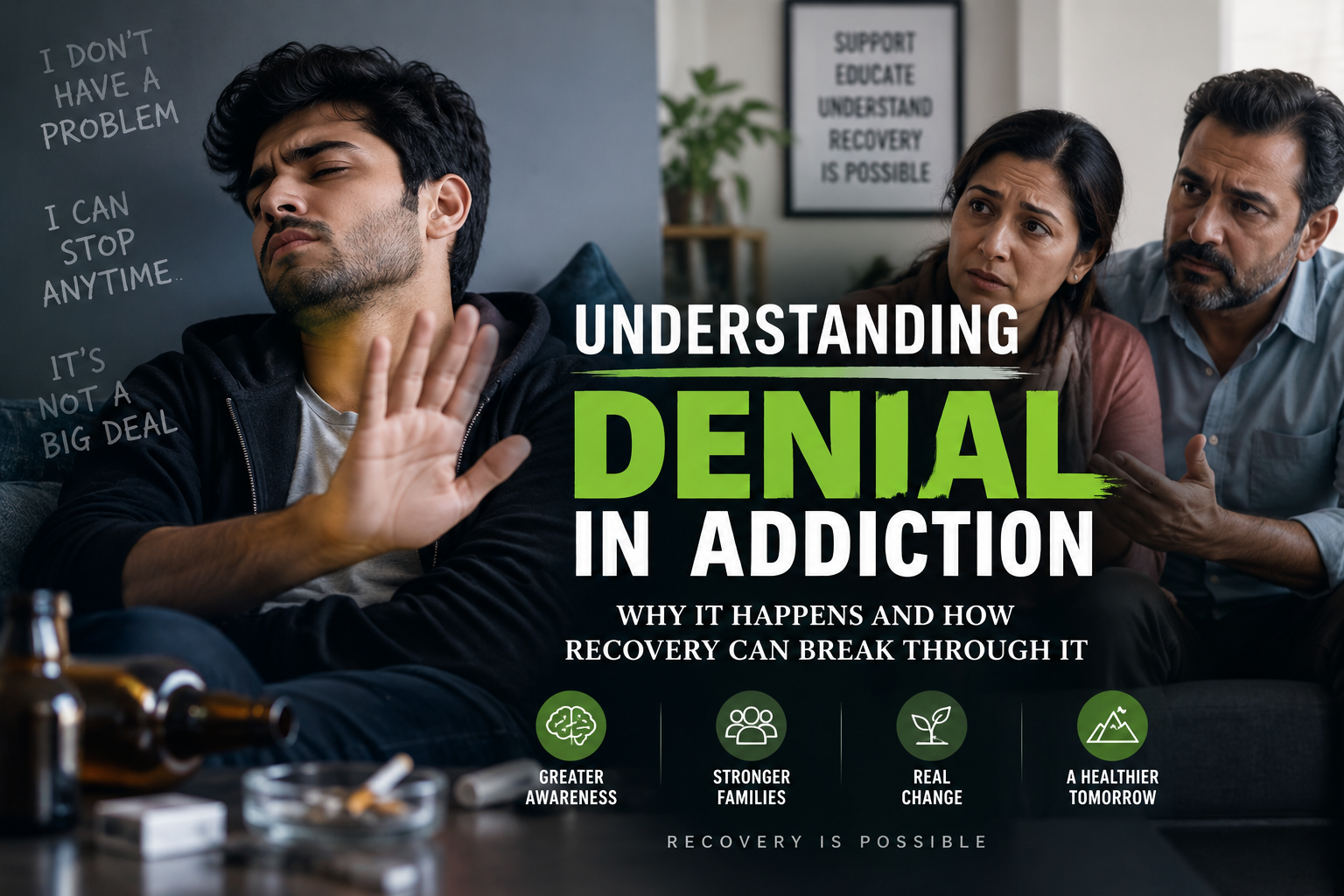
One reason high-functioning addiction can continue for years is that individuals often compare themselves to more severe cases. They may think:
- “I still have a job.”
- “I am taking care of my family.”
- “Things are not that bad.”
- “I can stop whenever I want.”
These beliefs may reduce the urgency to seek support. Unfortunately, addiction often becomes more difficult to address as time passes. Early intervention is usually more effective than waiting for major consequences to appear.
Recovery Is Possible at Any Stage
The good news is that recovery does not require someone to lose everything before seeking help. Many individuals successfully begin treatment while still maintaining employment, relationships, and daily responsibilities. Therapy, rehabilitation programs, support systems, and professional guidance can help individuals understand their substance use and develop healthier coping strategies. Recognizing the signs of high-functioning addiction early may help prevent more serious emotional, physical, and social consequences in the future.
Frequently Asked Questions
What is high-functioning addiction?
High-functioning addiction refers to addiction in individuals who continue managing work, family, education, or other responsibilities while struggling with substance use.
Can successful people have addiction?
Yes. Addiction can affect individuals from all educational, professional, and social backgrounds.
Why is high-functioning addiction difficult to identify?
Because individuals may continue appearing responsible and successful, warning signs are often overlooked.
Does having a job mean someone is not addicted?
No. Employment or success does not eliminate the possibility of addiction.
Can high-functioning addiction be treated?
Yes. Therapy, rehabilitation programs, professional support, and recovery services can help individuals address addiction and build healthier lives. High-functioning addiction often remains hidden because many individuals continue meeting daily responsibilities while privately struggling with substance use. This can make the warning signs difficult to recognize until addiction becomes more serious. Understanding the signs of high-functioning addiction can help individuals and families identify concerns earlier, seek support sooner, and take meaningful steps toward long-term recovery and wellbeing.