Recovery from addiction is often seen as a straightforward journey: stop using drugs, complete treatment, and move forward with a healthier life. In reality, recovery is rarely that simple.
One challenge that many people do not anticipate is cross addiction. This occurs when a person who has stopped using one addictive substance or behavior begins relying on another. While the new addiction may appear less harmful at first, it can eventually create the same cycle of dependency, emotional distress, and life disruption.
Cross addiction is more common than many people realize. Understanding how it develops can help individuals protect their recovery and build a healthier future.
What Is Cross Addiction?
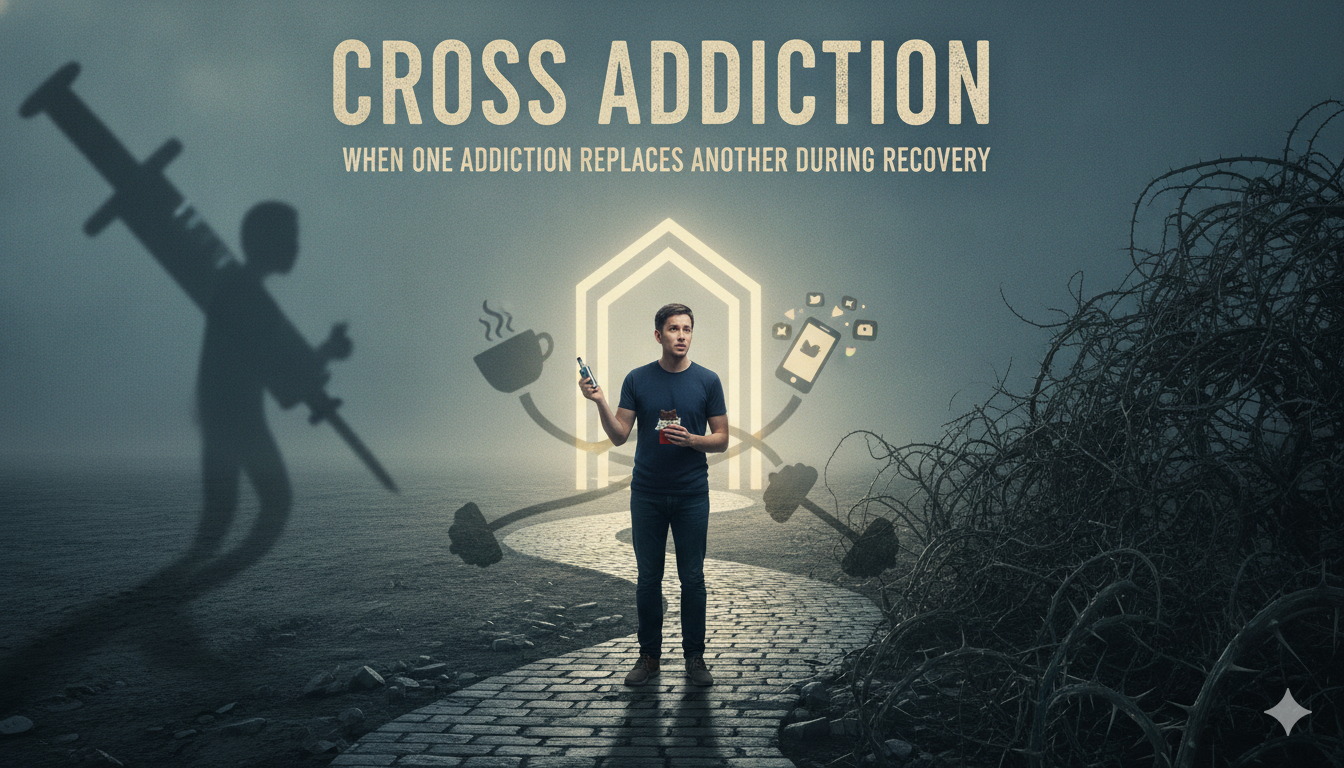
Cross addiction occurs when someone in recovery from one addiction develops a new addiction to a different substance or behavior.
For example, a person who stops using heroin may begin drinking heavily. Someone who quits alcohol may become dependent on prescription medications. In other cases, the new addiction may involve behaviors rather than substances, such as gambling, excessive gaming, compulsive shopping, or internet use.
The substance or behavior changes, but the underlying addictive patterns remain the same. At its core, cross addiction is not about the specific drug or activity. It is about the brain’s continued search for relief, reward, escape, or emotional comfort.
Why Does Cross Addiction Happen?
Many people believe addiction is solely about a particular substance. Modern research suggests otherwise. Addiction affects the brain’s reward system, decision-making processes, stress response, and emotional regulation. When someone removes one addictive substance, the underlying vulnerabilities often remain. Without healthy coping mechanisms, the brain may seek another source of stimulation or relief.
This is why recovery involves much more than simply stopping drug use. True recovery requires learning new ways to manage stress, emotions, boredom, anxiety, and life’s daily challenges. As explained in https://jadeedrifah.com/the-science-of-addiction-how-drugs-rewire-the-brain/, addiction changes neural pathways that influence motivation and reward-seeking behavior.
The Role of Dopamine in Cross Addiction
One of the key factors behind cross addiction is dopamine. Dopamine is a neurotransmitter involved in motivation, anticipation, and reward. Addictive substances and behaviors often produce unusually strong dopamine responses.
When someone stops using drugs, dopamine activity may take time to normalize. During this period, individuals may experience low motivation, reduced pleasure, emotional discomfort, and boredom.
As discussed in https://jadeedrifah.com/dopamine-recovery-after-addiction/, the brain’s healing process can take months. During this time, some individuals unknowingly replace one addiction with another in an attempt to regain feelings of excitement, relief, or satisfaction.
Common Examples of Cross Addiction
Cross addiction can take many forms. Some of the most common examples include:
Alcohol After Drug Recovery
A person recovering from cocaine, heroin, or methamphetamine addiction may begin drinking alcohol excessively, believing it is a safer alternative.
Prescription Medication Dependence
Some individuals become dependent on sedatives, sleeping pills, or anti-anxiety medications after stopping illicit drug use.
Gambling Addiction
The excitement and unpredictability of gambling can activate reward pathways similar to those involved in substance addiction.
Excessive Gaming
Video games can provide stimulation, achievement, and escape, which may become problematic when used compulsively.
Social Media and Internet Addiction
Constant notifications, likes, and online engagement can create dopamine-driven reward patterns that resemble addictive behaviors.
Food Addiction
Some people replace substance use with overeating, particularly foods high in sugar and fat, which can temporarily activate reward centers in the brain.
Signs of Cross Addiction
Cross addiction often develops gradually. Initially, the new behavior may seem harmless or even beneficial. Over time, however, warning signs begin to emerge. Common signs include:
- Increasing reliance on a new substance or behavior
- Difficulty controlling usage
- Using the activity to cope with stress or emotions
- Neglecting responsibilities
- Continued use despite negative consequences
- Irritability when unable to engage in the behavior
- Obsessive thoughts about the activity
- Loss of interest in healthy activities
Recognizing these signs early can prevent a minor problem from becoming a major relapse risk.
Is Cross Addiction the Same as Relapse?
Not exactly. Relapse typically refers to returning to the original substance of abuse. Cross addiction involves developing dependence on a different substance or behavior. However, the two are closely connected.
Many treatment professionals view cross addiction as a significant warning sign because it indicates that the underlying addictive cycle is still active. In some cases, cross addiction eventually leads individuals back to their original substance of choice. This is why comprehensive recovery focuses on healing addictive thinking patterns rather than merely avoiding a specific drug.
Emotional Factors Behind Cross Addiction
Cross addiction is often driven by unresolved emotional challenges. Many people use substances to cope with:
- Anxiety
- Depression
- Loneliness
- Trauma
- Stress
- Grief
- Low self-esteem
- Relationship difficulties
When the original addiction is removed, these underlying issues may remain. Without healthy coping strategies, individuals may seek another source of comfort or escape. This is one reason counseling, therapy, and emotional support play such important roles in long-term recovery.
The Connection Between Cravings and Cross Addiction
Cravings are a normal part of recovery. As discussed in https://jadeedrifah.com/what-causes-drug-cravings/, cravings often arise from changes within the brain’s reward and memory systems. When cravings become difficult to manage, some individuals may turn to alternative substances or behaviors instead of addressing the urge directly.
For example, someone craving drugs might begin drinking alcohol more frequently. Another person may spend excessive amounts of time online to distract themselves from emotional discomfort. Although these substitutes may provide temporary relief, they often reinforce the same addictive cycle.
Why Early Recovery Is a High-Risk Period
The early months of recovery can be particularly challenging. During this stage:
- The brain is still healing.
- Dopamine levels may remain disrupted.
- Emotional regulation is improving but not fully restored.
- Stress tolerance may be lower than normal.
- Healthy routines are still being developed.
These factors can increase vulnerability to cross addiction. Many rehabilitation professionals observe that individuals who focus only on abstinence, without building healthier coping skills, face a higher risk of replacing one addiction with another.
How to Prevent Cross Addiction
Preventing cross addiction requires awareness, honesty, and ongoing recovery work.
Build Healthy Coping Skills
Learning healthier ways to manage stress and emotions reduces the need to seek relief through addictive behaviors. Exercise, meditation, journaling, hobbies, and social support can all help.
Address Underlying Mental Health Issues
Anxiety, depression, trauma, and other mental health concerns should be treated alongside addiction. Ignoring these issues often increases the risk of developing new addictive behaviors.
Stay Connected to Recovery Support
Support groups, counselors, therapists, and treatment professionals provide accountability and guidance. Structured recovery programs, such as those described in https://jadeedrifah.com/the-roadmap-to-recovery-what-happens-in-addiction-treatment/, can help individuals recognize warning signs before problems escalate.
Be Honest About New Behaviors
Recovery requires self-awareness. If a new activity begins consuming excessive time, money, or emotional energy, it deserves attention. Many cases of cross addiction could be prevented through early recognition and honest self-reflection.
Maintain Balance
Healthy activities are important, but even positive behaviors can become problematic when taken to extremes. Recovery involves balance rather than replacement.
What We Often Observe in Treatment Settings
One pattern frequently seen in addiction treatment centers is that individuals become focused on avoiding their original substance while overlooking other potentially addictive behaviors. A patient may proudly report remaining drug-free while simultaneously developing a problematic relationship with alcohol, gambling, or excessive internet use.
Because the new behavior appears less dangerous, it often escapes attention until significant consequences emerge. This highlights an important reality: successful recovery is not simply about quitting drugs. It is about developing a healthier relationship with life itself.
Long-Term Recovery Requires More Than Abstinence
Many people initially define recovery as avoiding a specific substance. Over time, however, they discover that genuine recovery involves something deeper. It means learning how to experience stress, disappointment, boredom, success, and emotional pain without relying on addictive escapes.
The goal is not merely to eliminate one addiction. The goal is to create a life where addiction no longer feels necessary. As discussed in Relapse Prevention: How to Stay Clean After Rehab, long-term recovery is built through daily habits, self-awareness, and consistent support.
Final Thoughts
Cross addiction is one of the most overlooked challenges in addiction recovery. While a person may successfully stop using one substance, the underlying patterns that drive addiction can remain active. Without proper awareness and support, those patterns may attach themselves to a different substance or behavior.
The encouraging news is that cross addiction can be prevented. By understanding the warning signs, addressing emotional challenges, developing healthy coping skills, and maintaining strong recovery support, individuals can protect the progress they have worked so hard to achieve.
Recovery is not about replacing one addiction with another. It is about building a healthier, more balanced life that no longer depends on addictive behaviors for comfort, relief, or fulfillment.
Frequently Asked Questions (FAQs)
What is cross addiction?
Cross addiction occurs when a person recovering from one addiction develops a new addiction to a different substance or behavior. Examples include replacing drug use with alcohol, gambling, excessive gaming, or compulsive internet use.
Can cross addiction happen during recovery?
Yes. Cross addiction commonly occurs during recovery because the brain is still healing and may continue seeking sources of reward, comfort, or emotional escape. This is why ongoing support and self-awareness are important.
Is cross addiction the same as relapse?
No. Relapse refers to returning to the original substance of abuse. Cross addiction involves becoming dependent on a different substance or behavior. However, cross addiction can increase the risk of future relapse.
What are common examples of cross addiction?
Common examples include:
- Alcohol after drug recovery
- Prescription medication misuse
- Gambling addiction
- Excessive gaming
- Social media addiction
- Food addiction
- Compulsive shopping
Why does cross addiction happen?
Cross addiction occurs because addiction affects the brain’s reward and motivation systems. If underlying emotional issues and coping difficulties are not addressed, individuals may seek a new source of relief or pleasure.
How can cross addiction be prevented?
Cross addiction can be prevented by:
- Building healthy coping skills
- Attending therapy or counseling
- Managing stress effectively
- Staying involved in recovery programs
- Treating mental health conditions
- Monitoring new behaviors for warning signs
Can behavioral addictions be as serious as substance addictions?
Yes. Behavioral addictions such as gambling, gaming, and compulsive internet use can significantly affect mental health, relationships, finances, and daily functioning. They should be taken seriously and addressed early.
Does everyone in recovery develop cross addiction?
No. Many people achieve long-term recovery without developing cross addiction. Awareness, support, healthy coping mechanisms, and continued recovery work greatly reduce the risk.