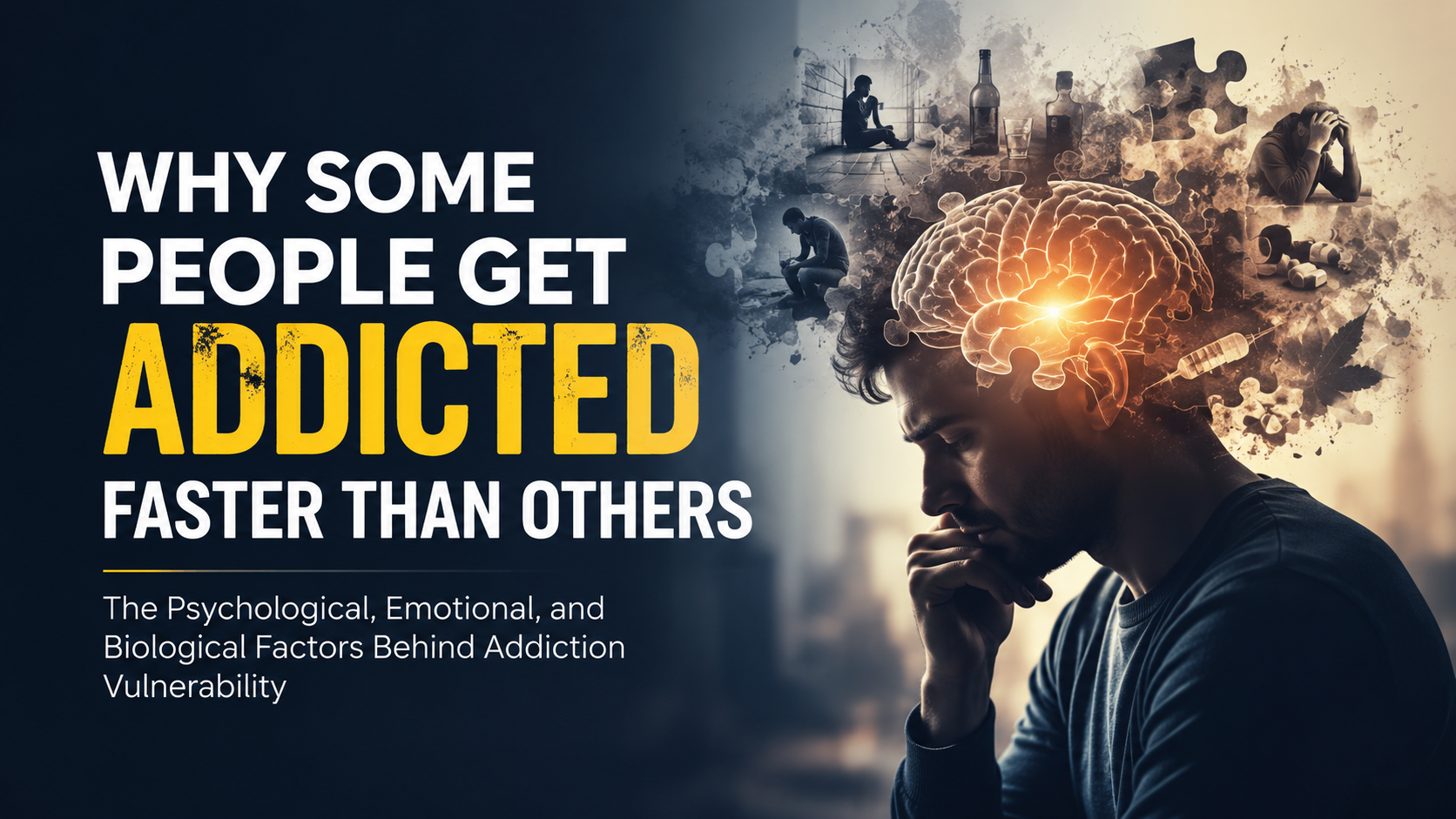
One of the most common questions people ask about addiction is why some individuals seem to lose control much faster than others. Two people may experiment with the same substance, experience the same environment, or go through similar situations, yet one develops a serious addiction while the other does not.
For many families, this can feel confusing and emotionally frustrating. Some people assume addiction only happens because of weak willpower or bad decisions. In reality, addiction is often influenced by a combination of emotional, psychological, environmental, and biological factors that affect people differently.
Not everyone experiences stress, trauma, emotional pain, loneliness, or coping difficulties in the same way. Some individuals may become emotionally dependent on substances much faster because addiction begins filling emotional needs long before the person fully realizes what is happening. Understanding why addiction affects people differently can help families and individuals approach recovery with more psychological awareness instead of only blame or judgment.
Emotional Pain Often Plays a Bigger Role Than People Realize
Many individuals struggling with addiction are not simply chasing pleasure. In many cases, substances gradually become emotional coping mechanisms.
Some people begin using drugs or alcohol to temporarily escape:
- anxiety
- loneliness
- emotional numbness
- trauma
- stress
- depression
- emotional exhaustion
- overwhelming thoughts
At first, the relief may feel temporary or manageable. Over time, however, the brain may begin associating substances with emotional comfort, emotional escape, or psychological survival.
This is one reason some individuals become addicted more quickly than others. People carrying unresolved emotional pain or chronic stress may experience stronger emotional attachment to substances because the temporary relief feels emotionally significant. Addiction often becomes psychologically complicated when substances stop feeling recreational and start feeling emotionally necessary.
Some Brains Become More Vulnerable to Addiction
Not everyone’s brain responds to substances in exactly the same way. Certain individuals may experience stronger dopamine responses, higher emotional relief, or more intense psychological reward patterns during substance use. This can gradually increase cravings and emotional dependency more rapidly in some people compared to others.
The brain’s reward system plays a major role in addiction development. Substances that temporarily increase pleasure, emotional escape, or relief from distress can slowly train the brain to repeat those behaviors again and again.
This is similar to why some people become emotionally attached to behaviors like gambling, social media, or excessive gaming. You can also read our article on The Dopamine Loop: How Social Media Mimics Chemical Addiction to better understand how reward systems and dopamine patterns influence behavior psychologically.
Environment and Life Experiences Matter Too
Environment can strongly influence how quickly addiction develops. Some individuals grow up around chronic stress, emotional neglect, unstable relationships, substance exposure, violence, or psychological pressure. Others may experience loneliness, social isolation, bullying, unresolved trauma, or environments where unhealthy coping behaviors become normalized. Over time, these experiences may increase emotional vulnerability and make temporary escape mechanisms feel more emotionally rewarding.
This does not mean everyone with difficult life experiences develops addiction. However, emotional environment often shapes how people cope with stress, pain, rejection, or emotional discomfort later in life. For some individuals, substances become a way to temporarily silence emotional struggles they never learned to manage in healthier ways.
Addiction Often Develops Gradually
One of the most dangerous aspects of addiction is that it rarely feels serious in the beginning. Many people initially believe they are fully in control. Substance use may begin socially, recreationally, or occasionally before emotional dependency slowly increases over time. As tolerance grows, the brain gradually adapts to repeated substance use. Some individuals begin needing stronger effects, more frequent use, or emotional escape more often than before.
At the same time, emotional and behavioral changes may slowly appear:
- irritability
- emotional withdrawal
- secrecy
- declining motivation
- relationship strain
- emotional instability
These changes often develop gradually enough that families may not recognize the seriousness immediately. You can also read our article on How Addiction Slowly Changes a Person’s Behavior to better understand how emotional and behavioral patterns may change during addiction progression.
Mental Health Can Increase Addiction Risk
Mental health struggles and addiction frequently become connected. Individuals experiencing anxiety, depression, trauma-related stress, emotional numbness, or chronic psychological distress may sometimes turn toward substances as temporary emotional relief. Over time, this coping pattern can gradually increase dependency risk.
In some cases, addiction and mental health difficulties begin affecting each other simultaneously. Emotional distress increases substance use, while substance use further worsens emotional instability. This cycle can become emotionally exhausting because many individuals begin feeling trapped between psychological pain and addiction itself.
Professional rehabilitation and therapy often become important during recovery because emotional healing usually needs to happen alongside physical sobriety.
Recovery Requires More Than Willpower Alone
One of the biggest misconceptions about addiction is the belief that recovery only depends on self-control. While personal responsibility remains important, long-term recovery often requires emotional support, psychological healing, healthier coping strategies, structured treatment, and stable recovery environments.
Many individuals struggling with addiction are also struggling emotionally underneath the surface. Shame, trauma, loneliness, anxiety, emotional instability, and unresolved stress may continue affecting recovery long after substance use stops physically. This is why rehabilitation programs often focus on emotional healing, therapy, relapse prevention, behavioral patterns, and psychological support alongside physical recovery itself.
Understanding Addiction More Realistically
Addiction is rarely caused by a single factor alone. Emotional pain, stress, trauma, mental health struggles, environment, reward-processing systems, coping patterns, and psychological vulnerability may all influence how quickly addiction develops in different individuals.
Understanding this more realistically does not remove personal accountability. However, it can help families and individuals approach addiction with greater awareness, earlier intervention, and more effective emotional support.
Frequently Asked Questions
Why do some people become addicted faster?
Addiction vulnerability may be influenced by emotional stress, trauma, mental health struggles, genetics, coping patterns, environment, and brain reward responses.
Can emotional pain increase addiction risk?
Yes. Many individuals use substances to temporarily escape emotional distress, loneliness, anxiety, trauma, or psychological pain.
Does addiction affect everyone the same way?
No. People respond differently to substances based on psychological, emotional, environmental, and biological factors.
Is addiction only about weak willpower?
No. Addiction is usually influenced by emotional, neurological, behavioral, and environmental factors beyond simple self-control alone.
Can therapy help during addiction recovery?
Yes. Therapy and rehabilitation often help individuals address emotional triggers, coping patterns, mental health struggles, and relapse prevention during recovery. Addiction develops differently in different people. Emotional vulnerability, stress, mental health struggles, life experiences, coping behaviors, and brain reward systems can all influence how quickly dependency forms over time.
Understanding these psychological and emotional factors more realistically can help individuals and families recognize addiction earlier while encouraging healthier support, treatment, and long-term recovery approaches.