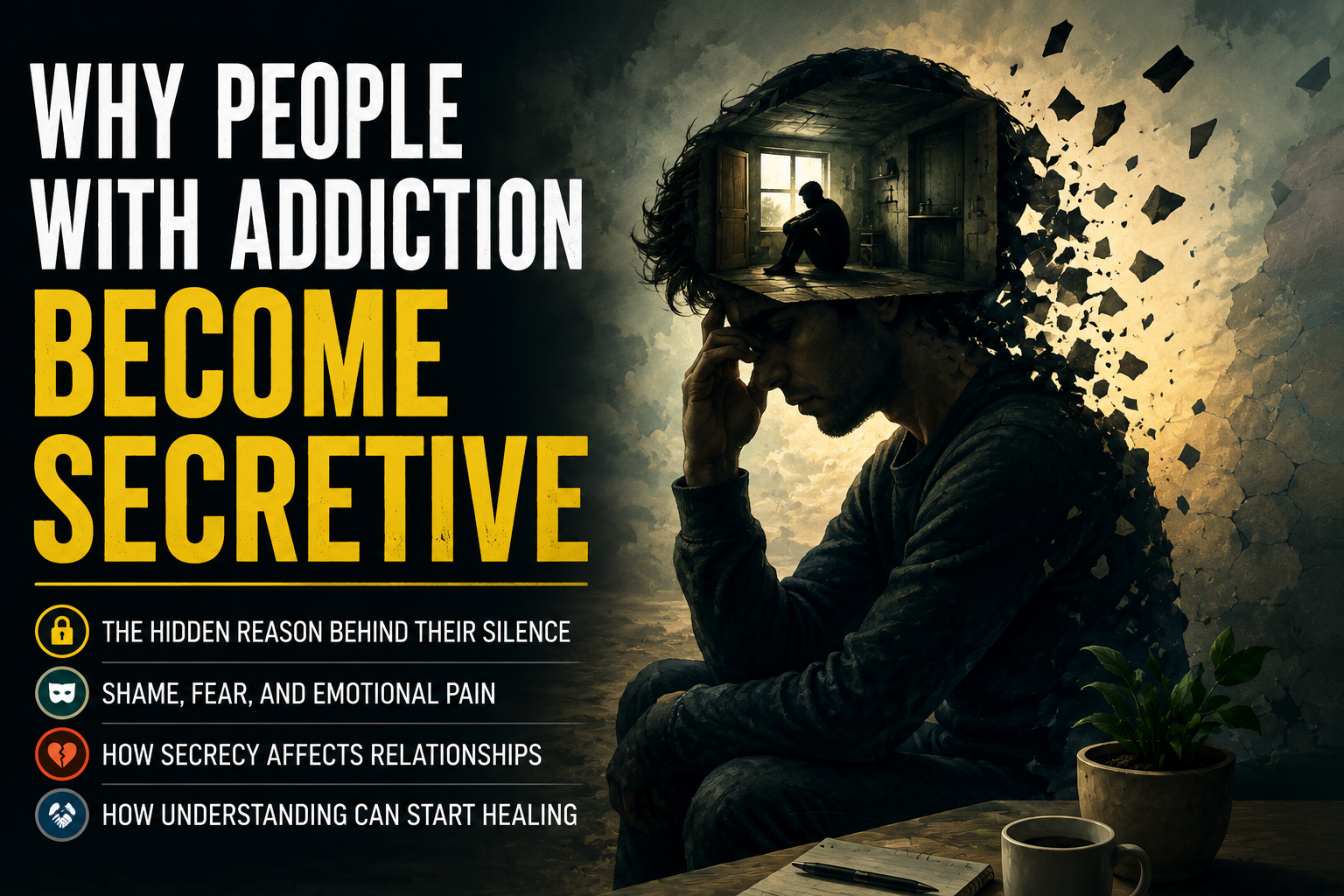
One of the most confusing changes families often notice during addiction is increasing secrecy. A person who was once open, communicative, and honest may gradually begin hiding information, avoiding questions, deleting messages, making excuses, or becoming defensive when ordinary topics are discussed.
For loved ones, this behavior can feel hurtful and difficult to understand. Many families begin wondering whether the person is intentionally trying to deceive them or no longer values trust within the relationship.
In reality, addiction and secrecy often become closely connected over time. Understanding why people with addiction become secretive can help families better recognize the emotional, behavioral, and psychological challenges that frequently accompany addiction. According to the National Institute of Mental Health, addiction can significantly affect behavior, emotional functioning, decision-making, and relationships.
Addiction Can Make People Become Secretive Over Time
One reason people become secretive during addiction is because they may begin hiding behaviors they know others would question or disapprove of. At first, secrecy may involve small details. Over time, however, some individuals become secretive about where they go, who they spend time with, how they use money, or what is happening in their daily lives.
For many people, this process develops gradually rather than suddenly. As addiction becomes more central to daily life, protecting the addiction may slowly become more important than maintaining openness with family and friends.
Fear of Consequences Often Increases Secrecy
Another reason people with addiction become secretive is fear. Some individuals worry about criticism, conflict, disappointment, or losing the trust of people they care about. Others fear that openly discussing their behavior may force them to confront problems they are not yet ready to address.
Because of these concerns, secrecy may begin feeling safer than honesty. Unfortunately, secrecy often creates additional stress and emotional distance over time. The more a person feels they must hide, the more isolated they may become from healthy support systems.
Shame Can Encourage Secretive Behavior
Shame is another powerful reason addiction can make people become secretive. Many individuals struggling with addiction already feel disappointed in themselves. They may recognize that their behavior is causing problems but feel embarrassed, guilty, or overwhelmed by the situation.
Instead of discussing these feelings openly, some people choose to hide their struggles. This does not necessarily mean they do not care about their loved ones. In many cases, secrecy develops because the individual is trying to avoid painful emotions or difficult conversations.
Understanding emotional struggles during addiction can also help explain why many individuals begin experiencing emotional disconnection over time. You can also read our article on Why Addiction Makes People Feel Emotionally Empty to better understand the emotional impact addiction may have.
Relationships Often Suffer When People Become Secretive
One of the biggest consequences of secrecy is its effect on relationships. Trust becomes more difficult to maintain when communication is inconsistent or information is repeatedly hidden. Family members may begin questioning explanations, worrying about safety, or feeling emotionally disconnected from the person they care about.
Over time, secrecy may create misunderstandings, arguments, frustration, and emotional distance. Many families report that secrecy becomes almost as painful as the addiction itself because it weakens the sense of honesty and connection within the relationship.
Understanding relationship challenges during addiction can also help explain why emotional distance often becomes more noticeable over time. You can also read our article on Why Addicted People Push Away the People Who Care About Them to better understand how addiction affects communication and emotional connection.
Becoming Secretive Does Not Mean Someone Cannot Recover
Families sometimes assume that increasing secrecy means recovery is impossible. Fortunately, that is not true. Many individuals who become secretive during addiction gradually rebuild honesty, communication, and trust during recovery. As treatment progresses and emotional stability improves, many people become more willing to discuss their experiences openly.
Therapy, rehabilitation, family support, and structured recovery programs often help individuals develop healthier communication habits and rebuild damaged relationships over time. Recovery is not only about stopping substance use. It is also about rebuilding trust, accountability, and healthier ways of interacting with others.
Professional Support Can Help Break the Cycle of Secrecy
One reason professional treatment is often valuable is because it provides a safe environment where individuals can discuss their struggles honestly without fear of immediate judgment. Therapists, rehabilitation professionals, and recovery programs help individuals understand the emotional and behavioral patterns connected with addiction.
As emotional awareness improves, many people become less dependent on secrecy and more comfortable seeking support. Learning why people become secretive during addiction can help families respond with greater understanding while still maintaining healthy boundaries and encouraging recovery.
Frequently Asked Questions
Why do people with addiction become secretive?
Many individuals become secretive because of shame, fear of consequences, emotional stress, or a desire to hide behaviors connected to addiction.
Does secrecy mean someone is lying?
Not always. While secrecy and dishonesty may occur together, secrecy often develops because individuals feel afraid, embarrassed, or overwhelmed by their situation.
How does secrecy affect relationships?
Secrecy may reduce trust, increase misunderstandings, create emotional distance, and make communication more difficult over time.
Can therapy help someone who has become secretive?
Yes. Therapy and rehabilitation programs often help individuals develop healthier communication skills, emotional awareness, and accountability.
Does secrecy improve during recovery?
For many individuals, honesty and communication gradually improve as recovery progresses and emotional stability increases. Addiction often affects much more than substance use alone. Over time, fear, shame, emotional stress, and unhealthy coping patterns may cause people to become secretive and withdraw from open communication.
With recovery, therapy, rehabilitation, and supportive relationships, many individuals slowly rebuild trust, improve communication, and develop healthier ways of dealing with difficult emotions and challenges.
About the Author
Ayesha Maheen — Clinical Psychologist
Ayesha Maheen is a Clinical Psychologist working in the field of mental health, addiction rehabilitation, emotional wellbeing, and behavioral recovery support. Her work focuses on psychological healing, relapse prevention, emotional regulation, and helping individuals and families better understand the long-term impact of substance abuse and mental health challenges. She is affiliated with Jadeed Rifah Rehabilitation and Care Center, where she contributes to rehabilitation awareness, psychological support, and recovery-focused mental health education.
Reviewed & Managed By
Rao Mubeen Hassan — Managing Director
Rao Mubeen Hassan serves as the Managing Director at Jadeed Rifah Rehabilitation and Care Center, where he oversees rehabilitation awareness initiatives, organizational management, patient support coordination, and community outreach related to addiction recovery and mental health services. His work focuses on strengthening rehabilitation programs, promoting recovery awareness, improving access to professional support, and helping individuals and families better understand the long-term emotional, psychological, and social impact of substance abuse and behavioral health challenges in Pakistan.