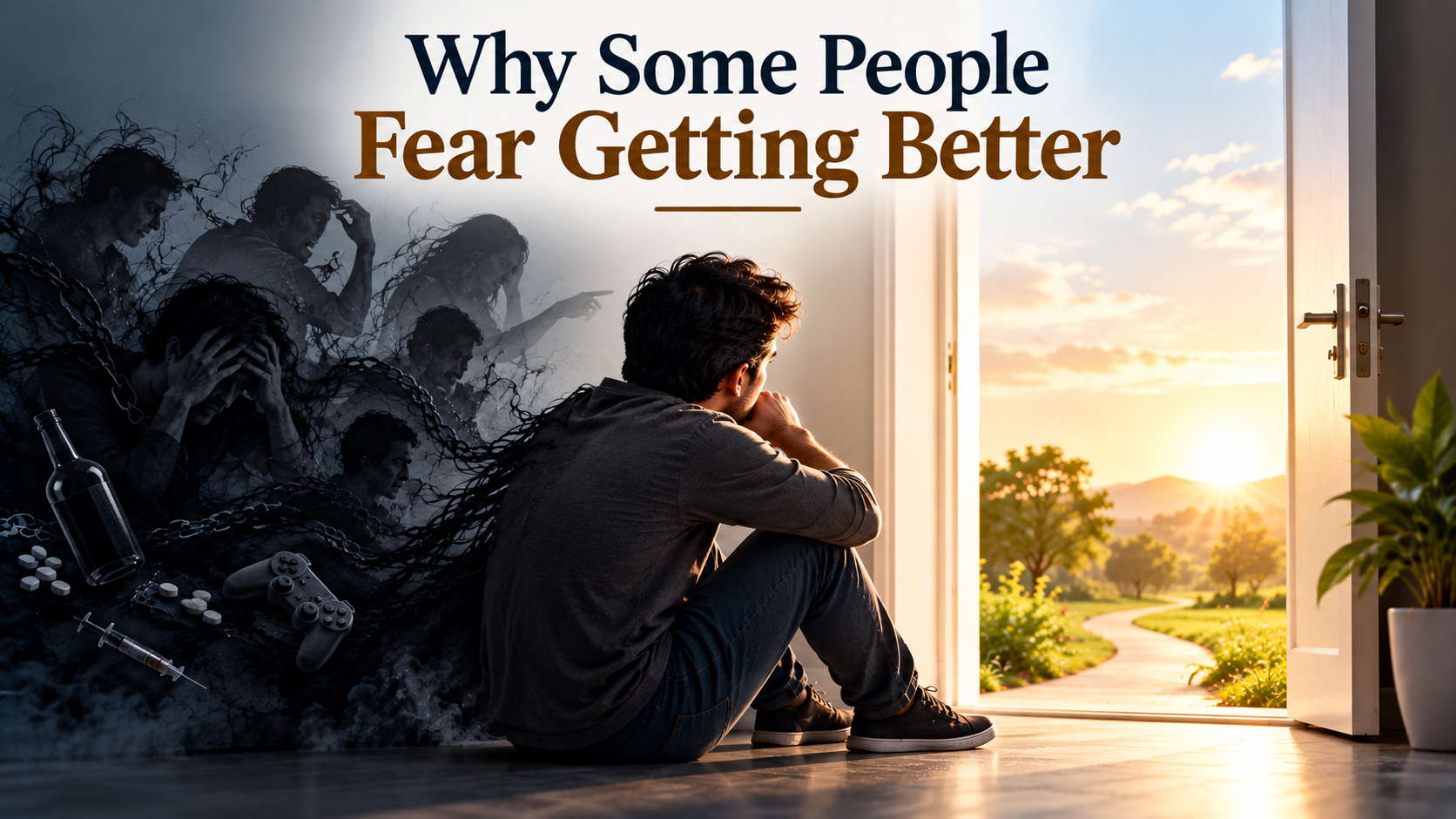
Fear of getting better can be a surprisingly important part of addiction recovery. A person may genuinely want to stop using drugs, improve their health, and rebuild their life, yet still feel anxious about what will happen when recovery starts working.
This can seem confusing to families. They may ask, “If you want to recover, why are you afraid of getting better?”
The answer is often more complicated than simply wanting to continue using drugs. Addiction can become connected to a person’s identity, relationships, routines, emotions, and way of coping with life. When those patterns begin to change, recovery can bring uncertainty along with hope. Understanding this fear can help people approach recovery with greater patience and self-awareness.
What Does Fear of Getting Better Mean?
Fear of getting better does not necessarily mean that someone wants to remain addicted. Instead, a person may feel uncertain about what life will look like without the substance. They may wonder:
“Who will I be without drugs?”
“Can I handle my emotions without using?”
“What if I fail after everyone expects me to change?”
“What will happen to my relationships?”
“Can I really build a normal life again?”
These questions can create anxiety even when the person wants recovery. For some people, addiction has existed for so long that life without it feels unfamiliar.
Addiction Can Become Part of a Person’s Routine
Substance use can gradually become connected to everyday life. A person may use drugs when waking up, after work, during social situations, when feeling stressed, or before going to sleep. Eventually, substance use can become part of how they structure their day. Recovery removes that routine. Suddenly, there may be empty hours, unfamiliar emotions, new responsibilities, and situations that previously revolved around using substances. The person is not only giving up a substance. They are learning how to live differently.
Fear of Facing Emotions Without Drugs
Some people use substances to escape painful emotions. Drugs or alcohol may temporarily reduce feelings such as anxiety, sadness, loneliness, anger, or emotional distress. When substance use stops, those emotions may become more noticeable. This can make recovery frightening. A person may think that using drugs was the only way they knew how to cope with difficult feelings.
Treatment can help change this pattern by teaching healthier ways to recognize, express, and manage emotions. Recovery therefore involves learning not only how to stop using substances, but also how to tolerate and respond to difficult emotions without returning to them.
What Happens When Life Starts Changing?
Getting better can bring responsibilities that were previously avoided. A person may need to return to work, repair relationships, manage finances, make decisions, maintain a routine, or take responsibility for past actions. These changes can be positive, but they can also feel overwhelming. During active addiction, the immediate goal may have been simply getting through the day. Recovery often introduces longer-term questions:
“What do I want from my life?”
“What kind of person do I want to become?”
“How do I repair what happened?” Having greater freedom can feel uncomfortable when someone has spent a long time living in survival mode.
Fear of Failure Can Become a Barrier
Some people are afraid of getting better because they are afraid of failing afterward. They may think that if they try to rebuild their life and fail, it will prove that they are incapable of change. This can create an unhealthy cycle.
Instead of taking a risk and trying something new, they may remain within familiar patterns—even if those patterns are harmful. Recovery requires a different understanding of failure. A difficult day, emotional setback, or mistake does not automatically mean that recovery has failed. Progress is usually measured over time.
Shame Can Make Recovery Feel Frightening
Past behavior can create significant shame. A person may remember broken promises, damaged relationships, financial problems, or things they did while under the influence of substances. As life begins improving, those memories may become more difficult to avoid.
Someone may think:
“How can my family forgive me?”
“I don’t deserve a better life.”
“I’ve already caused too much damage.”
This is one reason shame can keep people stuck in addiction. Our article How Shame Can Keep People Stuck in Addiction explores this connection in greater detail. Recovery does not require pretending that the past never happened. It involves accepting responsibility while recognizing that a person’s future does not have to be identical to their past.
Losing the Identity Built Around Addiction
Addiction can become part of how a person sees themselves. They may think of themselves primarily as someone who uses drugs, someone who has failed, or someone who cannot control their behavior. When recovery begins, that identity has to change. This can be uncomfortable.
A person may have spent years believing they are incapable of living differently. Becoming healthier requires them to develop a new understanding of themselves. That can take time. Recovery is partly the process of discovering that addiction is something a person has experienced—not the entirety of who they are.
Fear Does Not Mean Recovery Is Failing
One of the most important things to understand is that fear can exist alongside genuine motivation. A person can want recovery and still feel afraid. They can be grateful to be sober and still miss parts of their old life. They can be excited about the future and still feel uncertain about it. These feelings do not necessarily mean that treatment is failing. They can be part of adjusting to a new way of living. Talking openly about these feelings can be much more productive than hiding them.
How Treatment Can Help
Professional treatment can provide a structured environment where these fears can be explored safely. Counseling can help a person identify what they are afraid of, understand the beliefs behind those fears, and develop practical ways to handle uncertainty. Treatment may also address anxiety, depression, trauma, relationship difficulties, cravings, and other issues that can make recovery feel overwhelming. The goal is not to force someone to feel confident immediately. It is to help them gradually develop the skills and confidence needed to move forward.
What We Often Observe During Recovery
In rehabilitation, progress is not always visible as constant happiness or confidence. Someone may become healthier physically while still feeling uncertain about their future. Another person may become more responsible but struggle with the idea of returning to work or rebuilding relationships. These mixed emotions are important to acknowledge.
Over time, many people begin discovering that the life they feared may actually provide something addiction could not: stability, meaningful relationships, self-respect, and genuine choices. The process can be slow, but each healthy experience can make the future feel less unfamiliar.
Building a Future One Step at a Time
A person does not need to have their entire future planned before recovery can progress. Small goals are often easier to manage. Getting through today without using, attending a counseling session, rebuilding a daily routine, exercising, reconnecting with family, or returning to a productive activity can all create evidence that a different life is possible. The future becomes less frightening when it is approached one manageable step at a time.
How Families Can Respond
Families may become frustrated when someone appears to resist positive changes. Instead of saying, “Why don’t you want to get better?”, it may be more helpful to ask: “What worries you most about getting better?” That question creates space for an honest conversation.
The answer may reveal fear of failure, financial pressure, damaged relationships, emotional pain, employment concerns, or uncertainty about life after rehabilitation. Families can provide encouragement while maintaining appropriate boundaries. Support does not mean removing every difficulty from someone’s path. It means helping the person face those difficulties without returning to destructive patterns.
Final Thoughts
The fear of getting better can be an overlooked part of addiction recovery. Recovery may sound entirely positive from the outside, but major change can also create uncertainty. A person may fear responsibility, emotional pain, failure, damaged relationships, or simply not knowing who they will become without addiction. These fears do not automatically mean that someone does not want recovery.
With professional support, patience, honest conversations, and meaningful goals, people can gradually become more comfortable with the life they are building. Getting better does not mean having no fear. Sometimes, it means learning that you can move forward even while you are afraid.
Frequently Asked Questions
Why are some people afraid of getting better?
People may fear getting better because recovery brings unfamiliar responsibilities, emotions, relationships, and expectations. They may also worry about failure or life without substances.
Can someone want recovery and still be afraid of it?
Yes. A person can genuinely want to stop using drugs while simultaneously feeling anxious about the changes that recovery will bring.
Why does life after addiction feel unfamiliar?
Addiction can structure a person’s daily routine, relationships, and coping methods around substance use. Removing those patterns requires learning new ways of living.
Can fear of recovery increase relapse risk?
Fear alone does not cause relapse, but difficulty coping with uncertainty, emotional distress, or new responsibilities can make recovery more challenging. Professional support can help address these concerns.
How can families help someone who fears getting better?
Families can listen without immediately judging, ask what the person is worried about, encourage professional support, and maintain healthy boundaries.
Does fear of getting better mean someone is in denial?
Not necessarily. A person may fully recognize their addiction while still feeling frightened about what recovery and major life changes will bring.