One of the biggest misconceptions about addiction is the belief that it happens only because someone made bad choices or lacked willpower. If that were true, everyone who tried alcohol, cigarettes, or drugs would become addicted. But that isn’t what happens.
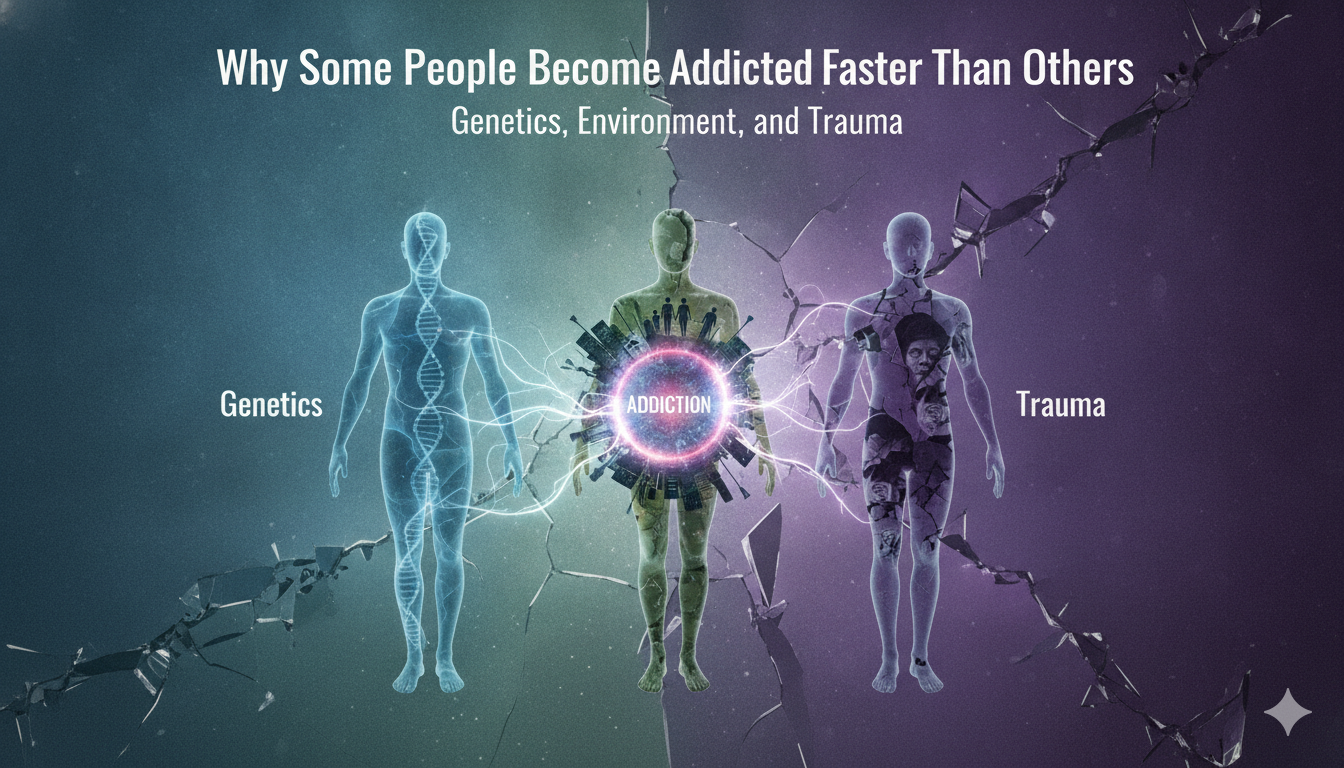
Two people can use the same substance under similar circumstances and have completely different outcomes. One person may experiment with a drug and never touch it again. Another may develop a serious addiction within a relatively short period of time. So why does this happen? The answer is complicated because addiction is rarely caused by a single factor. Research shows that addiction develops through a combination of genetics, environment, life experiences, mental health, and trauma. Some people are simply more vulnerable than others. Understanding these differences not only helps explain why addiction occurs but also reduces the stigma that often surrounds it.
Is Addiction a Choice?
People usually choose to try a substance for the first time. However, addiction itself is far more complex than a simple choice. Repeated substance use changes areas of the brain responsible for reward, motivation, decision-making, and self-control.
Over time, using the substance becomes less about pleasure and more about relieving discomfort, avoiding withdrawal, or satisfying powerful cravings. This is why addiction is often described as a chronic brain disorder rather than simply a lack of discipline.
The Role of Genetics in Addiction
Scientists estimate that genetics account for approximately 40 to 60 percent of a person’s risk of developing addiction. This does not mean there is a single “addiction gene.” Instead, many genes may influence how the brain responds to substances. Some people naturally experience stronger reward responses. Others may inherit traits such as impulsivity, risk-taking behavior, or difficulties managing stress. If addiction runs in a family, an individual’s risk may be higher.
For example, children who grow up with parents struggling with substance use disorders are statistically more likely to develop addiction themselves. Part of this risk is genetic, while another part comes from environmental influences. Having a genetic predisposition does not guarantee addiction. It simply means the person may need to be more cautious about substance use.
Why Some Brains Respond Differently to Drugs
Every brain is unique. Certain individuals experience stronger pleasurable effects from substances than others. Some may also develop tolerance more quickly, causing them to use larger amounts of a substance in a shorter period of time. Differences in brain chemistry can influence:
- How rewarding a drug feels
- How quickly dependence develops
- How severe cravings become
- How difficult quitting may be
These biological differences help explain why some people become addicted faster than others.
The Influence of Environment
Genetics may load the gun, but environment often pulls the trigger. A person’s surroundings can significantly influence their risk of developing addiction. Environmental factors include:
- Family relationships
- Childhood experiences
- Peer groups
- Availability of drugs
- Socioeconomic conditions
- Community influences
- Exposure to stress
Someone raised in an environment where substance use is common may see drug use as normal behavior. On the other hand, individuals with strong family support, healthy relationships, and positive role models often have protective factors that reduce their risk. Environment does not determine destiny, but it plays an important role in shaping behavior and opportunities.
Childhood Experiences Matter
Early life experiences can have a profound impact on addiction risk. Children who experience neglect, abuse, family conflict, or instability often carry emotional wounds into adulthood. Many studies have found a strong connection between adverse childhood experiences and substance use disorders later in life. When children grow up in stressful or traumatic environments, their developing brains may become more sensitive to stress. As adults, they may be more likely to use substances as a way of coping with difficult emotions.
The Powerful Link Between Trauma and Addiction
Trauma is one of the most significant risk factors for addiction. Trauma can include:
- Physical abuse
- Emotional abuse
- Sexual abuse
- Domestic violence
- Childhood neglect
- Serious accidents
- The loss of a loved one
- Exposure to violence
- Military experiences
- Major life-threatening events
Not everyone who experiences trauma develops addiction. However, many individuals use substances as a way to numb emotional pain, reduce anxiety, or temporarily escape painful memories. In treatment settings, it is common to hear patients describe how drugs initially felt like a solution to overwhelming emotions. Unfortunately, while substances may provide short-term relief, they often create much larger problems over time.
Mental Health and Addiction Often Go Together
Mental health conditions can also increase the risk of addiction. Individuals struggling with anxiety, depression, post-traumatic stress disorder, or other psychological challenges may turn to substances in an attempt to feel better. This is sometimes referred to as self-medication. Someone dealing with severe anxiety may use alcohol to relax. A person struggling with depression may seek temporary relief through drugs that create feelings of pleasure or energy.
Unfortunately, substances rarely solve the underlying problem. In many cases, addiction and mental health issues begin feeding into each other, creating a difficult cycle to break.
Why Peer Pressure Still Matters
People often associate peer pressure with teenagers, but social influences remain important throughout life. Humans naturally seek acceptance and connection. When friends, coworkers, or social groups regularly use substances, the likelihood of experimenting with drugs or alcohol often increases. Young people may be particularly vulnerable because their brains are still developing, especially the areas responsible for impulse control and decision-making. This helps explain why early substance use is associated with a greater risk of addiction later in life.
Stress and Chronic Pressure
Long-term stress can also increase vulnerability to addiction. Financial difficulties, relationship problems, work pressures, caregiving responsibilities, and major life changes can all contribute to emotional distress. For some people, substances become an unhealthy coping mechanism. Over time, the brain may begin associating drugs or alcohol with relief from stress. This pattern can gradually develop into dependence and eventually addiction.
Why Some People Become Addicted Faster
There is no single explanation. Usually, addiction develops when several risk factors come together. For example:
- A genetic predisposition
- Childhood trauma
- Mental health struggles
- High levels of stress
- Easy access to substances
- Peer influence
- Poor coping skills
The more risk factors a person has, the greater their vulnerability may become. This does not mean addiction is inevitable. It simply means some individuals may need greater support and healthier coping strategies.
What We Often Observe in Recovery
One of the most important lessons learned in addiction treatment is that no two recovery journeys look exactly alike. Some people develop severe addictions after relatively short periods of substance use. Others may use substances for years before experiencing significant problems. Patients frequently ask why they became addicted while friends who used the same drugs did not. The answer is often hidden in personal history.
Different life experiences, genetic backgrounds, emotional challenges, and support systems create different levels of vulnerability. Understanding this can reduce feelings of shame and encourage people to approach recovery with greater compassion toward themselves.
Can Addiction Be Prevented?
Although no prevention strategy is perfect, understanding risk factors can help reduce vulnerability. Protective factors include:
- Strong family relationships
- Healthy coping skills
- Early mental health support
- Positive social connections
- Education about addiction
- Stress management techniques
- Seeking help after traumatic experiences
Early intervention often makes a significant difference. The sooner emotional struggles are recognized and addressed, the lower the likelihood that substances will become a primary coping mechanism.
Recovery Is Possible for Everyone
Understanding why some people become addicted faster than others is not about making excuses. It is about recognizing that addiction is a complex condition influenced by many different factors. People do not choose their genetics, childhood experiences, or traumatic events.
However, they can choose to seek help, develop healthier coping strategies, and begin the process of recovery. With proper treatment, support, and education, individuals can overcome addiction and build meaningful lives regardless of the circumstances that contributed to their struggles.
Final Thoughts
Why some people become addicted faster than others is a question with no single answer. Addiction develops through a complex interaction between genetics, environment, trauma, mental health, and life experiences. Some individuals are simply more vulnerable due to factors beyond their control. Recognizing these influences helps replace judgment with understanding and stigma with compassion.
Most importantly, understanding risk factors reminds us that addiction is not a moral failure. It is a complex health condition that can affect people from all backgrounds. The encouraging news is that recovery remains possible. No matter how addiction began, healing, growth, and long-term recovery can still become part of a person’s future.
Frequently Asked Questions (FAQs)
Why do some people become addicted faster than others?
Some people have a higher risk due to genetics, trauma, mental health conditions, stressful environments, or early exposure to substances. Addiction usually develops through a combination of factors rather than a single cause.
Is addiction inherited?
Genetics can increase a person’s vulnerability to addiction, but having a family history of addiction does not guarantee that someone will become addicted.
Can childhood trauma increase the risk of addiction?
Yes. Research shows that childhood abuse, neglect, and other adverse experiences significantly increase the likelihood of developing substance use disorders later in life.
Can mental health problems lead to addiction?
Yes. Many individuals use substances to cope with anxiety, depression, trauma, or other emotional difficulties. This pattern can eventually lead to addiction.
Does everyone who uses drugs become addicted?
No. Many people experiment with substances without developing addiction. Individual differences in genetics, environment, and life experiences influence risk.
Can addiction be prevented?
While addiction cannot always be prevented, healthy coping skills, strong support systems, early mental health treatment, and education about substance use can significantly reduce the risk.