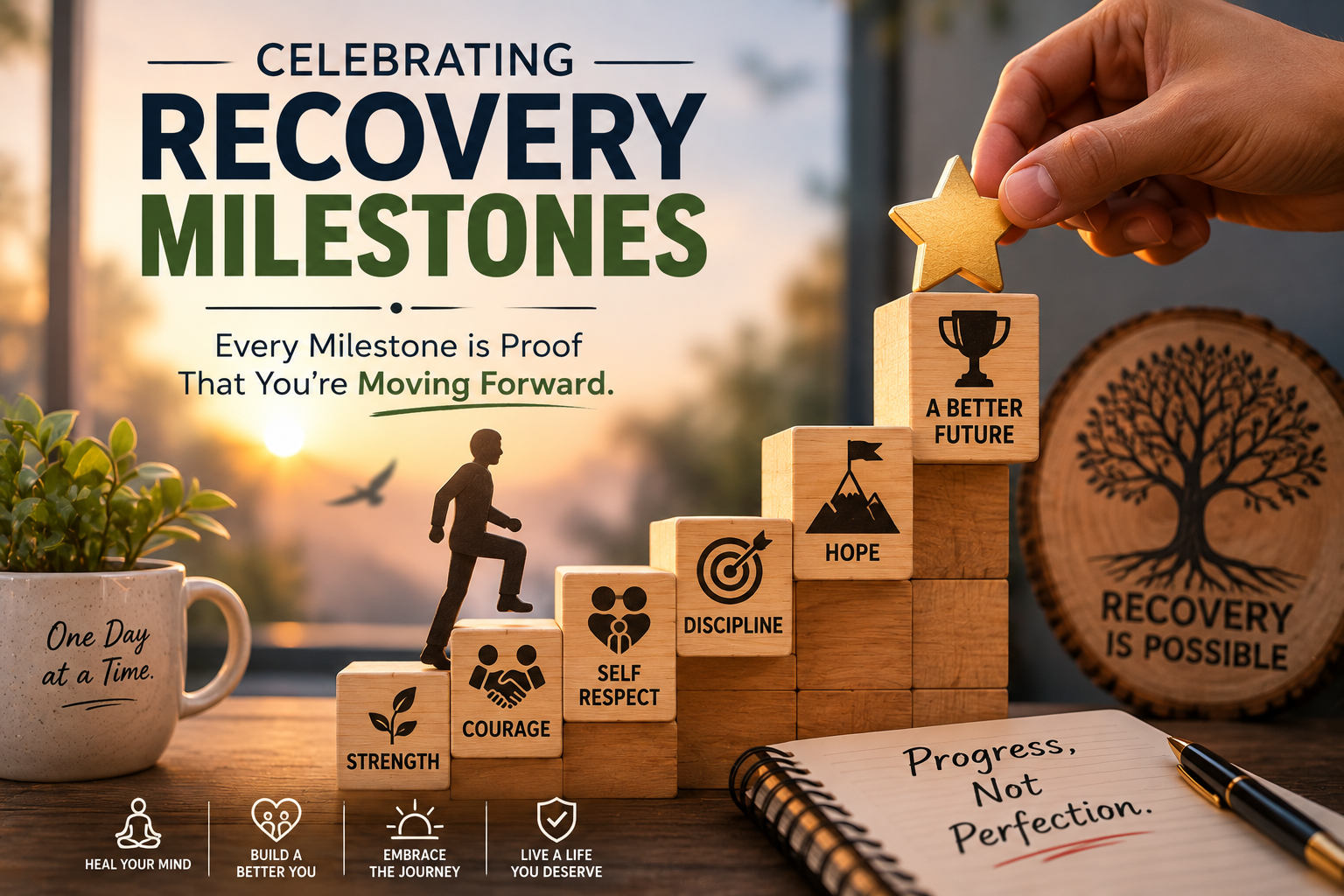
Recovery milestones give people a chance to recognize how far they have come rather than focusing only on how far they still have to go. In addiction recovery, progress is not always obvious. Some changes happen quietly, such as thinking more clearly, responding to stress differently, rebuilding trust, or making healthier decisions.
Celebrating these moments does not mean ignoring the challenges that remain. It means acknowledging that change is happening. For someone who has spent months or years struggling with addiction, even a small achievement can represent a major personal victory. Recognizing that progress can strengthen confidence and encourage continued commitment to recovery.
What Counts as a Recovery Milestone?
A recovery milestone is any meaningful point of progress in a person’s recovery journey. The most obvious milestone may be reaching a period of sobriety, but recovery involves much more than counting sober days. Attending treatment consistently, completing a counseling program, managing a difficult craving without using, returning to work, repairing a relationship, developing a healthy routine, or taking responsibility for past actions can all represent important progress. Milestones are personal. What feels ordinary to one person may represent an enormous achievement for another. That is why recovery should not be measured by someone else’s timeline.
Why Recognizing Progress Matters
Addiction can cause people to focus heavily on their mistakes. A person may remember the relationships they damaged, money they lost, opportunities they missed, or pain they caused their family. Although accepting responsibility is an important part of recovery, constantly focusing on past failures can make it difficult to recognize present growth.
Celebrating progress creates a healthier balance. Instead of thinking, “I have ruined my life,” a person can begin thinking, “I have already changed some important parts of my life, and I can keep changing.” That shift can make long-term recovery feel more achievable.
Milestones Can Strengthen Motivation
Recovery does not always feel rewarding. There may be periods when cravings return, emotions feel difficult to manage, or progress seems slower than expected. During these periods, remembering previous achievements can provide a reason to continue. Someone who has successfully completed one difficult stage of recovery has evidence that they can handle challenges.
This connects with How to Stay Motivated When Recovery Feels Slow, because motivation often becomes stronger when people can see evidence of their own progress. A milestone does not have to be dramatic. Sometimes recognizing one month of consistent treatment, completing a difficult counseling session, or successfully handling a trigger can remind someone that recovery is moving forward.
Celebrating Milestones Does Not Mean Becoming Complacent
There is an important difference between celebrating progress and becoming overconfident. Reaching a milestone does not mean addiction can no longer affect a person. Recovery still requires awareness, healthy routines, and appropriate support.
For example, someone who has maintained sobriety for several months may feel proud of that achievement while continuing to avoid situations that could increase the risk of relapse. Celebration should strengthen commitment rather than create a false sense of security. The message should be: “I have made progress, and I want to protect it.”
Healthy Ways to Celebrate Recovery
Celebration does not need to involve expensive gifts or large events. A person might spend meaningful time with supportive family members, enjoy a healthy meal, write about their progress, participate in a favorite activity, or set a new personal goal.
Some people find it helpful to keep a recovery journal and record important achievements. Looking back at those entries during difficult periods can provide a powerful reminder of how much has changed. Families can also play an important role by recognizing progress without bringing unnecessary attention to past mistakes. A simple statement such as “We can see how hard you have worked” can mean a great deal to someone rebuilding their life.
Recovery Milestones Are About More Than Sobriety
Sobriety is an essential part of recovery, but it is not the only measure of success. Recovery can also involve rebuilding identity, purpose, confidence, relationships, physical health, and daily responsibility. Similarly, learning to enjoy ordinary experiences without drugs or alcohol can become a major milestone in itself. Going out with friends, spending time with family, exercising, working, praying, or enjoying a hobby may gradually become rewarding again. These experiences show that recovery is not simply about giving something up. It is about gaining a different way of living.
What We Often See During Recovery
One of the most encouraging parts of recovery is seeing changes that may initially seem small. A person who once struggled to control their behavior may begin pausing before making decisions. Someone who avoided responsibility may start completing daily tasks. Another person may begin communicating honestly with family instead of hiding problems.
These changes can be easy to overlook because they happen gradually. Recognizing them gives people an opportunity to understand that recovery is already affecting their everyday life. Progress becomes easier to maintain when it is noticed and valued.
How Families Can Celebrate Recovery Progress
Families sometimes focus so heavily on preventing relapse that they forget to acknowledge improvement. Constantly watching for mistakes can make a person feel that nothing they do will ever be enough. Families can support recovery by recognizing genuine progress while maintaining healthy boundaries.
Celebrating a milestone might be as simple as having a meal together, acknowledging an achievement, encouraging a new healthy goal, or expressing appreciation for the person’s effort. Support should not mean ignoring problems. It means recognizing improvement while continuing to encourage responsible choices.
Creating New Milestones After Rehab
Recovery does not end when a rehabilitation program finishes. Life after rehab creates new opportunities for growth. Returning to work, continuing counseling, developing financial stability, rebuilding relationships, maintaining a healthy routine, and becoming more independent can all become future milestones. This is why recovery should be viewed as a continuing journey rather than a single treatment event. Each new achievement can become part of a larger story of rebuilding.
Final Thoughts
Recovery milestones matter because they make progress visible. Addiction can leave people focused on what they lost, but recovery gives them an opportunity to recognize what they are rebuilding. Every healthy decision, difficult conversation, completed treatment session, sober day, repaired relationship, and new responsibility can become evidence of meaningful change.
Celebrating these moments does not mean pretending that recovery is easy. It means recognizing that difficult work deserves to be acknowledged. The goal is not to reach one final milestone and declare recovery finished. The goal is to continue building a healthier and more meaningful life, one achievement at a time.
Frequently Asked Questions
What are recovery milestones?
Recovery milestones are meaningful achievements during addiction recovery. They can include maintaining sobriety, completing treatment, managing cravings, returning to work, rebuilding relationships, or developing healthier routines.
Why are recovery milestones important?
Recovery milestones help people recognize their progress, strengthen motivation, build confidence, and remain committed to long-term recovery.
Should only sobriety anniversaries be celebrated?
No. Sobriety anniversaries are important, but many other achievements deserve recognition. Completing treatment, handling a difficult trigger, repairing a relationship, or developing a healthy habit can also be meaningful milestones.
How can families celebrate recovery milestones?
Families can celebrate through encouragement, quality time, a healthy meal, a meaningful activity, or simply acknowledging the person’s effort and progress.
Can celebrating recovery milestones prevent relapse?
Celebrating milestones cannot guarantee relapse prevention, but recognizing progress can strengthen motivation and reinforce healthy behaviors. Continued treatment and appropriate support remain important.
What happens after someone reaches a major recovery milestone?
Recovery continues. After reaching one goal, a person can establish new goals related to health, relationships, work, education, finances, or personal growth.