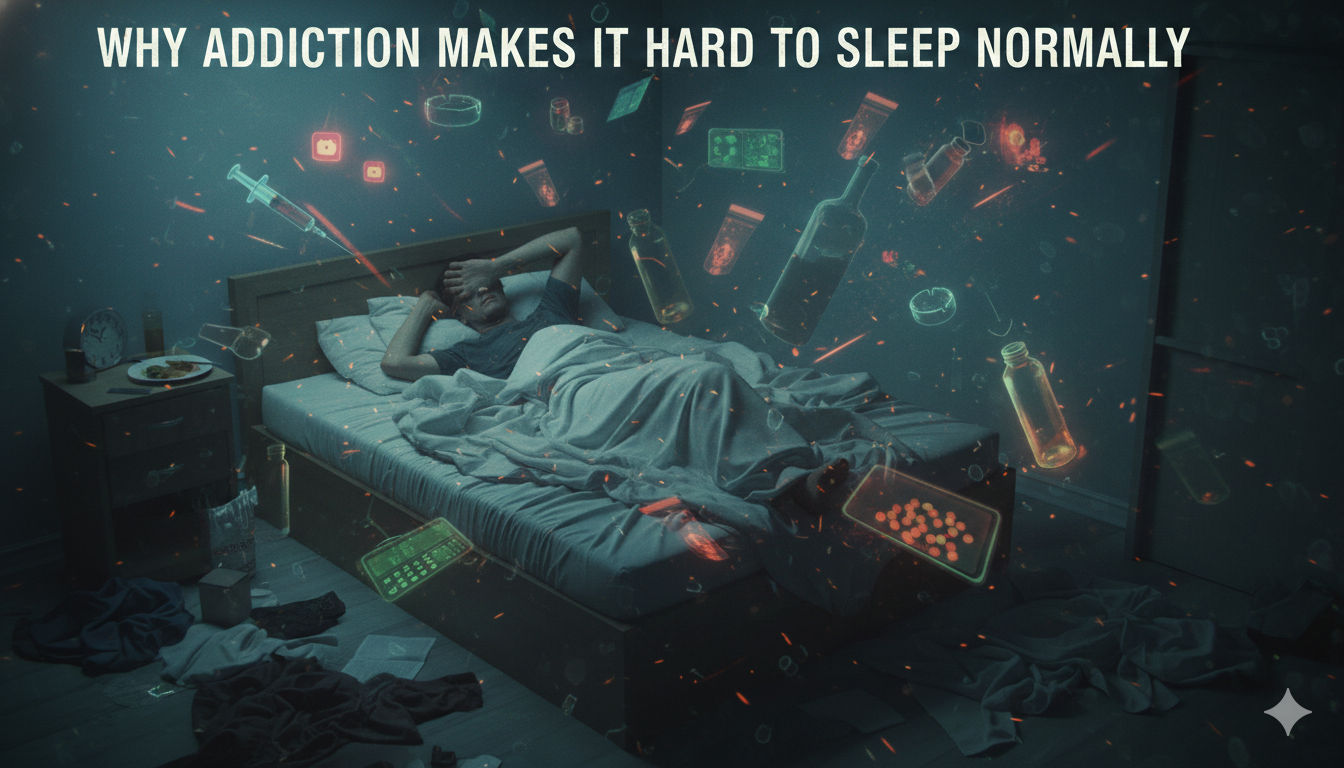
Sleep is one of the most important parts of emotional and physical health, yet many people struggling with addiction experience serious sleep problems for long periods of time without fully understanding why. Some individuals struggle falling asleep, while others wake repeatedly during the night, feel mentally exhausted during the day, or never feel properly rested even after sleeping for hours.
Many individuals stop being able to sleep normally as addiction gradually affects physical health, stress levels, and emotional stability over time. Over time, poor sleep may begin affecting emotional stability, concentration, stress levels, motivation, physical energy, and overall mental health. Many people do not immediately connect addiction with sleep problems. However, addiction can significantly affect normal sleep patterns and make it difficult for the body and mind to rest properly.
Understanding why addiction makes it hard to sleep normally can help individuals and families better recognize the physical and psychological effects addiction may have over time. According to the National Institute of Mental Health, addiction can affect emotional health, brain functioning, stress regulation, and overall physical wellbeing.
Addiction Can Disrupt the Ability to Sleep Normally
One major reason addiction makes it difficult to sleep normally is because substances may interfere with the body’s natural sleep cycle. Some substances temporarily make people feel relaxed or sleepy initially, but over time they often disrupt healthy sleep quality instead. Sleep may become lighter, more interrupted, or emotionally restless during the night.
Some individuals begin waking repeatedly during the night, sleeping at irregular times, struggling with insomnia, feeling exhausted during the day, or depending on substances to fall asleep. Over time, these unhealthy patterns may gradually affect both physical and emotional health more seriously.
Poor Sleep Often Increases Mental Exhaustion
When addiction affects sleep repeatedly, mental exhaustion often becomes stronger as well. Many individuals struggling with addiction already experience emotional stress, instability, or psychological pressure. Poor sleep may make concentration, emotional regulation, motivation, and daily functioning even more difficult.
Some people begin feeling constantly tired, mentally overwhelmed, emotionally irritated, or unable to focus properly throughout the day. Sleep problems may also increase emotional sensitivity, making ordinary stress feel more difficult to manage. This cycle often becomes emotionally exhausting because addiction affects sleep, while poor sleep may also increase emotional instability at the same time.
Sleep Problems May Continue During Recovery
One important thing many individuals do not expect during recovery is that sleep problems may continue temporarily even after substance use decreases.
During early recovery, the body and mind often need time to adjust and rebuild healthier sleep patterns again. Some individuals experience difficulty falling asleep, vivid dreams, restlessness, nighttime anxiety, interrupted sleep, or mental exhaustion during the day. Although this adjustment period can feel frustrating, sleep often improves gradually over time with healthier routines, emotional support, recovery treatment, and proper care.
Understanding the emotional and physical challenges of early recovery can also help explain why the beginning stages of sobriety may feel difficult mentally and physically. You can also read our article on The First 72 Hours of Sobriety to better understand the early recovery process.
Poor Sleep Can Affect Emotional Health
Many people underestimate how strongly sleep affects emotional wellbeing. When addiction repeatedly disrupts sleep, emotional stress may become harder to manage properly. Some individuals become emotionally irritated, mentally exhausted, anxious, emotionally disconnected, or less motivated over time. Poor sleep may also affect patience, communication, concentration, and emotional balance inside relationships and daily life. This is one reason addiction often affects much more than physical health alone.
Understanding emotional changes during addiction can also help explain why many individuals begin struggling emotionally even when they try hiding it externally. You can also read our article on Why Addiction Makes People Feel Emotionally Empty to better understand the emotional effects addiction may create over time.
Recovery Often Helps People Sleep Normally Again
One important part of long-term recovery is rebuilding healthier sleep habits and physical stability gradually. Structured rehabilitation, therapy, emotional support, healthier routines, reduced stress, physical recovery, and professional treatment may all help individuals improve sleep quality over time. Many recovery programs encourage consistent sleep schedules, healthier daily structure, emotional support, reduced nighttime stress, physical self-care, and healthier daily routines. Sleep recovery usually happens gradually rather than instantly.
For many individuals, improved sleep eventually becomes one of the clearest signs the body and mind are slowly beginning to stabilize again. Learning how addiction affects the ability to sleep normally can help families better understand the physical and emotional effects of addiction.
Sleeping Normally Again Can Take Time
Many individuals become discouraged when healthy sleep does not return immediately during recovery. However, long-term addiction often affects both physical and emotional functioning in ways that require time to heal properly. Rebuilding healthy sleep patterns may happen slowly as emotional health, stress regulation, routines, and physical wellbeing improve together. Patience, structured support, therapy, and consistent recovery habits often play important roles during this process.
Frequently Asked Questions
Why does addiction affect sleep?
Addiction may interfere with the body’s natural sleep cycle, emotional regulation, stress levels, and overall physical health, making healthy sleep more difficult.
Can poor sleep affect emotional health?
Yes. Poor sleep may increase emotional exhaustion, anxiety, irritability, stress, low motivation, and difficulty concentrating.
Is insomnia common during addiction recovery?
Yes. Many individuals experience temporary sleep problems, restlessness, vivid dreams, or interrupted sleep during early recovery.
Does sleep improve during recovery?
For many individuals, sleep gradually improves with recovery treatment, healthier routines, therapy, emotional support, and physical stabilization.
Why do people feel mentally exhausted during addiction?
Poor sleep, emotional stress, instability, and unhealthy routines may all contribute to mental exhaustion during addiction.
Addiction often affects much more than substance use alone. Over time, disrupted sleep, exhaustion, emotional stress, and poor physical recovery may gradually affect concentration, emotional stability, motivation, and overall wellbeing. With recovery, therapy, structured rehabilitation, healthier routines, and emotional support, many individuals slowly begin rebuilding healthier sleep patterns, physical stability, and emotional balance again.
About the Author
Ayesha Maheen — Clinical Psychologist
Ayesha Maheen is a Clinical Psychologist working in the field of mental health, addiction rehabilitation, emotional wellbeing, and behavioral recovery support. Her work focuses on psychological healing, relapse prevention, emotional regulation, and helping individuals and families better understand the long-term impact of substance abuse and mental health challenges. She is affiliated with Jadeed Rifah Rehabilitation and Care Center, where she contributes to rehabilitation awareness, psychological support, and recovery-focused mental health education.
Reviewed & Managed By
Rao Mubeen Hassan — Managing Director
Rao Mubeen Hassan serves as the Managing Director at Jadeed Rifah Rehabilitation and Care Center, where he oversees rehabilitation awareness initiatives, organizational management, patient support coordination, and community outreach related to addiction recovery and mental health services. His work focuses on strengthening rehabilitation programs, promoting recovery awareness, improving access to professional support, and helping individuals and families better understand the long-term emotional, psychological, and social impact of substance abuse and behavioral health challenges in Pakistan.