
Addiction recovery is not only about quitting substances, it is about rebuilding a life that once revolved around them. For many individuals in recovery, one of the most powerful yet overlooked tools for long-term sobriety is routine and daily structure. Establishing consistent habits helps individuals regain control over their lives, improve mental well-being, and strengthen their commitment to recovery. In fact, experts in addiction medicine and psychology often emphasize that behavioral health & stability are deeply connected to predictable daily routines.
Routine provides a framework for healthy living, offering stability in a period that can otherwise feel chaotic and uncertain. When someone begins the journey of sobriety, their brain and body are adjusting to life without substances. During this phase, having structure can make the difference between relapse and recovery. In this article, we will explore how routine supports sobriety, why structure is essential for behavioral health, and how individuals can build healthy daily habits that promote long-term recovery.
Understanding Behavioral Health & Stability in Addiction Recovery
Behavioral health & stability refer to the balance of mental, emotional, and behavioral patterns that support a person’s overall well-being. In the context of addiction recovery, stability means having predictable behaviors, consistent emotional regulation, and healthy coping mechanisms.
Substance addiction disrupts this balance in many ways. Drugs and alcohol alter brain chemistry, particularly affecting the dopamine reward system, which is responsible for motivation, pleasure, and habit formation. Over time, addiction replaces healthy routines, such as sleeping regularly, working, or socializing, with compulsive substance use.
When individuals enter recovery, their lives often lack structure. They may experience:
- Irregular sleep patterns
- Emotional instability
- Lack of purpose or daily goals
- Increased vulnerability to stress and cravings
This is where routine becomes crucial. By creating structured daily habits, individuals begin rebuilding behavioral health & stability, allowing the brain and body to heal while reducing the risk of relapse.
Why Structure Is Critical for Long-Term Sobriety

Routine plays a vital role in recovery because it replaces the chaos of addiction with predictability and control. Structure provides a sense of order that helps individuals stay focused on their recovery goals.
Reduces Decision Fatigue
Recovery requires many positive choices each day, choosing healthy activities, avoiding triggers, attending therapy, and maintaining self-care. Without structure, these choices can become overwhelming.
A consistent routine simplifies decision-making. When certain behaviors become habitual, like attending morning therapy sessions or exercising in the evening, individuals spend less mental energy deciding what to do and more energy maintaining recovery.
Creates Accountability
Structured routines create a sense of responsibility. Scheduled therapy sessions, support group meetings, and daily tasks encourage individuals to stay accountable to themselves and others.
Accountability is a powerful motivator in recovery. It reinforces commitment and reduces the likelihood of returning to destructive behaviors.
Strengthens the Brain’s Reward System
Substance abuse hijacks the brain’s reward system by artificially stimulating dopamine release. Over time, natural rewards such as social interaction, exercise, or achievement feel less satisfying.
Routine helps retrain the brain to find pleasure in healthy activities. When individuals consistently engage in positive behaviors, like exercise, meditation, or creative hobbies, the brain gradually restores its natural reward pathways.
This process is essential for rebuilding behavioral health & stability and maintaining long-term sobriety.
How Routine Supports Mental and Emotional Healing

Addiction often leaves individuals struggling with anxiety, depression, or emotional instability. Routine plays an important role in restoring psychological balance.
Improves Emotional Regulation
Predictable routines help regulate mood by reducing uncertainty and stress. When individuals know what to expect throughout the day, they feel more in control of their environment and emotions.
For example, starting the day with meditation or prayer can promote calmness, while ending the day with reflection or journaling can help process emotions.
Reduces Stress and Anxiety
Unstructured time can trigger cravings and negative thoughts. Routine fills the day with meaningful activities that reduce idle time, one of the biggest triggers for relapse.
Regular sleep schedules, exercise, and therapy sessions also contribute to lower stress levels and improved mental health.
Encourages Healthy Coping Mechanisms
Instead of turning to substances when facing challenges, individuals learn to rely on structured coping strategies such as counseling, physical activity, mindfulness, or social support.
Over time, these behaviors become automatic responses to stress, strengthening both behavioral health & stability.
The Science Behind Habits and Recovery
Scientific research shows that habits play a significant role in addiction and recovery. Habits are formed through repeated behaviors that become automatic over time.
When someone struggles with addiction, substance use becomes a powerful habit reinforced by the brain’s reward system. Breaking this cycle requires replacing destructive habits with healthier ones.
According to behavioral psychology, habits consist of three components:
- Cue: A trigger that initiates a behavior
- Routine: The behavior itself
- Reward: The positive outcome that reinforces the behavior
In recovery, individuals can reshape these habit loops. For example:
- Cue: Feeling stressed
- Old Routine: Using drugs or alcohol
- New Routine: Exercising, calling a support person, or practicing breathing techniques
Through repetition, the brain begins associating positive rewards with healthy behaviors instead of substance use.
Key Elements of a Healthy Recovery Routine
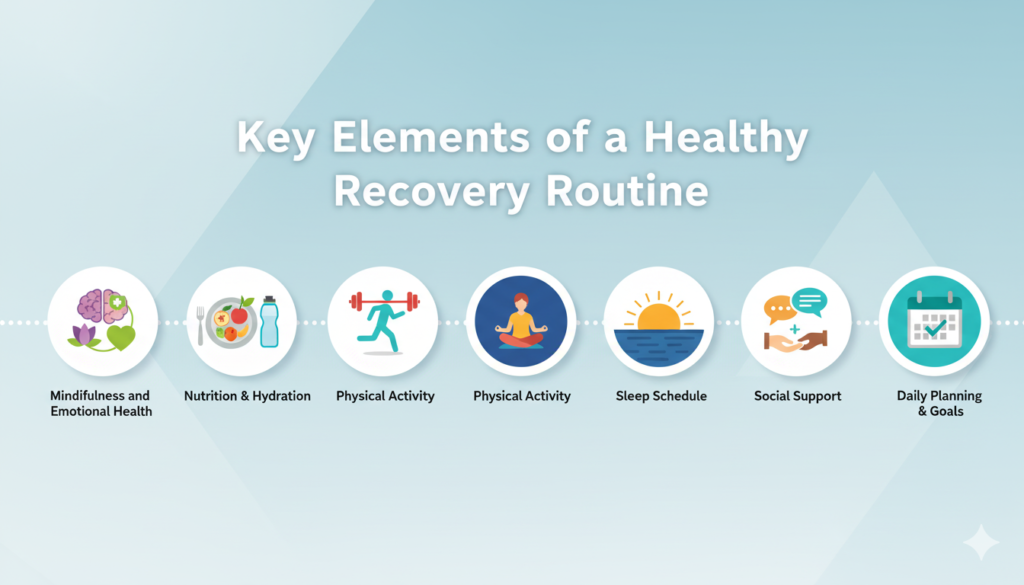
Creating a recovery routine does not require rigid schedules or unrealistic expectations. Instead, it involves building consistent habits that support physical, emotional, and mental health.
Consistent Sleep Schedule
Sleep is essential for brain recovery and emotional regulation. Many individuals struggling with addiction experience disrupted sleep patterns.
Going to bed and waking up at consistent times helps restore the body’s natural circadian rhythm, improving mood, concentration, and energy levels.
Physical Activity
Exercise is one of the most powerful tools for addiction recovery. Physical activity increases natural dopamine and endorphin levels, helping individuals experience pleasure without substances.
Regular exercise also reduces anxiety, improves sleep, and enhances overall mental health.
Therapy and Counseling
Professional support plays a crucial role in recovery. Scheduled therapy sessions—whether individual counseling, group therapy, or family therapy—provide guidance, accountability, and emotional support.
Counseling helps individuals address the root causes of addiction while building healthier coping strategies.
Support Groups
Recovery is easier when individuals feel connected to others who understand their struggles. Attending support groups such as 12-step programs or recovery meetings provides encouragement, shared experiences, and motivation.
These meetings often become an essential part of a structured recovery routine.
Healthy Nutrition
Substance abuse often damages physical health and nutritional balance. A routine that includes regular, balanced meals helps restore energy levels and supports brain healing.
Nutritious foods also contribute to improved mood and mental clarity.
Mindfulness and Spiritual Practices
Many recovery programs incorporate mindfulness practices such as meditation, prayer, or breathing exercises. These practices help individuals develop awareness of their thoughts and emotions without reacting impulsively.
Mindfulness strengthens emotional control and promotes behavioral health & stability.
The Role of Routine in Preventing Relapse
Relapse is one of the greatest challenges in addiction recovery. While it can occur for many reasons, lack of structure is a common risk factor.
Routine reduces relapse risk by:
- Minimizing idle time that can trigger cravings
- Reinforcing healthy habits and responsibilities
- Providing daily reminders of recovery goals
- Encouraging connection with supportive communities
When individuals follow structured routines, they are less likely to encounter the boredom, stress, or emotional instability that often leads to relapse.
Building a Routine That Supports Behavioral Health & Stability
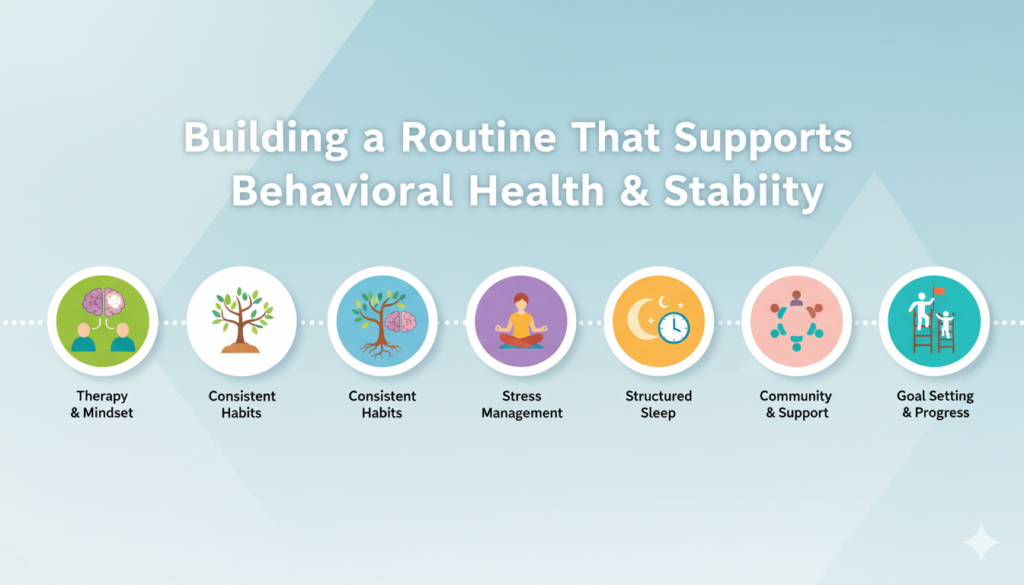
Developing a routine is a gradual process. It does not happen overnight, and it should be tailored to each individual’s lifestyle and recovery needs.
Start Small
Attempting to change everything at once can be overwhelming. Instead, individuals should begin with a few manageable habits, such as waking up at the same time each day or attending weekly counseling sessions.
Small changes build momentum and confidence.
Focus on Consistency
Consistency matters more than perfection. Missing a routine activity occasionally does not mean failure—it simply means starting again the next day.
Track Progress
Keeping a journal or planner helps individuals track their daily habits and recognize patterns. This awareness strengthens commitment and highlights progress in recovery.
Stay Flexible
While structure is important, routines should allow room for flexibility. Life circumstances change, and recovery routines must adapt accordingly.
The goal is not rigid control but sustainable behavioral health & stability.
The Role of Rehabilitation Centers in Establishing Routine
Rehabilitation centers often emphasize structured daily schedules because routine plays such a crucial role in recovery. In treatment programs, patients typically follow organized daily activities including therapy sessions, educational programs, exercise, and group discussions.
These structured environments help individuals:
- Develop healthy habits
- Learn time management skills
- Build discipline and responsibility
- Practice new coping strategies
By the time patients leave treatment, they have already experienced how structure supports sobriety, making it easier to maintain similar routines in everyday life.
How Families Can Support Routine in Recovery
Family members also play a significant role in helping individuals maintain structured routines. Supportive families can encourage recovery by promoting healthy habits and providing stability at home.
Families can help by:
- Encouraging regular therapy attendance
- Supporting healthy lifestyle changes
- Maintaining positive communication
- Avoiding environments that trigger substance use
A stable home environment reinforces behavioral health & stability, giving individuals a stronger foundation for long-term sobriety.
Real-Life Impact of Routine in Recovery
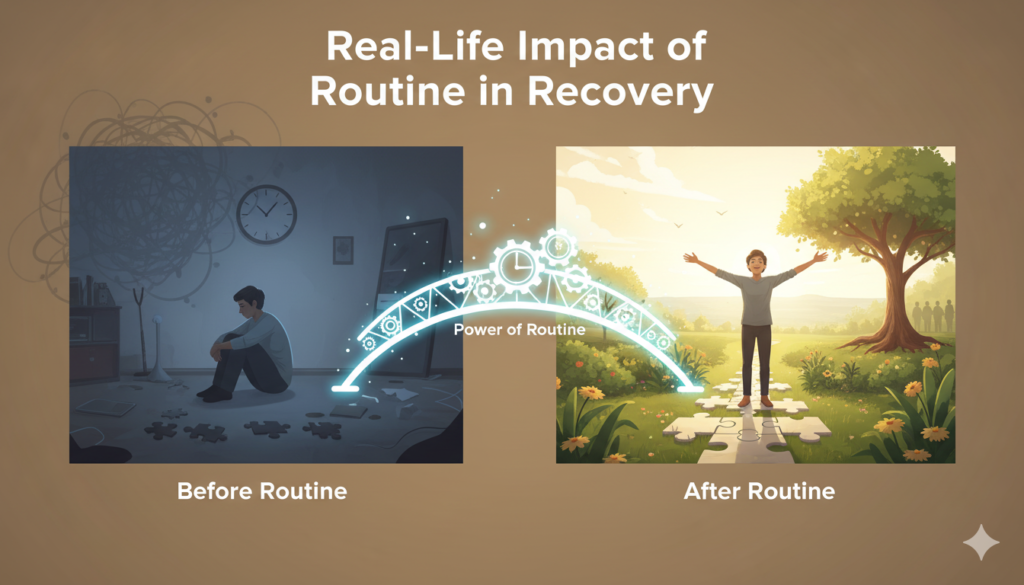
Many individuals in long-term recovery attribute their success to structured daily routines. Whether it involves morning meditation, regular exercise, or consistent therapy sessions, these habits create a sense of purpose and direction.
Routine transforms recovery from a temporary effort into a sustainable lifestyle. Instead of focusing solely on avoiding substances, individuals begin building fulfilling lives centered on health, growth, and meaningful relationships.
Conclusion
Sobriety is not simply about stopping substance use, it is about rebuilding a stable and meaningful life. One of the most effective ways to achieve this transformation is through the power of routine.
Structure provides the foundation for behavioral health & stability, helping individuals regulate emotions, manage stress, rebuild healthy habits, and strengthen their commitment to recovery. Through consistent daily practices such as exercise, therapy, mindfulness, and social support, individuals can retrain their brains and create lasting positive change.
While the journey to recovery can be challenging, routine offers a reliable path forward. By embracing structure and consistency, individuals can replace the chaos of addiction with stability, purpose, and long-term sobriety.
References
- National Institute on Drug Abuse (NIDA). Drugs, Brains, and Behavior: The Science of Addiction. https://nida.nih.gov
- American Psychological Association (APA). Understanding Substance Use Disorders. https://www.apa.org
- World Health Organization (WHO). Management of Substance Abuse. https://www.who.int
- Harvard Medical School. Addiction and the Brain’s Reward System. https://www.health.harvard.edu
- SAMHSA (Substance Abuse and Mental Health Services Administration). Recovery and Relapse Prevention. https://www.samhsa.gov
- Duhigg, C. (2012). The Power of Habit: Why We Do What We Do in Life and Business. Random House.