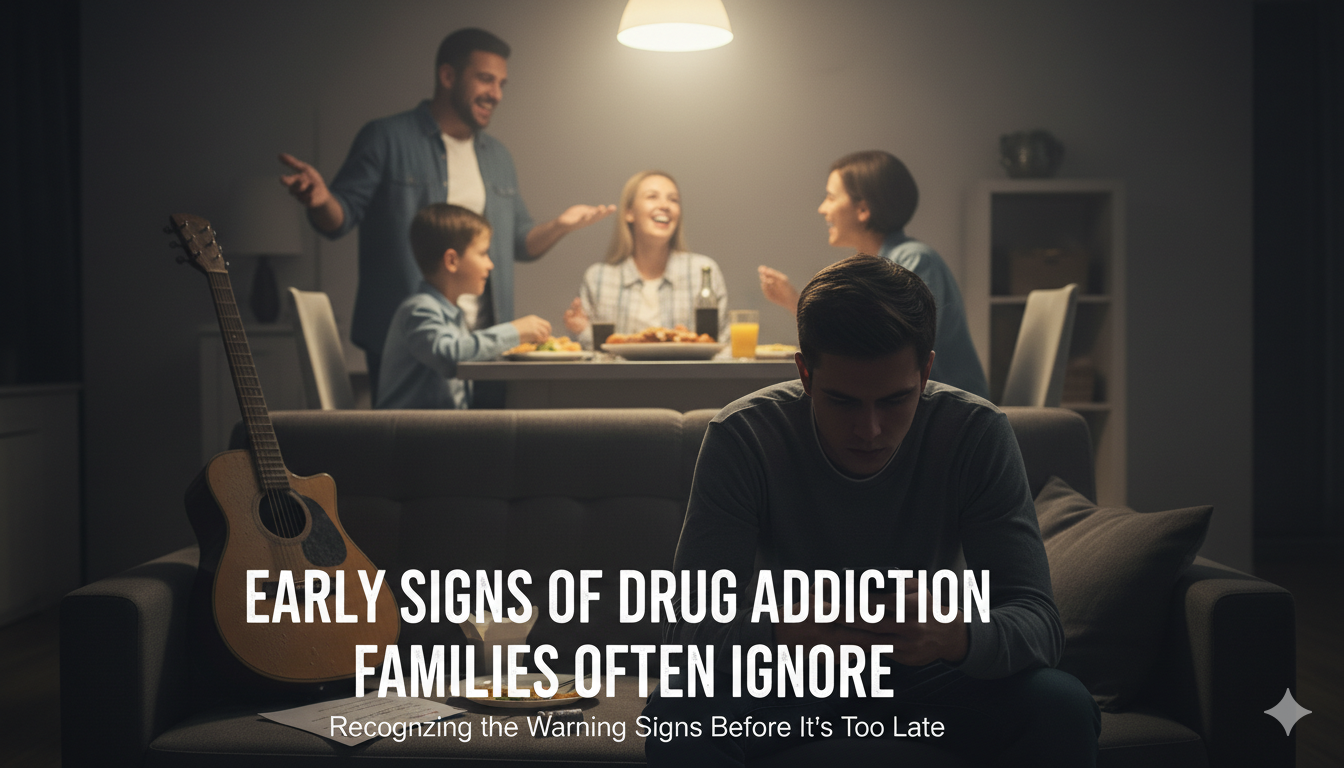
Most families do not recognize addiction in the beginning because it rarely starts in an obvious way. There is usually no dramatic moment that suddenly makes everything clear. Instead, the changes appear slowly. A person may become emotionally distant, easily irritated, secretive, or less interested in everyday life. These signs are often mistaken for stress, teenage behavior, or temporary mood changes.
By the time addiction becomes noticeable, the individual may already be struggling emotionally, mentally, and physically. This is why understanding the early warning signs of drug addiction is so important. Recognizing these changes early can help families seek support before substance use becomes more severe.
Understanding how addiction develops emotionally and psychologically can help families recognize warning signs earlier. You can also read our detailed guide on What Is Addiction? to better understand how substance dependence develops over time.
Addiction Often Begins With Small Behavioral Changes
In the early stages, many people continue functioning normally. They may still attend work, school, or social gatherings while quietly struggling with substance use. Because of this, families often ignore the warning signs or convince themselves that the behavior is temporary.
One of the first things that usually changes is emotional behavior. Someone who was once open and communicative may suddenly become withdrawn or defensive. Small personality shifts may begin affecting relationships inside the home.
Common emotional and behavioral warning signs include:
- Increased irritability or anger
- Sudden mood swings
- Isolation from family members
- Loss of motivation
- Secretive behavior
- Frequent excuses or lying
- Lack of emotional interest in daily life
- Changes in social circles
- Declining academic or work performance
These changes may not always mean addiction, but when several signs appear together and continue over time, they should not be ignored.
Physical Signs Families Commonly Notice Later
Physical symptoms often become more noticeable as substance use increases. However, in many cases, emotional and behavioral changes appear much earlier than physical signs.
Some possible physical signs of drug addiction include:
- Red or glassy eyes
- Poor personal hygiene
- Sudden weight loss or gain
- Changes in sleep patterns
- Frequent fatigue
- Slurred speech
- Unusual restlessness
- Neglect of physical appearance
- Tremors or shakiness
The type and severity of symptoms may vary depending on the substance being used and the duration of use.
Why Addiction Is Often Hidden?
Many individuals struggling with addiction try hard to hide it from the people around them. Fear of judgment, shame, denial, or guilt may prevent them from asking for help openly.
Some people also believe they still have control over their substance use, even when their behavior is already being affected. Others may use drugs as a way to escape emotional pain, stress, trauma, anxiety, or depression.
This is one reason addiction should never be viewed simply as a lack of willpower. In many cases, substance abuse is deeply connected with emotional distress and unhealthy coping patterns.
Addiction can also affect the brain’s reward system, emotional regulation, and decision-making abilities. Learn more in our article The Science of Addiction: How Drugs Rewire the Brain.
Changes in Daily Life and Relationships
As addiction progresses, daily responsibilities often begin to suffer. Families may notice increasing tension at home, reduced communication, or sudden emotional distance.
Some common lifestyle-related warning signs include:
- Financial problems
- Missed responsibilities
- Declining performance at work or school
- Withdrawal from social activities
- Increased conflict at home
- Sudden secrecy regarding phone calls or routines
- Loss of trust in relationships
These patterns usually become more noticeable over time if substance use continues.
When Professional Help Should Be Considered
Many families wait until addiction becomes severe before seeking help. Unfortunately, delaying treatment can increase emotional, psychological, and physical harm.
Professional support should be considered when behavioral or emotional changes become persistent and begin affecting relationships, mental health, or daily functioning.
Early treatment and rehabilitation can help individuals understand the underlying causes of addiction, develop healthier coping strategies, and begin the recovery process in a safer and more structured environment.
Recovery Is Possible
Addiction recovery is possible with proper support, professional guidance, and early intervention. Recovery is not only about stopping substance use. It also involves emotional healing, rebuilding relationships, improving mental health, and learning healthier ways to manage stress and life difficulties.
With psychological support, rehabilitation services, and family involvement, many individuals are able to regain stability and rebuild meaningful lives after addiction.
Frequently Asked Questions
Can addiction exist without major physical signs?
Yes. In many cases, emotional and behavioral changes appear long before physical symptoms become obvious.
Why do people hide addiction from their families?
Fear, shame, denial, and emotional distress are some of the most common reasons individuals hide substance use.
Are mood swings always related to addiction?
Not always. However, persistent emotional and behavioral changes combined with secrecy or declining functioning may require professional attention.
Can early treatment improve recovery outcomes?
Yes. Early intervention often reduces the long-term emotional and physical impact of addiction.
Conclusion
The early signs of drug addiction are often subtle and easy to dismiss in the beginning. Families may assume these changes are temporary or related to stress, personality shifts, or emotional struggles. However, recognizing the warning signs early can make a major difference in preventing addiction from becoming more severe.
Seeking professional guidance early may help individuals receive the emotional, psychological, and rehabilitative support needed before substance use causes deeper harm to their mental health, relationships, and future.