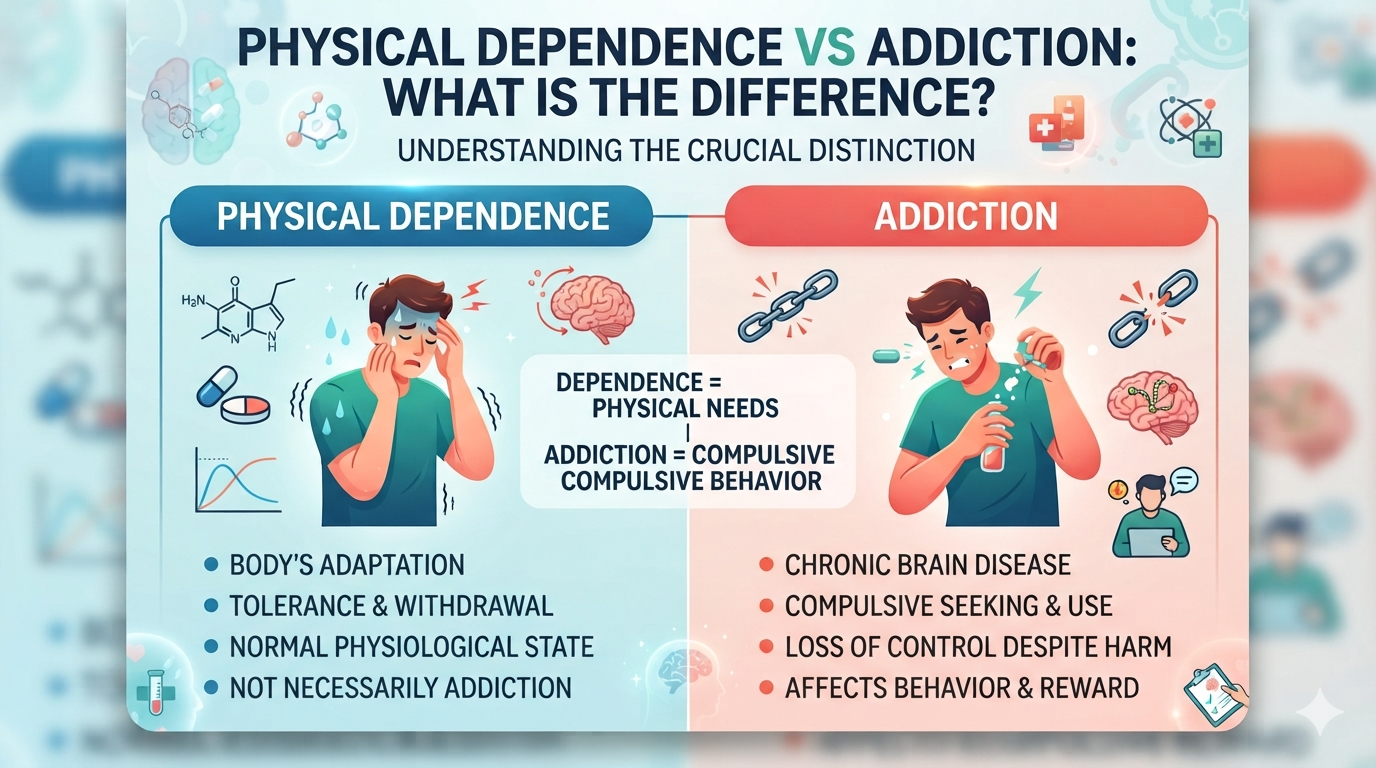
Physical dependence vs addiction is an important distinction because the two terms are often used as if they mean the same thing. They do not. A person can develop physical dependence on a medication without having an addiction, while addiction involves a broader pattern of compulsive substance use despite harmful consequences.
This difference matters for patients, families, and anyone trying to understand substance use. Physical dependence mainly describes how the body adapts to repeated exposure to a substance. Addiction involves changes in behavior, control, priorities, and the continued use of a substance despite problems. Understanding the difference can reduce stigma and help people recognize when professional support may be needed.
What Is Physical Dependence?
Physical dependence occurs when the body adapts to the presence of a drug or medication. If the substance is suddenly reduced or stopped, the person may experience withdrawal symptoms. These symptoms can range from mild discomfort to serious medical complications, depending on the substance and the individual’s circumstances.
Physical dependence can develop with some prescription medications even when they are being taken exactly as directed. For example, certain medications used for pain, anxiety, or other medical conditions can cause physical dependence after regular use. This does not automatically mean that the person has developed an addiction. This distinction is particularly important when discussing medications that affect the brain and nervous system.
What Is Addiction?
Addiction is more than physical adaptation. It involves a persistent pattern of substance use in which a person may experience difficulty controlling use, strong urges or cravings, and continued use despite negative consequences. A person with addiction may recognize that drugs or alcohol are damaging their health, relationships, finances, education, or employment but still find it extremely difficult to stop. Addiction can affect decision-making, reward processing, impulse control, and motivation.
Physical Dependence Does Not Automatically Mean Addiction
This is perhaps the most important point to understand. Someone can be physically dependent on a medication without being addicted to it. Imagine a patient who takes a prescribed medication regularly for a medical condition. Their body becomes accustomed to the medication, and stopping it suddenly causes withdrawal symptoms. If they take the medication only as prescribed and do not compulsively seek or misuse it, physical dependence alone does not establish addiction. The opposite can also be complicated. A person may have addiction-related problems even when physical withdrawal is not the most obvious feature of their substance use. Therefore, physical dependence should not be used as a simple synonym for addiction.
How Addiction Can Affect Behavior
Addiction can gradually change a person’s priorities. Obtaining and using a substance may become increasingly important, sometimes taking priority over responsibilities that were previously meaningful.
Someone may begin hiding their substance use, spending excessive money on drugs, missing work, damaging relationships, or repeatedly attempting to stop without being able to maintain abstinence. These behavioral patterns help distinguish addiction from physical dependence. The central issue is not simply whether the body has adapted to a substance. It is whether substance use has become difficult to control and is continuing despite significant harm.
Withdrawal and Addiction Are Not the Same Thing
Withdrawal is a physical or psychological response that can occur when a dependent person’s substance use is reduced or stopped. Symptoms vary according to the substance and the individual. They may include anxiety, sweating, nausea, tremors, sleep problems, irritability, or other symptoms.
Some withdrawal syndromes can be medically dangerous. This is why suddenly stopping certain substances without appropriate medical guidance can be unsafe. Withdrawal can occur as part of addiction, but experiencing withdrawal by itself does not prove that someone has an addiction.
Can Someone Become Addicted Without Strong Physical Dependence?
Yes. Addiction is not defined solely by physical withdrawal. Some substances can produce powerful psychological reinforcement and compulsive patterns of use even when physical withdrawal is less obvious.
Cravings, loss of control, continued use despite harm, and repeated unsuccessful attempts to stop can all be important signs that professional assessment may be appropriate. This is one reason it is better to look at the person’s overall pattern of substance use rather than focusing on one symptom.
Why the Difference Matters in Treatment
Understanding physical dependence vs addiction can lead to better decisions about treatment. A person who is physically dependent on a prescribed medication may need a medically supervised taper rather than simply being labeled as having an addiction.
Someone experiencing addiction may require a broader treatment plan that addresses cravings, behavior, emotional triggers, mental health, relationships, and relapse prevention. In either situation, professional assessment is valuable. Treatment should be based on the individual’s substance use, medical history, symptoms, and overall needs.
What We Often See in Recovery
During rehabilitation, people often begin learning that stopping substance use is only one part of recovery. Someone may need to understand the situations that trigger cravings, develop healthier coping strategies, rebuild daily structure, and learn how to respond to stress without returning to substance use. This is particularly important when addiction has affected decision-making and relationships.
Why Using the Right Terms Matters
Confusing dependence with addiction can create unnecessary shame. A person taking a medication under medical supervision should not automatically be described as addicted simply because their body has become physically dependent on it.
At the same time, avoiding the word addiction when there is clear evidence of compulsive substance use can prevent someone from receiving appropriate help. Accurate language allows patients and families to discuss substance use without unnecessary judgment.
Final Thoughts
The difference between physical dependence and addiction is important but sometimes misunderstood. Physical dependence primarily describes the body’s adaptation to a substance and the possibility of withdrawal when that substance is reduced or stopped.
Addiction involves a broader pattern of compulsive or difficult-to-control substance use that continues despite harmful consequences. The two can occur together, but they are not identical. If you or someone you care about is struggling with substance use, a qualified healthcare or addiction professional can assess the situation and recommend appropriate support. With the right treatment, recovery is possible.
Frequently Asked Questions
Is physical dependence the same as addiction?
No. Physical dependence means the body has adapted to a substance and may experience withdrawal when it is stopped. Addiction involves problematic patterns such as loss of control, compulsive use, and continued use despite harm.
Can prescription medication cause physical dependence?
Yes. Some prescription medications can cause physical dependence when taken regularly. Physical dependence does not automatically mean that a person has an addiction.
Can a person have addiction without physical dependence?
Yes. Addiction is not defined solely by withdrawal. Compulsive use, cravings, loss of control, and continued use despite negative consequences can occur without obvious physical dependence.
Does withdrawal mean someone is addicted?
No. Withdrawal can occur because of physical dependence and does not by itself establish an addiction.
Is physical dependence dangerous?
It can be, depending on the substance and circumstances. Some medications and substances can produce serious withdrawal symptoms, so stopping them suddenly may be unsafe. Medical guidance may be necessary.
How is addiction diagnosed?
A qualified healthcare professional evaluates the person’s overall pattern of substance use, including impaired control, cravings, continued use despite consequences, and other symptoms. Diagnosis should not be based on physical dependence alone.