Learning how to stay motivated in recovery can be difficult, especially when progress feels slow. Many people expect recovery to improve their lives quickly, but healing the brain, body, and emotions takes time. When changes happen gradually, it is normal to feel discouraged or wonder whether recovery is working. The good news is that slow progress is often a sign that lasting recovery is taking place.
Recovery is often imagined as a straight path where each day brings noticeable improvement. In reality, recovery rarely works that way. Some days feel hopeful and productive, while others feel frustrating, exhausting, or even discouraging. Many people reach a point where they ask themselves, “Why doesn’t it feel like I’m getting better?” This feeling is more common than many people realize.
Healing from addiction takes time because both the brain and body need time to recover. Emotional wounds, damaged relationships, and unhealthy habits cannot be repaired overnight. Progress often happens gradually, making it difficult to recognize from one day to the next. The good news is that slow progress is still progress. Understanding why recovery sometimes feels slow can help people remain motivated and continue moving forward.
Why Recovery Can Feel Slow
One of the biggest misconceptions about addiction recovery is that life immediately becomes easier after stopping drug or alcohol use. While sobriety removes the harmful effects of substances, it does not instantly solve every problem that addiction created. Many people are rebuilding relationships, finding employment, managing financial responsibilities, and learning healthier ways to cope with stress. At the same time, the brain is recovering from months or years of substance use. Because these changes happen gradually, it is normal to feel as though nothing is improving. Recovery is not measured by dramatic daily changes. It is measured by steady long-term growth.
The Brain Needs Time to Heal
One reason motivation declines is that the brain is still recovering. Repeated substance use changes the brain’s reward system, making it more difficult to experience motivation, pleasure, and emotional balance.
Some people experience periods where they feel emotionally flat or less excited about activities they once enjoyed. This does not mean recovery has stopped. It often means the brain is continuing its healing process. Patience is one of the most valuable skills during this stage.
Comparing Yourself to Others Can Be Discouraging
Recovery looks different for everyone. Some people regain stability quickly, while others need more time to rebuild their health, relationships, or confidence. Comparing your progress to someone else’s can create unnecessary frustration.
Every person’s addiction history, physical health, emotional experiences, and support system are different. Instead of asking, “Why am I not where they are?” it is often more helpful to ask, “Am I healthier today than I was a month ago?” Recovery is a personal journey, not a competition.
Small Improvements Matter More Than You Think
Many people overlook the progress they are already making. Sleeping better, attending counseling consistently, rebuilding trust with family, controlling cravings, or simply getting through a difficult day without using substances are all meaningful achievements.
These improvements may seem small on their own, but together they create lasting change. Recovery is built through hundreds of small victories rather than one dramatic breakthrough. Recognizing these moments helps maintain motivation during difficult periods.
Motivation Is Not Always the First Step
One of the biggest myths about recovery is that people need to feel motivated before taking action. In reality, action often comes first. There will be days when attending therapy, exercising, or following a daily routine feels difficult. Choosing to continue anyway often leads to renewed motivation later. Waiting to “feel motivated” before making healthy choices can delay progress. Consistency is usually more powerful than temporary inspiration.
What We Often Observe in Recovery
Many individuals entering treatment expect to feel completely different within a few weeks. When that does not happen, they sometimes believe they are failing. However, treatment professionals often notice positive changes long before patients recognize them. People become calmer during conversations.
Their decision-making improves. Relationships slowly become healthier. They begin accepting responsibility and thinking more clearly. These changes may seem small at first, but they often become the foundation for long-term recovery. Families also notice these improvements, even when the individual struggles to see them.
Building Motivation During Difficult Days
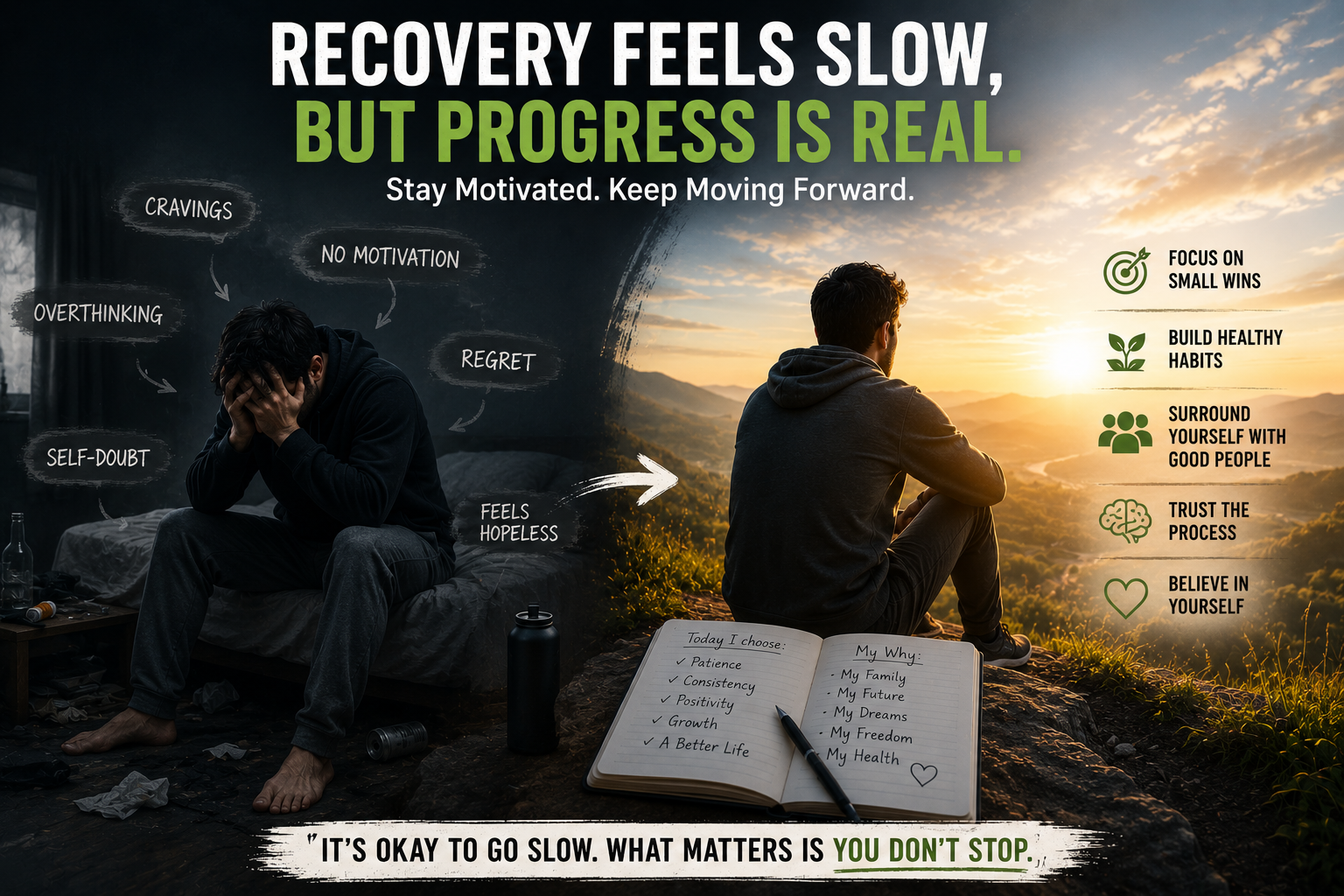
When recovery feels slow, it helps to shift the focus away from perfection and toward consistency. Rather than asking whether everything has changed, ask whether today’s choices are moving you closer to the life you want. Staying connected with supportive people, following a structured routine, celebrating small achievements, and remembering the reasons for starting recovery can all strengthen motivation. Recovery is not about never feeling discouraged. It is about continuing to move forward despite discouragement.
Recovery Is Measured in Months, Not Days
One mistake many people make is expecting daily improvements. Healing usually becomes much easier to recognize over longer periods. Looking back six months often reveals changes that were impossible to notice from one week to the next. Relationships may have improved. Health may be stronger. Thinking may be clearer. Confidence may have returned. Progress is often easier to appreciate when viewed over time rather than day by day.
Final Thoughts
Learning to stay motivated in recovery is not about feeling positive every day. It is about trusting the process, even when progress seems slow. Recovery involves healing the brain, rebuilding relationships, developing healthier habits, and creating a meaningful future. None of these changes happen overnight.
The most successful recoveries are rarely built through dramatic moments of inspiration. They are built through small, consistent choices repeated day after day. Every counseling session attended, every craving managed, every honest conversation, and every sober day is evidence that progress is happening. Even when recovery feels slow, you are moving forward. Keep taking the next healthy step.
Frequently Asked Questions (FAQs)
Why does recovery feel so slow?
Recovery involves healing the brain, body, and relationships, all of which take time. Progress is often gradual rather than immediate.
Is it normal to lose motivation during recovery?
Yes. Many people experience periods of low motivation. These moments are common and do not mean recovery is failing.
How can I stay motivated in recovery?
Focus on small daily goals, maintain a routine, attend counseling, celebrate progress, and remind yourself why you chose recovery.
Does the brain continue healing after quitting drugs?
Yes. The brain continues recovering for months and sometimes longer, depending on the individual and the substances used.
What should I do if I feel like I’m not making progress?
Talk with your counselor, review how far you’ve come, avoid comparing yourself to others, and continue following your recovery plan. Small improvements often become more noticeable over time.