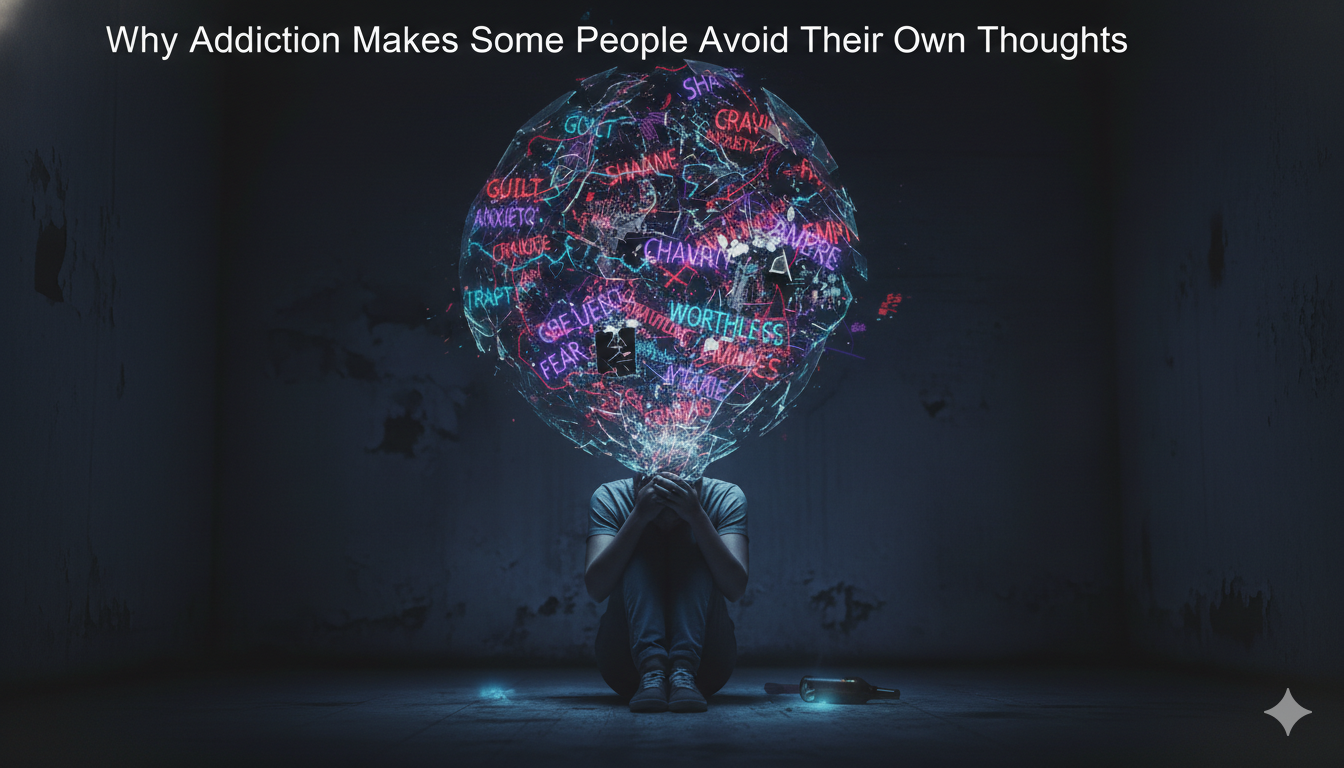
One of the less discussed emotional realities of addiction is how deeply it can become connected with avoiding painful thoughts and emotions. Many individuals gradually avoid their own thoughts because emotional stress and unresolved feelings become difficult to manage internally over time. Over time, it may also become connected with emotional escape, mental exhaustion, stress, overthinking, guilt, loneliness, or emotional discomfort that feels difficult to manage internally.
Many people struggling with addiction describe feeling emotionally uncomfortable when left alone with their thoughts for long periods of time. Silence may begin feeling overwhelming. Emotional memories become difficult to sit with. Stress feels mentally louder. Even ordinary moments of stillness may trigger emotional discomfort that becomes difficult to ignore. This is one reason addiction can gradually become emotionally connected with distraction, temporary relief, or psychological escape.
Understanding why some people avoid their own thoughts during addiction can help families and recovering individuals better understand the emotional side of substance use beyond physical dependence alone. According to the National Institute of Mental Health, addiction can significantly affect emotional wellbeing, stress regulation, and psychological functioning over time.
Emotional Escape Often Begins Quietly
Many people imagine addiction beginning only through recklessness or impulsive behavior. In reality, emotional escape often develops much more quietly. For some individuals, substances initially create temporary relief from emotional stress, anxiety, painful memories, loneliness, emotional pressure, or overwhelming thoughts. During emotionally difficult periods, that temporary relief may begin feeling emotionally comforting or mentally calming.
Over time, the brain may slowly begin associating substance use with emotional escape itself. Instead of processing stress directly, some individuals gradually begin depending on distraction or temporary numbness to avoid emotional discomfort internally. This emotional pattern usually develops gradually rather than suddenly.
Overthinking and Emotional Stress Can Become Exhausting
Another reason addiction may become connected with emotional avoidance is because chronic stress and overthinking can become mentally exhausting over time. Some individuals constantly replay painful memories, relationship problems, guilt, fears, emotional failures, or personal struggles internally. Others experience emotional pressure that never fully feels quiet mentally.
When emotional exhaustion becomes severe, temporary escape may begin feeling emotionally easier than confronting difficult thoughts directly. This does not necessarily mean the individual wants to avoid responsibility permanently. In many cases, emotional overwhelm simply becomes difficult to tolerate continuously without healthier coping strategies.
Understanding emotional exhaustion during addiction can also help explain why many individuals begin feeling emotionally disconnected over time. You can also read our article on Why Addiction Makes People Feel Emotionally Empty to better understand how addiction gradually affects emotional wellbeing.
Silence May Start Feeling Emotionally Uncomfortable
One of the more painful experiences many individuals describe during addiction and early recovery is emotional discomfort during silence or isolation. Without constant distraction, emotional thoughts may begin feeling louder internally. Stress, shame, loneliness, guilt, regret, or unresolved emotional pain often become more noticeable during quiet moments. For some individuals, this emotional discomfort becomes difficult enough that distraction starts feeling emotionally necessary.
Substances, unhealthy routines, social overstimulation, excessive screen use, or emotional avoidance behaviors may gradually become ways of avoiding internal emotional discomfort rather than addressing it directly. This is one reason recovery can initially feel emotionally overwhelming for some individuals. Learning how to sit with emotions again often takes time.
Addiction Can Quietly Reduce Emotional Self-Awareness
Another reason people begin avoiding their own thoughts is because addiction may gradually weaken emotional self-awareness over time. Some individuals become so focused on emotional survival, stress management, or temporary relief that they slowly stop checking in with themselves emotionally altogether.
Instead of asking:
- What am I feeling?
- Why am I emotionally overwhelmed?
- What is actually hurting internally?
many people begin focusing only on getting through each day emotionally. Over time, emotional avoidance may begin feeling automatic rather than intentional. This emotional disconnect can quietly affect relationships, communication, confidence, emotional stability, and overall mental wellbeing.
Understanding emotional disconnection during addiction can also help explain why many individuals gradually isolate themselves from relationships over time. You can also read our article on Why Addicted People Push Away the People Who Care About Them to better understand how addiction affects emotional connection and communication.
Recovery Often Requires Facing Difficult Emotions Instead of Avoiding Their Own Thoughts
One reason recovery can feel emotionally difficult at first is because emotional escape patterns slowly become weaker during sobriety. Thoughts, memories, emotional stress, shame, anxiety, or unresolved emotional struggles that were previously avoided may gradually become more noticeable again. For many individuals, this emotional adjustment can feel overwhelming initially.
This is why recovery often involves much more than stopping substance use physically. Therapy, emotional support, rehabilitation, healthier routines, communication, and emotional coping strategies all help individuals gradually learn healthier ways to process emotions again.
Understanding the emotional difficulty of early recovery can also help explain why the beginning stages of sobriety may feel psychologically intense for many individuals. You can also read our article on The First 72 Hours of Sobriety to better understand the emotional and psychological challenges many individuals experience during early recovery.
Avoiding Thoughts Does Not Mean Someone Is Weak
One important thing many people misunderstand is that emotional avoidance during addiction does not automatically mean someone is emotionally weak or uncaring. Many individuals struggling with addiction are carrying emotional pressure, unresolved pain, shame, loneliness, stress, or psychological exhaustion that gradually became difficult to manage in healthier ways over time.
Addiction often becomes connected with temporary emotional relief because emotional suffering itself may already feel overwhelming internally. Understanding these emotional patterns does not excuse harmful behavior caused during addiction. However, it can help families and recovering individuals approach addiction with greater emotional awareness and compassion. Learning why people avoid their own thoughts can help families understand the emotional side of addiction more clearly.
Frequently Asked Questions
Why do some people use addiction to escape their thoughts?
Many individuals use substances or unhealthy behaviors to temporarily avoid emotional stress, painful memories, anxiety, loneliness, guilt, or overwhelming thoughts.
Does addiction affect emotional self-awareness?
Yes. Addiction may gradually reduce emotional self-awareness by increasing emotional avoidance and unhealthy coping patterns over time.
Why does silence feel uncomfortable during addiction recovery?
Without distraction or emotional escape, difficult emotions, stress, guilt, loneliness, or unresolved thoughts may become more noticeable during quiet moments.
Can therapy help emotional avoidance during addiction?
Yes. Therapy, emotional support, and rehabilitation can help individuals develop healthier ways to process emotions and manage stress during recovery.
Is emotional avoidance common during addiction?
Yes. Many individuals struggling with addiction gradually begin avoiding difficult emotions, stress, or painful thoughts through unhealthy coping behaviors over time.
Addiction often becomes connected with much more than physical dependence alone. Over time, emotional escape, stress avoidance, overthinking, loneliness, guilt, and unresolved emotional pain may gradually make distraction or temporary relief feel emotionally necessary for some individuals. With recovery, therapy, emotional support, rehabilitation, and healthier coping strategies, many people slowly begin learning how to process emotions and reconnect with themselves in healthier ways again.