If you’ve ever sat across from someone struggling with addiction, one question almost always comes up: “Why can’t they just stop?”
On the surface, it looks simple. A matter of choice. Maybe even willpower. But when you start looking a little deeper, especially at what’s happening inside the brain, the picture changes quite a bit.
Addiction isn’t just about chasing a high. That’s where it starts sometimes, yes. But it doesn’t stay there.
The Brain’s Reward System: Where It All Begins
The brain is built to keep us alive. It rewards things that help us survive, such as eating, bonding with people, and achieving something meaningful. And behind all of that is a chemical called dopamine.
People often call dopamine the “pleasure chemical,” but that’s not exactly right. It’s more like a signal. It tells the brain, ” This matters, remember this, do it again.
Normally, this system is balanced. You eat a good meal, and you feel satisfied. You meet someone you care about, and you feel connected. Nothing extreme.
Drugs don’t follow that balance.
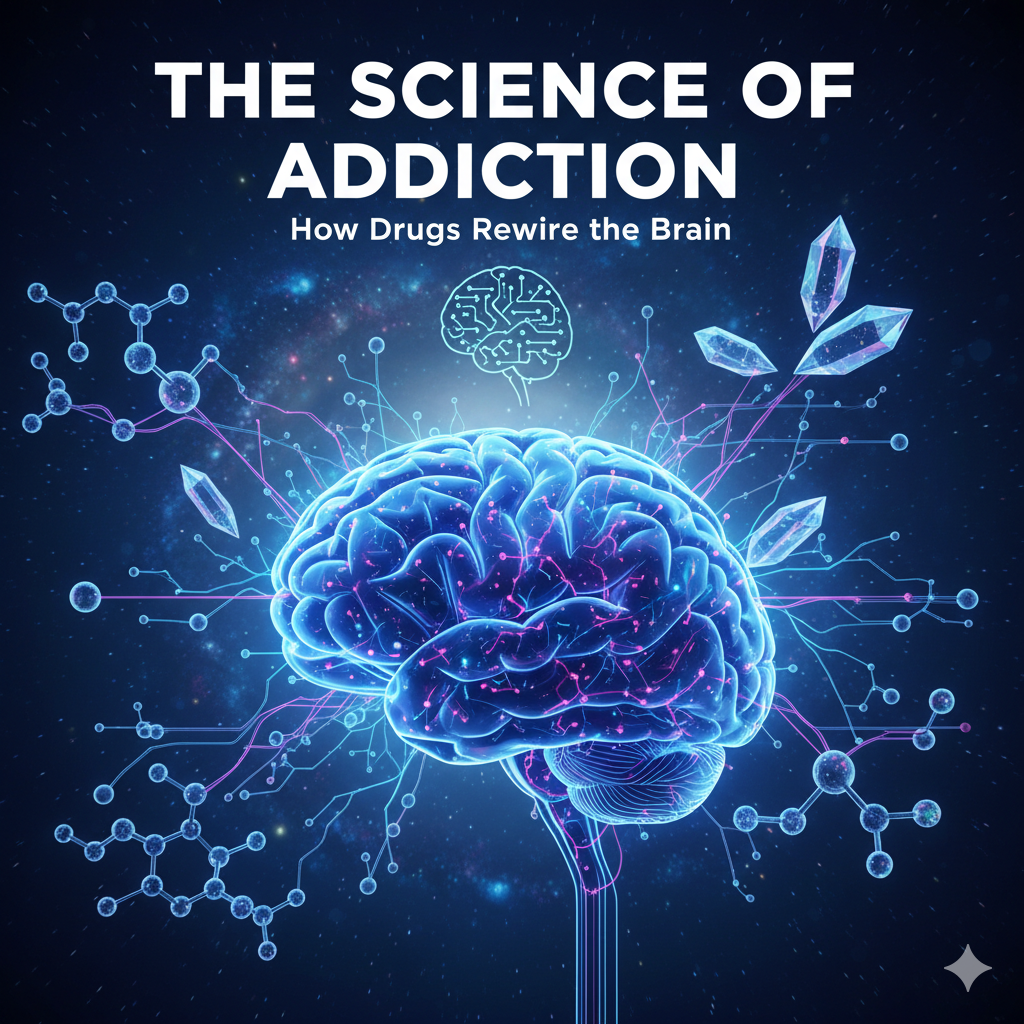
Substances like heroin, meth, alcohol, and even nicotine push dopamine levels far beyond what the brain is used to. Not just a little more. Sometimes several times higher than natural rewards.
And the brain notices.
Not in a thoughtful way, but in a very primitive one:
This is important. Very important.
From Use to Dependence: The Brain Adjusts (Quietly)
The brain doesn’t just sit there and accept all this. It adapts. It always does.
There’s a term for this neuroadaptation. Basically, the brain tries to restore balance when things go too far in one direction.
So when dopamine is constantly high, the brain starts dialing things down:
1- Fewer dopamine receptors
2- Less natural dopamine production
At first, the person still feels good. But over time, something shifts.
Normal life starts to feel flat.
Things that used to matter, family, work, even small pleasures, don’t hit the same way anymore. Not because they’ve lost meaning, but because the brain isn’t responding like it used to.
This is where tolerance creeps in.
The same drug, same amount, doesn’t do much anymore. So the dose increases. Not always to get high, sometimes, but to feel okay.
And that’s a turning point, though most people don’t notice it when it happens.
When It Stops Being a Choice
This part is uncomfortable, but important.
Addiction eventually affects the prefrontal cortex, the part of the brain that helps you think things through, control impulses, and make decisions.
In a healthy brain, there’s a pause before action:
Should I do this? What happens if I do?
With prolonged substance use, that pause gets weaker.
At the same time, the parts of the brain linked to habits and cravings get stronger. So you end up with an imbalance:
1- The urge becomes louder
2- The control becomes quieter
People often say, “I knew it was wrong, but I did it anyway.”
That’s not just a statement. It’s actually a pretty accurate description of what’s happening neurologically.
Cravings Don’t Come Out of Nowhere
Cravings aren’t random. They’ve learned.
Over time, the brain starts linking the drug to certain things:
1- Places
2- People
3- Stress
4- Even specific times of day
You walk into a familiar environment, and suddenly there’s an urge. Stronger than expected.
What’s happening is the brain is anticipating the reward. It’s already preparing for it. Dopamine can rise even before the substance is used.
This is why cravings can show up months or longer after someone stops.
It’s not a weakness. It’s memory. Deep, wired-in memory.
Withdrawal: The Other Side of the Story
When someone stops using, the brain doesn’t immediately reset. It struggles first.
Because now, the system that had adapted to the drug suddenly has to function without it.
That imbalance shows up as withdrawal:
1- Anxiety
2- Irritability
3- Poor sleep
4- Low mood
5- Physical discomfort
Sometimes severe, depending on the substance.
And this is where things get difficult. Because relief feels very close, just one use away.
That’s often what pulls people back. Not a desire to get high, but a need to stop feeling bad.
Why Some People Are More at Risk
Not everyone who uses drugs becomes addicted. That part is true.
But some people are more vulnerable. And usually, it’s not just one reason.
Genetics plays a role. Some individuals are more sensitive to addictive substances.
Environment matters too. Exposure, stress, unstable surroundings, it all adds up.
Then there’s mental health. Anxiety, depression, trauma, these don’t cause addiction directly, but they create a space where substances start to feel like a solution.
And age, age matters more than people think. The younger the brain, the more impressionable it is.
Can the Brain Recover?
Yes, but not instantly.
The brain has something called neuroplasticity, which means it can change and heal over time. But it’s a slow process. Sometimes frustratingly slow.
In early recovery, people often say they don’t feel like themselves. That thing feels off. That’s actually expected.
The brain is trying to rebalance.
Gradually, with the right support:
1- Emotions stabilize
2- Motivation returns
3- Clarity improves
Therapies like CBT help reshape thinking patterns. Structure helps. Routine helps. Human connection probably helps more than anything else.
Recovery isn’t just about stopping the substance. It’s about teaching the brain how to function again without it.
So, Is Addiction a Disease?
In many ways, yes. It affects brain structure, chemistry, and behavior.
But calling it a disease doesn’t mean a person has no role in their recovery. It just means the problem runs deeper than “bad choices.”
And more importantly, it changes how we respond.
Because judgment doesn’t rewire a brain, but the right kind of treatment, over time, actually can.
Final Thoughts
Addiction doesn’t happen all at once. It builds slowly, often quietly, until it reaches a point where stopping feels almost impossible.
But “almost” matters.
Because the same brain that adapts to substances can adapt away from them, too.
It takes time. It takes structure. And usually, it takes help.
But it does happen. More often than people think.