Watching someone struggle with addiction can be heartbreaking. Whether it is a child, spouse, sibling, or close friend, families often feel helpless as they watch someone they love change because of drugs or alcohol. Most families do not intend to make the problem worse. In fact, many of the things that end up enabling addiction come from love, fear, and a desire to protect someone from harm.
This is why many families are surprised when they learn that some of their efforts to help may actually be keeping the addiction alive. Understanding the difference between helping and enabling can become an important turning point for both the person struggling with addiction and the people who care about them.
What Does Enabling Addiction Mean?
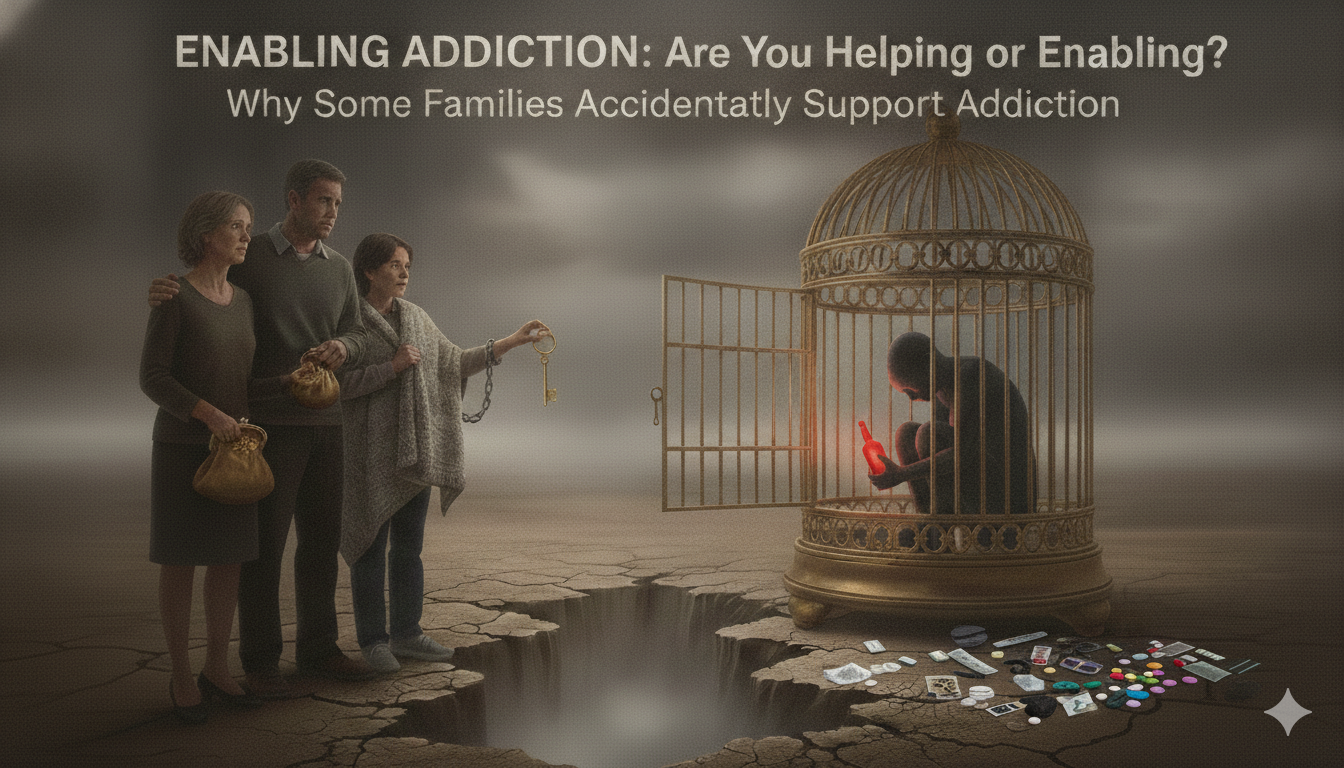
Enabling addiction happens when a person’s actions unintentionally make it easier for someone to continue using drugs or alcohol. The key word here is unintentionally. Most family members are not trying to support addiction. They are trying to reduce conflict, protect their loved one from consequences, or prevent something bad from happening.
Over time, however, certain behaviors can remove the natural consequences of addiction and allow the cycle to continue. Addiction rarely affects just one person. It gradually affects the entire family, changing relationships, communication, and emotional well-being.
Why Families Begin Enabling
Families often start enabling because they are afraid. A mother may give money because she worries her son will go hungry. A husband may call his wife’s employer and make excuses because he does not want her to lose her job. Parents may repeatedly pay debts because they are terrified of what might happen if they refuse.
These reactions are understandable. When someone you love is struggling, your natural instinct is to help. The problem is that repeatedly rescuing someone from the consequences of addiction can reduce the urgency to seek treatment. Without consequences, there is often less motivation to change.
Enabling Usually Comes From Love, Not Bad Intentions
Many people assume enabling means supporting addiction on purpose. That is rarely true. Most enabling behaviors come from a place of deep love and concern. Families often tell themselves:
“I’m only helping this one last time.”
“They’ve had a difficult week.”
“I can’t just leave them to deal with this alone.”
Over time, however, these temporary solutions can become long-term patterns. The person struggling with addiction may begin depending on others to solve problems that they need to address themselves.
The Emotional Burden Families Carry
Living with addiction can be exhausting. Many families spend years worrying, arguing, covering up problems, and trying to hold everything together. They often feel responsible for keeping the family functioning while also trying to protect their loved one. This constant stress can lead to anxiety, sleep problems, depression, and emotional burnout.
Helping Is Different From Enabling
This is where many families become confused. Helping someone means encouraging recovery and supporting positive change. Enabling means protecting the addict from consequences. Healthy support may include:
- Encouraging treatment.
- Listening without judgment.
- Setting clear boundaries.
- Participating in family counseling.
- Supporting recovery goals.
The focus remains on helping the person get better rather than making addiction easier to continue.
Why Consequences Can Sometimes Lead to Change
This can be one of the hardest realities for families to accept. People often begin seeking help when the consequences of addiction become too painful to ignore. If every financial problem, legal issue, or personal responsibility is repeatedly handled by someone else, the person struggling with addiction may never fully recognize the seriousness of their situation.
Allowing consequences does not mean abandoning someone. It means giving them the opportunity to take responsibility for their actions while still offering recovery support.
What We Often Observe in Treatment
In rehabilitation settings, many families express guilt when they learn about enabling.
They often say:
“I thought I was helping.”
“I didn’t want to make things worse.”
“I was only trying to protect them.”
These feelings are extremely common. The reality is that most enabling behaviors are driven by love and fear, not bad intentions. Interestingly, many patients later admit that a family member finally setting boundaries became the moment they realized they needed professional help.
Supporting Recovery Without Enabling
Families cannot control another person’s addiction, but they can change how they respond to it. Supporting recovery often means encouraging treatment, communicating honestly, and refusing to participate in behaviors that keep the addiction going. It also means taking care of your own emotional well-being. Recovery becomes stronger when the entire family learns healthier ways of communicating and coping.
Final Thoughts
Enabling addiction is often misunderstood because it usually comes from a place of love and concern. Families want to protect the people they care about, but some actions can unintentionally remove the consequences that might encourage someone to seek help. Understanding the difference between helping and enabling can create healthier relationships and improve the chances of long-term recovery.
Supporting someone through addiction does not mean solving every problem for them. Sometimes the most loving thing a family can do is encourage treatment, set healthy boundaries, and allow their loved one to take responsibility for their own recovery. Healing often begins when the entire family starts changing together.