Addiction often develops gradually, which can make it difficult for individuals and families to recognize when professional rehabilitation support may become necessary. Many people try managing emotional struggles, substance use, or unhealthy coping behaviors alone for long periods of time before seriously considering treatment or structured recovery support.
Some individuals continue believing they still have control over the situation even while emotional health, routines, relationships, or daily functioning slowly become more unstable. Families may also struggle understanding when emotional support alone is no longer enough and professional rehabilitation support may be needed instead.
Understanding these warning signs early may help individuals and families seek healthier support before addiction causes deeper emotional, psychological, social, or physical harm over time. According to the National Institute of Mental Health, addiction can significantly affect emotional wellbeing, relationships, behavior, and overall mental health functioning.
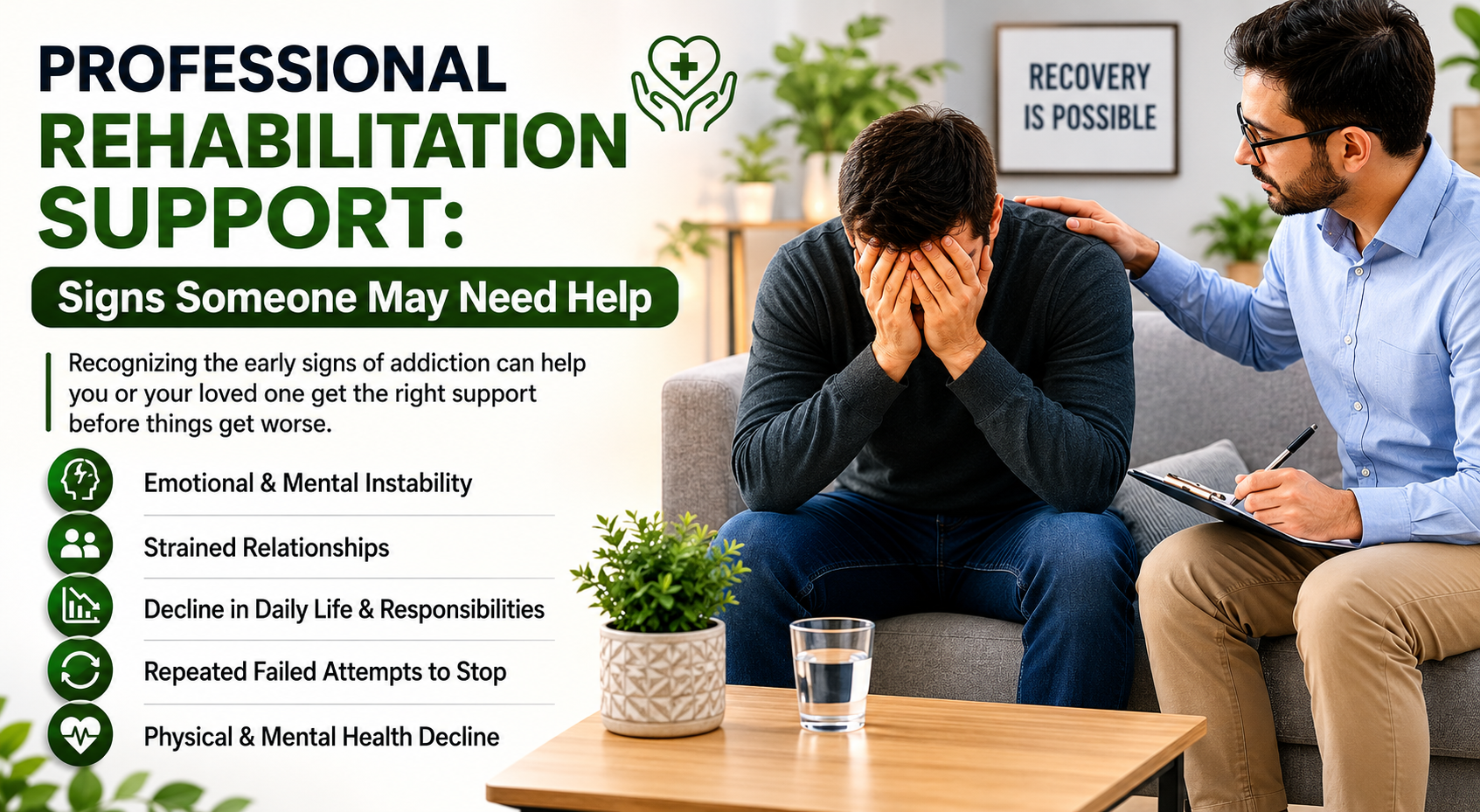
Daily Life Starts Becoming Difficult to Manage
One important sign someone may need professional rehabilitation support is when addiction begins affecting normal daily functioning consistently. Sleep schedules may become unstable. Responsibilities become harder to manage. Work performance, communication, studies, or personal routines may slowly begin falling apart over time.
Some individuals begin losing motivation toward activities they once cared about, while others struggle maintaining emotional balance during ordinary daily situations. When addiction repeatedly interferes with everyday life, it often suggests deeper emotional and behavioral support may become necessary.
Emotional Health Becomes Increasingly Unstable
Another major warning sign is worsening emotional instability. Many individuals struggling with addiction experience emotional exhaustion, anxiety, irritability, hopelessness, emotional numbness, or social withdrawal over time. Emotional pressure may gradually become difficult to manage without unhealthy coping behaviors. Some individuals also begin isolating themselves emotionally or avoiding conversations about their struggles altogether.
Understanding emotional disconnection during addiction can also help explain why many individuals gradually begin feeling emotionally overwhelmed internally over time. You can also read our article on Why Addiction Makes People Feel Emotionally Empty to better understand how addiction gradually affects emotional wellbeing.
Relationships Begin Suffering Repeatedly
Relationships are often one of the clearest areas affected during addiction. Communication problems, emotional distance, secrecy, broken trust, conflict, or social withdrawal may gradually become more common over time. Some individuals begin avoiding loved ones emotionally, while families often feel confused about how to help effectively. Repeated relationship damage may indicate that addiction is affecting emotional functioning more seriously than the individual realizes.
Understanding relationship changes during addiction can also help explain why emotional isolation becomes increasingly common over time. You can also read our article on Why Addicted People Push Away the People Who Care About Them to better understand how addiction affects emotional connection and communication.
Attempts to Stop Keep Failing
Another major sign someone may need professional rehabilitation support is repeated unsuccessful attempts to stop unhealthy behaviors independently. Many individuals genuinely want recovery but struggle maintaining emotional stability without structured treatment, therapy, rehabilitation guidance, or healthier routines. Over time, repeated failed attempts may increase hopelessness, emotional exhaustion, shame, or loss of confidence.
Professional rehabilitation support may help individuals receive structured care, emotional guidance, therapy, healthier routines, and recovery-focused support that may feel difficult to achieve alone.
Physical and Mental Health Begin Declining
Long-term addiction may also begin affecting both physical and psychological health more seriously over time. Sleep problems, appetite changes, chronic stress, emotional instability, exhaustion, low motivation, or worsening mental health symptoms may gradually become more noticeable. Some individuals also experience increasing difficulty managing emotions, stress, or ordinary daily responsibilities consistently.
When addiction begins affecting both mental and physical wellbeing together, professional rehabilitation support often becomes increasingly important.
Recovery Often Requires More Than Willpower Alone
One of the biggest misunderstandings about addiction is the belief that recovery depends only on “trying harder” or using enough willpower. In reality, addiction often affects emotional health, stress management, communication, routines, coping behaviors, and overall daily functioning in complex ways over time.
Professional rehabilitation support may help individuals rebuild healthier emotional patterns, routines, coping strategies, and communication skills within a structured recovery environment. Therapy, emotional support, rehabilitation programs, and professional guidance often play important roles during long-term recovery.
Understanding how recovery environments support emotional healing can also help explain why rehabilitation involves much more than simply stopping substance use physically. You can also read our article on What Is It Really Like Inside a Rehabilitation Center? to better understand how structured recovery environments support emotional and psychological healing.
Seeking Professional Rehabilitation Support Is Not Weakness
Many individuals avoid treatment because they fear judgment or believe seeking professional rehabilitation support means failure. In reality, recognizing the need for help often requires emotional honesty, self-awareness, and courage.
Recovery becomes much more difficult when addiction is ignored for long periods of time without emotional or professional support. Seeking professional rehabilitation support early may help reduce long-term emotional, psychological, social, and physical harm while improving the chances of long-term recovery stability.
Frequently Asked Questions
When should someone seek professional rehabilitation support?
Professional rehabilitation support may become necessary when addiction begins affecting emotional health, relationships, routines, motivation, or daily functioning consistently.
Can emotional instability be a sign someone needs rehabilitation?
Yes. Emotional exhaustion, anxiety, hopelessness, mood instability, isolation, or difficulty managing stress may indicate deeper emotional support is needed.
Why do people struggle quitting addiction alone?
Addiction often affects emotional coping patterns, routines, stress management, communication, and psychological wellbeing, making recovery difficult without structured support.
Can rehabilitation help emotional health during recovery?
Yes. Rehabilitation programs often include therapy, emotional support, healthier routines, and recovery-focused guidance that help individuals rebuild emotional stability.
Is seeking professional rehabilitation support a sign of weakness?
No. Seeking professional rehabilitation support often reflects emotional awareness and willingness to pursue healthier long-term recovery and wellbeing. Professional rehabilitation support often becomes important when addiction begins affecting emotional health, relationships, routines, confidence, motivation, and overall daily functioning.
Many individuals struggle silently for long periods before recognizing they may need structured support and professional guidance. With therapy, emotional support, structured rehabilitation, and healthier recovery environments, many individuals slowly begin rebuilding emotional balance, healthier routines, and long-term recovery stability again.