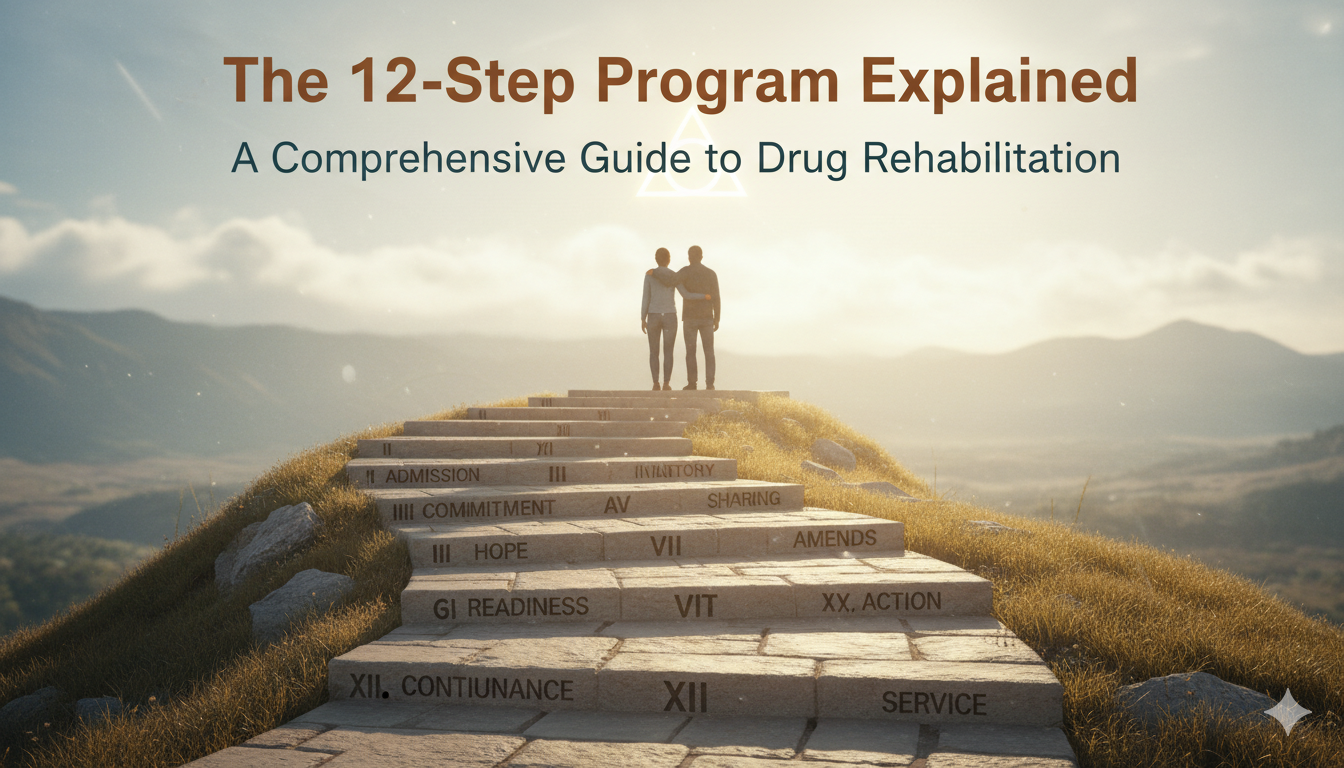
As a health professional, I’ve witnessed countless individuals embark on the challenging yet profoundly rewarding journey of drug rehabilitation. Among the various pathways to recovery, the 12-step program stands as a beacon of hope and a cornerstone for many. This comprehensive guide aims to demystify the steps of drug rehabilitation through the lens of the 12-step philosophy, offering insights into its origins, principles, and enduring impact.
The Enigma of Addiction: A Societal Challenge
Addiction, a chronic relapsing brain disease characterized by compulsive drug seeking and use despite harmful consequences, affects millions worldwide. Its insidious nature not only devastates individuals but also tears apart families and burdens society with significant health, economic, and social costs. The search for effective treatments has been ongoing, leading to a spectrum of approaches, with the 12-step program emerging as one of the most widely recognized and utilized.
A Glimpse into History: The Genesis of the 12-Step Program
The 12-step program’s roots can be traced back to the early 20th century, a time when alcoholism was largely misunderstood and stigmatized. In 1935, two men, Bill Wilson and Dr. Robert Smith, both struggling with severe alcoholism, found common ground in their shared experiences and a desire for sobriety. Their individual struggles and eventual triumph over addiction led to the birth of Alcoholics Anonymous (AA), the progenitor of all 12-step programs.
AA’s foundational text, “Alcoholics Anonymous,” often referred to as “The Big Book,” outlines the 12 steps, a set of guiding principles designed to foster spiritual and personal growth, leading to lasting sobriety. The success of AA sparked the creation of numerous other 12-step fellowships, including Narcotics Anonymous (NA), Cocaine Anonymous (CA), and Gamblers Anonymous (GA), each adapting the core principles to address specific addictive behaviors.
Understanding the Core Principles: The 12 Steps Unveiled

The 12 steps are not a rigid set of rules but rather a suggested pathway to recovery, emphasizing personal responsibility, spiritual awakening, and service to others. Let’s delve into each step, exploring its meaning and significance in the journey of drug rehabilitation.
Step 1: We admitted we were powerless over alcohol – that our lives had become unmanageable.
This initial step is perhaps the most crucial and often the most challenging. It requires an honest and sometimes painful acknowledgment of the extent of one’s addiction. For many, admitting powerlessness is counterintuitive, as society often champions self-reliance. However, within the 12-step framework, this admission is not a surrender to weakness but a liberating act. It signifies an end to the futile struggle to control an uncontrollable force and opens the door to seeking help.
Step 2: Came to believe that a Power greater than ourselves could restore us to sanity.
Step 2 introduces the concept of a “Power greater than ourselves.” It’s important to clarify that this does not necessitate adherence to any specific religious doctrine. The “Higher Power” can be understood in various ways: a traditional God, a spiritual force, the fellowship itself, or even the innate human capacity for resilience and healing. The essence of this step is to cultivate hope and a belief that recovery is possible, even when personal efforts have failed.
Step 3: Made a decision to turn our will and our lives over to the care of God as we understood Him.
Building upon Step 2, this step involves a conscious decision to relinquish self-will and trust in the guidance of one’s Higher Power. This doesn’t mean passively waiting for miracles; rather, it implies a willingness to take direction, be open to new perspectives, and follow the principles of the program. It’s an act of faith and surrender, allowing a greater force to guide the recovery process.
Step 4: Made a searching and fearless moral inventory of ourselves.
Step 4 is an intensely personal and often emotionally demanding process. It involves a thorough self-examination, identifying character defects, past wrongs, and resentments. This inventory is not about self-condemnation but about gaining self-awareness and understanding the patterns of behavior that contributed to addiction. It’s like decluttering a messy room, making space for new, healthier habits.
Step 5: Admitted to God, to ourselves, and to another human being the exact nature of our wrongs.
Sharing the moral inventory with another person, typically a sponsor, is a profoundly therapeutic act. This step fosters transparency, reduces shame and guilt, and builds trust. The act of verbalizing one’s mistakes can be incredibly liberating, breaking the cycle of secrecy that often fuels addiction.
Step 6: Were entirely ready to have God remove all these defects of character.
Having identified character defects in Step 4 and shared them in Step 5, Step 6 focuses on cultivating a willingness to have these defects removed. It’s about readiness for change, recognizing that while self-awareness is important, true transformation requires a desire to shed old patterns and embrace new ones.
Step 7: Humbly asked Him to remove our shortcomings.
This step is an act of humility, asking the Higher Power to assist in the removal of character defects. It acknowledges that while personal effort is essential, some aspects of change require spiritual intervention or a surrender to forces beyond individual control.
Step 8: Made a list of all persons we had harmed, and became willing to make amends to them all.
Step 8 shifts the focus from internal reflection to external relationships. It involves acknowledging the harm caused to others during active addiction and developing a willingness to rectify those wrongs. This is a crucial step in healing damaged relationships and rebuilding trust.
Step 9: Made direct amends to such people wherever possible, except when to do so would injure them or others.
This is the action-oriented counterpart to Step 8. Making amends involves directly approaching those who have been harmed and expressing sincere apologies, and where appropriate, taking tangible steps to rectify the situation. The caveat “except when to do so would injure them or others” emphasizes the importance of thoughtful and responsible amends-making, prioritizing the well-being of all involved.
Step 10: Continued to take personal inventory and when we were wrong promptly admitted it.
Recovery is not a destination but a lifelong journey. Step 10 emphasizes the importance of ongoing self-assessment and accountability. It encourages individuals to regularly examine their thoughts, feelings, and actions, promptly admitting mistakes and making necessary corrections. This continuous self-monitoring helps prevent a return to old patterns of behavior.
Step 11: Sought through prayer and meditation to improve our conscious contact with God as we understood Him, praying only for knowledge of His will for us and the power to carry that out.
Step 11 deepens the spiritual connection cultivated in earlier steps. Through prayer and meditation, individuals seek guidance, wisdom, and strength to navigate life’s challenges. This conscious contact with a Higher Power provides a moral compass and a source of inner peace, vital for sustained sobriety.
Step 12: Having had a spiritual awakening as the result of these steps, we tried to carry this message to alcoholics, and to practice these principles in all our affairs.
The culmination of the 12-step journey is a “spiritual awakening,” a profound shift in perspective and a renewed sense of purpose. This awakening often manifests as a desire to help others struggling with addiction, embodying the principle of “paying it forward.” Carrying the message and practicing the principles in all aspects of life ensures that recovery remains a living, evolving process.
The Role of Sponsorship: A Guiding Hand

A cornerstone of the 12-step program is the concept of sponsorship. A sponsor is an individual who has successfully navigated the steps themselves and offers guidance, support, and mentorship to newcomers. This one-on-one relationship provides a safe space for sharing, accountability, and practical advice, serving as a vital link in the recovery chain.
Effectiveness and Criticisms: A Balanced Perspective
Numerous studies have attested to the effectiveness of the 12-step program, particularly when integrated into a comprehensive treatment plan that may include medical detoxification, therapy, and medication-assisted treatment. Research published in the Journal of the American Medical Association (JAMA) has shown that active participation in AA/NA can lead to higher rates of abstinence and improved psychosocial functioning (Kelly et al., 2020).
However, like any approach, the 12-step program also faces criticisms. Some individuals find the emphasis on a “Higher Power” difficult to reconcile with their personal beliefs. Others may struggle with the group-oriented nature, preferring more individualized interventions. It’s crucial to remember that recovery is highly personal, and what works for one person may not work for another.
Integrating the 12 Steps with Professional Treatment
As a health professional, I often advocate integrating 12-step principles with professional treatment. While the 12-step program offers invaluable peer support and a spiritual framework, it is not a substitute for medical care, individual therapy, or medication when needed. A holistic approach that combines the strengths of both can significantly enhance the chances of long-term recovery. For instance:
- Medical Detoxification: The initial phase of drug rehabilitation often requires medical supervision to manage withdrawal symptoms safely.
- Individual Therapy: Therapists can help address underlying mental health conditions (co-occurring disorders) such as depression, anxiety, or trauma, which often fuel addiction.
- Cognitive Behavioral Therapy (CBT): This therapy helps individuals identify and change negative thought patterns and behaviors associated with drug use.
- Medication-Assisted Treatment (MAT): For certain addictions, medications can reduce cravings and prevent relapse.
The Synergy of Support: Why the 12 Steps Endure
The enduring appeal and effectiveness of the 12-step program lie in several key factors:
- Peer Support: The sense of belonging and shared experience within the fellowship is incredibly powerful. Knowing that others understand and have overcome similar struggles provides hope and reduces feelings of isolation.
- Accountability: The program fosters accountability through sponsorship and group participation, encouraging individuals to take responsibility for their actions and progress.
- Spiritual Growth: For many, the spiritual awakening aspect offers a profound shift in values and a renewed sense of purpose, moving beyond the self-centeredness of addiction.
- Accessibility: 12-step meetings are free, ubiquitous, and available to anyone who desires sobriety, making them an accessible resource for ongoing support.
- Lifelong Journey: The program emphasizes that recovery is an ongoing process, providing a framework for continued personal growth and relapse prevention.
Conclusion: A Pathway to Hope and Healing

The 12-step program, with its rich history and time-tested principles, offers a powerful pathway to recovery for individuals struggling with drug addiction. While it may not be the sole answer for everyone, its emphasis on honesty, self-reflection, spiritual growth, and service to others has transformed countless lives. As health professionals, understanding and respecting the steps of drug rehabilitation through the lens of the 12-step program allows us to better guide and support those seeking freedom from addiction, offering them hope and a chance at a healthier, more fulfilling life. The journey is arduous, but with dedication and support, recovery is not just a possibility—it’s a reality.
References:
Kelly, J. F., Humphreys, K., & Ferri, M. (2020). Alcoholics Anonymous and other 12-Step programs for alcohol use disorder. Journal of the American Medical Association, 324(17), 1779-1780.
Alcoholics Anonymous World Services, Inc. (2001). Alcoholics Anonymous (4th ed.).
Narcotics Anonymous World Services. (2008). Narcotics Anonymous (6th ed.).
National Institute on Drug Abuse. (n.d.). Principles of Drug Addiction Treatment: A Research-Based Guide (Third Edition).