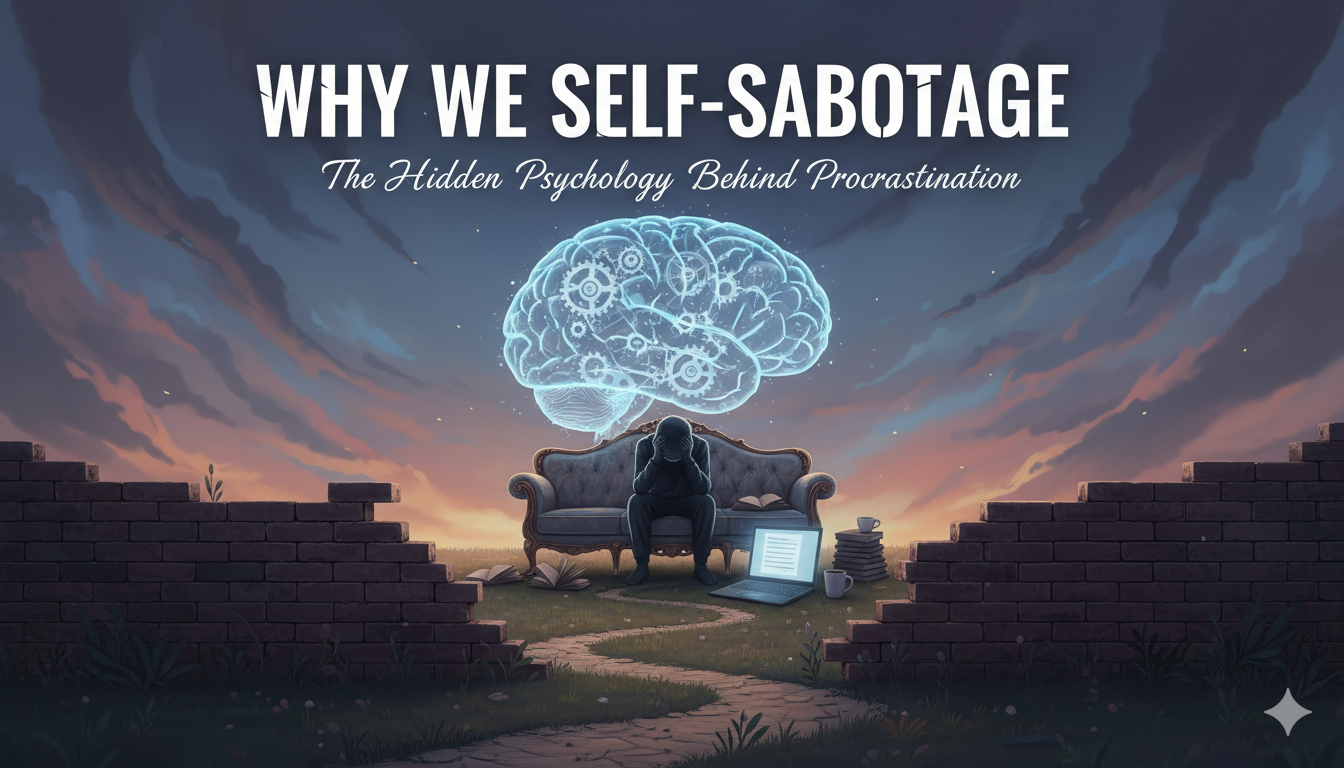
Procrastination is one of the most misunderstood human behaviors. At first glance, it looks like laziness, poor time management, or a lack of discipline. But when you look deeper, procrastination is rarely about time, it’s about emotion. It is a form of self-sabotage, a psychological defense mechanism that protects us from discomfort in the short term while quietly damaging our long-term goals.
In this article, we will explore the hidden psychology behind procrastination, why we engage in self-sabotaging behaviors, and how understanding these patterns can help us regain control. If you’ve ever wondered why you delay important tasks despite knowing the consequences, this deep dive will offer clarity, and solutions.
What Is Self-Sabotage?
Self-sabotage occurs when your actions (or inaction) interfere with your own goals, values, or well-being. It often operates unconsciously. You may want to succeed, grow, or improve, yet your behavior tells a different story.
Procrastination is one of the most common forms of self-sabotage. It involves delaying tasks that are important, often replacing them with less meaningful activities. While it provides temporary relief, it creates long-term stress, guilt, and reduced performance.
From a psychological perspective, self-sabotage is not irrational, it’s protective. Your brain is trying to shield you from perceived threats such as failure, rejection, or emotional discomfort.
The Emotional Core of Procrastination
To understand procrastination, you must move beyond productivity advice and focus on emotions. At its core, procrastination is an emotion regulation strategy.
When a task triggers negative feelings, such as anxiety, boredom, self-doubt, or overwhelm, the brain seeks immediate relief. Avoiding the task becomes a quick fix.
For example:
- A student delays studying because the subject makes them feel inadequate.
- A professional postpones a presentation because of fear of judgment.
- A person avoids starting a fitness routine due to fear of failure.
In each case, procrastination reduces discomfort temporarily, reinforcing the behavior. This creates a loop where avoidance becomes habitual.
The Brain Science Behind Self-Sabotage
Procrastination involves a conflict between two parts of the brain:
- The limbic system: The emotional, impulsive part that seeks immediate pleasure and avoids pain.
- The prefrontal cortex: The rational, decision-making part responsible for planning and long-term goals.
When you procrastinate, the limbic system overrides the prefrontal cortex. The brain prioritizes short-term mood repair over long-term success.
This is why you might choose scrolling on social media over completing an important task—even when you know it’s not in your best interest.
Dopamine also plays a role. Instant gratification activities (like checking notifications or watching videos) provide quick dopamine hits, reinforcing avoidance behaviors. Over time, the brain becomes conditioned to prefer short-term rewards over meaningful effort.
Common Psychological Causes of Self-Sabotage
1. Fear of Failure
Fear of failure is one of the strongest drivers of procrastination. When you delay a task, you create an excuse for potential failure. If you don’t try fully, failure feels less personal.
This unconscious strategy protects your self-esteem but prevents growth.
2. Fear of Success
Surprisingly, success can also be intimidating. It brings new expectations, responsibilities, and visibility. Some individuals subconsciously sabotage themselves to avoid these pressures.
3. Perfectionism
Perfectionists often procrastinate because they fear producing work that is less than perfect. The standard becomes so high that starting feels overwhelming.
Instead of risking imperfection, they delay action altogether.
4. Low Self-Worth
If you don’t believe you are capable or deserving of success, you may engage in behaviors that confirm that belief. Procrastination becomes a self-fulfilling prophecy.
5. Decision Fatigue and Overwhelm
When tasks feel too large or complex, the brain perceives them as threats. This leads to avoidance as a way to reduce cognitive load.
Breaking tasks into smaller steps can significantly reduce this effect.
6. Instant Gratification Culture
Modern environments are designed to distract. Social media, streaming platforms, and constant notifications make it easier than ever to escape discomfort.
This constant availability of quick rewards strengthens procrastination habits.
The Procrastination Cycle
Understanding the procrastination cycle is key to breaking it:
- You face a task.
- The task triggers discomfort (stress, anxiety, boredom).
- You avoid the task.
- You feel temporary relief.
- Guilt and stress build up over time.
- The task becomes even more intimidating.
- You continue to avoid it.
This cycle reinforces itself, making procrastination a deeply ingrained habit.
Self-Sabotage and Addiction: A Hidden Link
There is a surprising overlap between procrastination and addictive behaviors. Both involve:
- Avoidance of discomfort
- Reliance on short-term relief
- Reinforcement through dopamine
In clinical settings, including alcohol addiction treatment and behavioral therapy, similar patterns emerge. Individuals often engage in self-sabotaging behaviors to cope with underlying emotional distress.
Procrastination, while less severe, operates on a similar psychological framework. It is not about weakness, it is about coping mechanisms that have become maladaptive.
Why Willpower Alone Doesn’t Work
Many people try to overcome procrastination through sheer willpower. While discipline has its place, it often fails because it does not address the root cause.
If procrastination is driven by emotional discomfort, then forcing yourself to act without addressing those emotions creates resistance.
Sustainable change requires understanding why you are avoiding the task, not just pushing yourself to do it.
How to Overcome Self-Sabotage and Procrastination
1. Identify the Underlying Emotion
Ask yourself: What am I feeling about this task?
Is it fear, boredom, confusion, or self-doubt? Naming the emotion reduces its power and helps you respond more effectively.
2. Use the “5-Minute Rule”
Commit to working on a task for just five minutes. This reduces the psychological barrier to starting.
Once you begin, momentum often takes over.
3. Break Tasks into Micro-Steps
Large tasks trigger overwhelm. Break them into smaller, manageable actions.
Instead of “write a report,” start with “open the document” or “write the first paragraph.”
4. Practice Self-Compassion
Harsh self-criticism increases avoidance. When you treat yourself with understanding, you reduce the emotional burden associated with tasks.
Self-compassion improves resilience and motivation.
5. Limit Distractions
Design your environment to reduce temptation. Turn off notifications, use website blockers, and create a dedicated workspace.
Small environmental changes can significantly impact behavior.
6. Reframe Failure
View failure as feedback rather than a reflection of your worth. This mindset reduces fear and encourages action.
Growth requires imperfection.
7. Build Emotional Awareness
Practices like mindfulness and journaling help you become more aware of your thoughts and feelings. This awareness is crucial for breaking automatic patterns.
8. Seek Professional Support
If procrastination is severe or linked to deeper issues such as anxiety, depression, or addiction, professional help can be transformative.
Therapies like Cognitive Behavioral Therapy (CBT) are highly effective in addressing self-sabotaging behaviors.
The Role of Identity in Procrastination
One often overlooked factor is identity. If you see yourself as “someone who procrastinates,” your behavior will align with that belief.
Changing behavior requires shifting identity. Instead of focusing on outcomes, focus on becoming the type of person who takes action despite discomfort.
Small, consistent actions reinforce this new identity over time.
Long-Term Consequences of Self-Sabotage
While procrastination may seem harmless in the moment, its long-term effects can be significant:
- Chronic stress and anxiety
- Reduced productivity and missed opportunities
- Lower self-esteem
- Strained relationships
- Career stagnation
Over time, self-sabotage can limit your potential and create a cycle of dissatisfaction.
Turning Awareness into Action
Understanding the psychology behind procrastination is the first step. But awareness alone is not enough, action is required.
Start small. Choose one task you’ve been avoiding and apply a simple strategy, such as the 5-minute rule. Notice the emotions that arise and how they influence your behavior.
Change does not happen overnight, but consistent effort can rewire your habits.
Final Thoughts
Procrastination is not a character flaw, it is a psychological pattern rooted in emotional regulation. When you understand the hidden drivers behind self-sabotage, you gain the power to change it.
Instead of fighting procrastination with guilt or pressure, approach it with curiosity and compassion. Ask yourself what your mind is trying to protect you from, and address that directly.
By doing so, you move from avoidance to action, and from self-sabotage to self-mastery.