
Addiction is a relentless force, tearing through not just an individual’s life but also the intricate web of their family. While the spotlight often shines on the person battling substance abuse, the truth is that recovery is rarely a solo journey. The profound impact on loved ones – the hurt, anger, distrust, and desperation – can create a fractured environment that inadvertently hinders healing. This is where family counselling steps in, offering a vital lifeline and transforming a stumbling block into a cornerstone of sustained recovery.
For anyone seeking effective “family support for addicts,” understanding the multifaceted benefits of this therapeutic approach is paramount. It’s not just about fixing the individual; it’s about mending the entire family system, fostering an environment where genuine healing can flourish.
Beyond the Individual: Understanding Addiction as a Family Disease
One of the most crucial paradigm shifts in understanding addiction is recognizing it as a “family disease.” This doesn’t mean the family caused the addiction, but rather that everyone within the system is affected by it and plays a role, conscious or unconscious, in the dynamics surrounding it.
- Ripple Effect: The user’s substance use creates a ripple effect, impacting communication patterns, emotional expression, financial stability, and trust within the family unit.
- Enabling vs. Supporting: Family members, often out of love, might unknowingly fall into patterns of enabling, protecting the individual from the consequences of their actions. Conversely, some may become overly critical, leading to resentment and further isolation for the person struggling.
- Unaddressed Trauma: Families often carry their own unaddressed traumas, grief, or historical patterns of dysfunction that can be exacerbated by addiction, making recovery even more challenging.
Without addressing these complex interpersonal dynamics, even the most robust individual treatment plan can falter. This is precisely why “family support for addicts” through professional counselling is not just beneficial, but often essential.
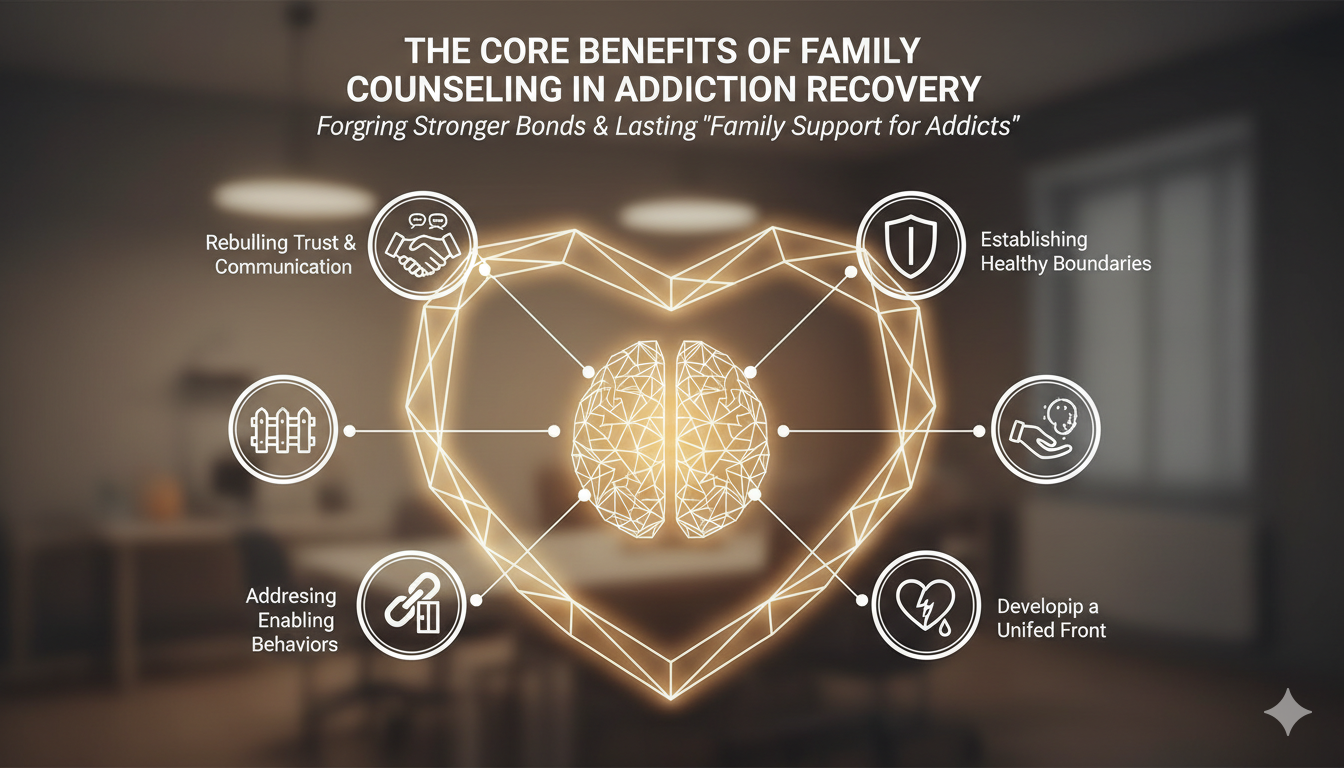
The Core Benefits of Family Counselling in Addiction Recovery
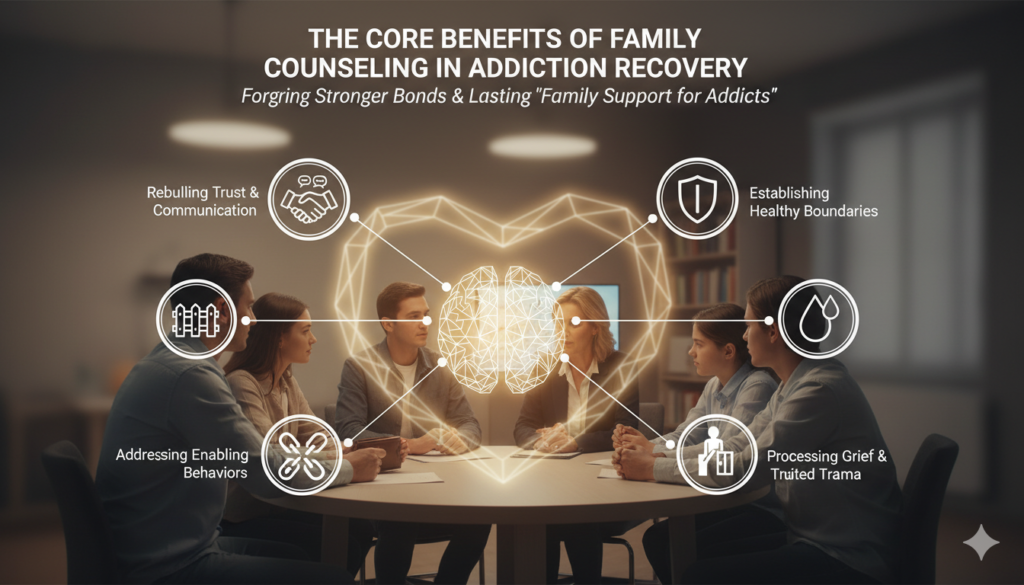
Family counselling provides a structured, safe, and guided environment for families to navigate the turbulent waters of addiction and recovery. Its benefits are numerous and deeply impactful:
1. Rebuilding Trust and Communication
Trust is often the first casualty of addiction. Lies, broken promises, and manipulative behaviors erode the foundation of family relationships. Similarly, communication often becomes dysfunctional – characterized by shouting, silence, blame, or avoidance.
- Safe Space: A skilled family therapist creates a neutral space where each member can express their feelings, fears, and frustrations without judgment.
- Active Listening: Families learn active listening skills, allowing them to truly hear and understand each other’s perspectives, rather than simply reacting defensively.
- Honesty and Transparency: The process encourages honesty and transparency, laying the groundwork for rebuilding trust, brick by painstaking brick. Learning to communicate needs and boundaries effectively is a cornerstone of healthy “family support for addicts.”
2. Establishing Healthy Boundaries
Boundaries are critical in any healthy relationship, but they become blurry and often nonexistent in families grappling with addiction. Family counselling helps in:
- Defining Roles: Clarifying roles and responsibilities within the family, ensuring that no one is overly burdened or enabling.
- Setting Limits: Teaching family members how to set firm, consistent boundaries regarding the individual’s behavior, financial requests, and personal responsibilities. This protects both the family and the person in recovery by holding them accountable.
- Consequence Management: Understanding the importance of allowing natural consequences to occur, rather than constantly bailing out the individual, which is a crucial aspect of effective “family support for addicts.”
3. Addressing Enabling Behaviors
Enabling is a pervasive and often unintentional pattern in families affected by addiction. It stems from love and a desire to protect, but it ultimately prevents the individual from facing the consequences necessary for change.
- Identifying Patterns: Counselling helps family members identify their specific enabling behaviors, whether it’s providing money, making excuses, or shielding the person from legal troubles.
- Breaking the Cycle: Therapists guide families in developing new, healthier responses that support recovery without inadvertently perpetuating the addiction. This is a painful but necessary step in providing genuine “family support for addicts.”
4. Processing Grief and Trauma
Families often experience significant grief and trauma due to addiction. This can include:
- Loss of the “Old” Person: Grieving the loss of the person they once knew, before addiction took hold.
- Betrayal and Hurt: Processing deep feelings of betrayal, anger, and hurt caused by the individual’s actions.
- Secondary Trauma: Family members may experience their own forms of secondary trauma from living with the chaos and uncertainty of addiction.
Family counselling provides a safe space for these emotions to be acknowledged, validated, and processed, which is essential for collective healing and moving forward.
5. Education and Understanding of Addiction
Many family members lack a comprehensive understanding of addiction as a disease, often viewing it as a moral failing or a lack of willpower.
- Disease Model: Counselling educates families about the neuroscience of addiction, helping them understand it as a complex brain disease rather than a choice.
- Relapse Prevention: Families learn about the triggers and warning signs of relapse and how they can best support sustained sobriety without taking on the sole responsibility for it.
- Coping Strategies: They also learn healthy coping strategies for themselves, recognizing that their own well-being is integral to providing effective “family support for addicts.”
6. Developing a Unified Front
When a family is fragmented and disorganized, it provides fertile ground for addiction to thrive. Family counselling helps to unite the family unit in a common goal: supporting long-term recovery.
- Shared Goals: Establishing shared goals and expectations for the recovery process.
- Consistent Messaging: Ensuring consistent messaging and responses to the individual’s behaviors, preventing manipulation or triangulation.
- Mutual Support: Fostering a sense of mutual support among family members, so they can lean on each other during challenging times. This collective strength is invaluable for “family support for addicts.”
7. Preventing Codependency
Codependency, a common pattern in families affected by addiction, involves an excessive reliance on another person and a neglect of one’s own needs.
- Self-Care: Counselling helps family members recognize codependent patterns and encourages them to prioritize their own self-care and personal growth.
- Healthy Independence: It promotes healthy independence within relationships, ensuring that support doesn’t morph into control or enabling. Breaking codependent cycles is a critical outcome of effective “family support for addicts.”
Different Approaches to Family Counselling for Addiction
Just as individual therapy has various modalities, so too does family counselling. Some common approaches include:
- Structural Family Therapy: Focuses on altering dysfunctional family structures and interaction patterns.
- Strategic Family Therapy: Aims to resolve specific problems and symptoms by changing maladaptive communication sequences.
- Multisystemic Therapy (MST): Particularly effective for adolescents, MST addresses the various systems (family, school, peers) that influence a young person’s behavior.
- Bowenian Family Therapy: Emphasizes differentiation of self and understanding multigenerational patterns.
- Family Behavior Therapy (FBT): Integrates behavioral contracting and communication skills training.
The choice of approach often depends on the family’s specific needs, the nature of the addiction, and the therapist’s expertise. Regardless of the specific methodology, the underlying goal remains consistent: to strengthen the family unit and enhance “family support for addicts.”
When to Seek Family Counselling
It’s never too early or too late to consider family counselling when addiction is present.
- During Active Addiction: Even before the individual enters treatment, family counselling can help set boundaries, reduce enabling, and motivate the person to seek help.
- During Inpatient/Outpatient Treatment: Many treatment centers incorporate family sessions as a crucial component of their programs.
- In Early Recovery: This is a critical time for families to adjust to new dynamics, address resentments, and establish new communication patterns.
- Long-Term Recovery: Family counselling can be beneficial even years into recovery to address new challenges, prevent relapse, and continue fostering healthy relationships.
The Role of a Professional Counsellor
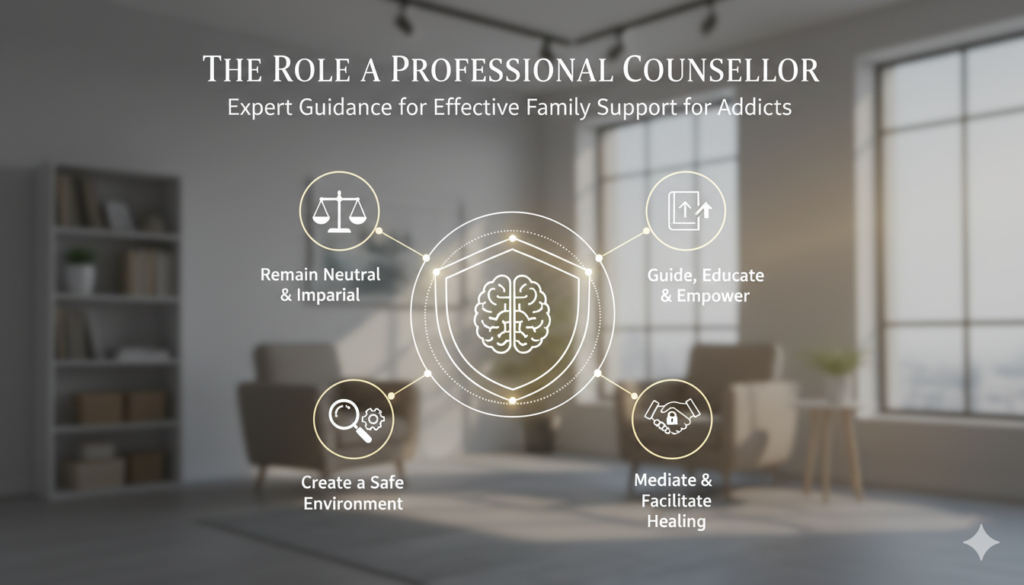
A qualified family counsellor specializing in addiction is essential. They are trained to:
- Remain Neutral: Provide an objective perspective, mediating conflicts and ensuring all voices are heard.
- Guide and Educate: Offer insights into addiction dynamics and teach practical coping and communication skills.
- Identify Dysfunctional Patterns: Recognize and challenge unhealthy family patterns and behaviors.
- Create a Safe Environment: Ensure that discussions are productive and do not devolve into blame or further conflict.
Their expertise transforms potentially volatile family interactions into opportunities for profound growth and healing, ultimately strengthening “family support for addicts.”
The Power of Collective Healing
The journey of recovery is arduous, filled with setbacks and triumphs. While the individual battling addiction shoulders a significant burden, they do not have to carry it alone. When families commit to the process of counselling, they embark on their own journey of healing – a collective endeavor that strengthens bonds, fosters understanding, and builds a resilient support system.
Investing in family counselling is not just an investment in the individual’s sobriety; it is an investment in the health, happiness, and future of the entire family unit. It transforms despair into hope, conflict into connection, and ultimately, provides the robust, informed “family support for addicts” that is so desperately needed for lasting recovery.