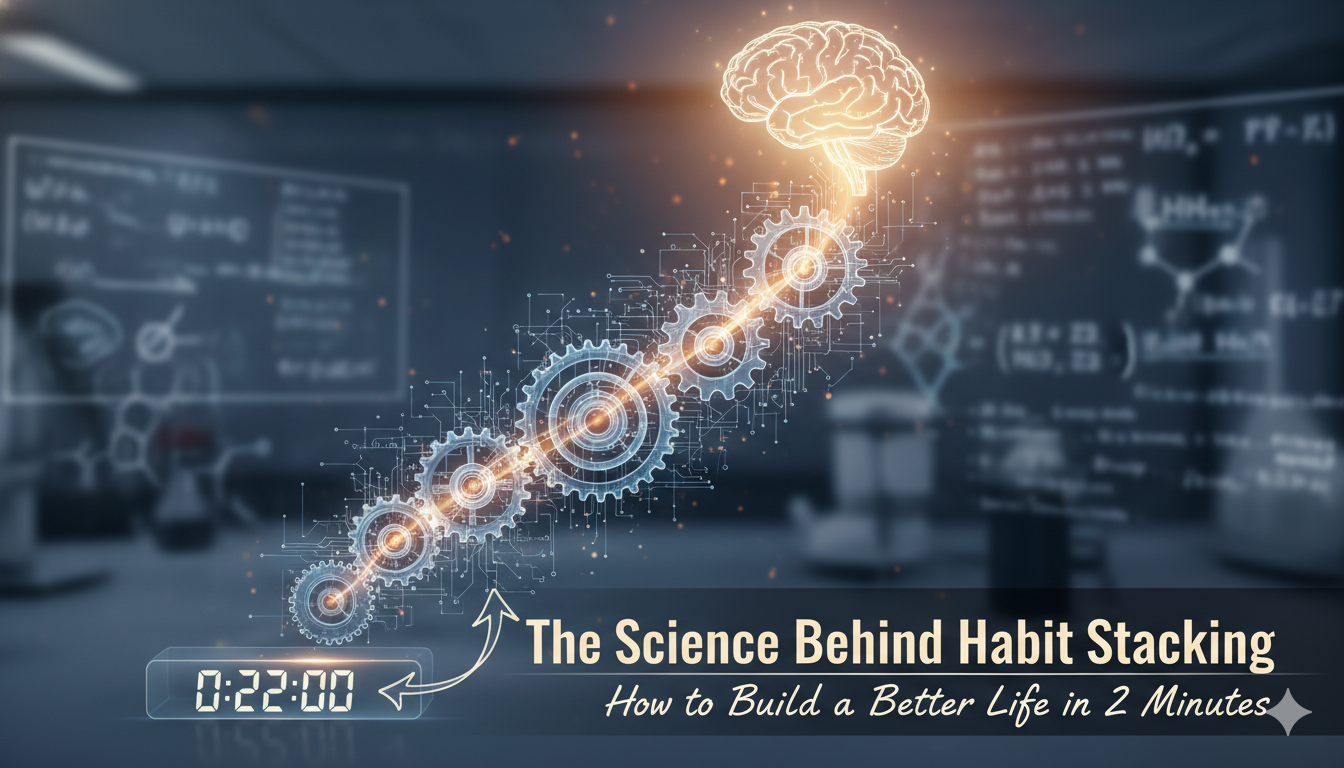
In a world where time feels scarce and attention is constantly fragmented, the idea of transforming your life in just two minutes may sound unrealistic. Yet, science suggests otherwise. The concept of habit stacking, a powerful behavioral strategy rooted in neuroscience and psychology, offers a simple, practical way to build better habits without overwhelming your mind or schedule. Whether you are trying to improve productivity, mental health, or even support alcohol addiction treatment, habit stacking provides a framework that works with your brain rather than against it.
This article explores the science behind habit stacking, why it works, and how you can use it to create meaningful, lasting change, starting in just two minutes a day.
What Is Habit Stacking?
Habit stacking is a behavior design technique that involves linking a new habit to an existing one. Instead of trying to create a habit from scratch, you “stack” it onto something you already do automatically.
For example:
- After brushing your teeth → meditate for 2 minutes
- After making tea → write one sentence in a journal
- After locking your door → take a deep breath and set an intention
The formula is simple:
“After I [current habit], I will [new habit].”
This approach was popularized by behavioral experts like James Clear, but its roots go deeper into cognitive psychology and neuroscience.
The Neuroscience Behind Habit Formation
To understand why habit stacking works, you need to understand how habits are formed in the brain.
Habits are governed by the basal ganglia, a part of the brain responsible for automatic behaviors. When you repeat an action enough times, your brain creates a neural pathway that allows the behavior to occur with minimal conscious effort.
Every habit follows a loop:
- Cue (Trigger) – a signal that initiates the behavior
- Routine (Behavior) – the action you take
- Reward – the benefit your brain receives
Habit stacking leverages this loop by using an existing cue, something your brain already recognizes. Instead of creating a new trigger, you piggyback on an established one. This dramatically reduces the mental resistance associated with starting a new habit.
Why Habit Stacking Works So Well
The effectiveness of habit stacking is not accidental, it is deeply rooted in human behavior and brain efficiency.
1. It Reduces Decision Fatigue
Every decision you make consumes mental energy. When you attach a new habit to an existing one, you eliminate the need to decide when or how to act. The decision has already been made.
For individuals undergoing alcohol addiction treatment, this is especially important. Decision fatigue can increase vulnerability to relapse. Habit stacking minimizes these decision points and creates structure.
2. It Uses Existing Neural Pathways
Your brain prefers efficiency. By linking a new behavior to an existing habit, you are essentially “hitchhiking” on a well-established neural pathway. This makes the new habit easier to adopt and sustain.
3. It Builds Momentum
Small actions create momentum. When you complete a simple task, like a 2-minute breathing exercise, you trigger a sense of accomplishment. This activates dopamine pathways, reinforcing the behavior and encouraging repetition.
4. It Makes Change Feel Manageable
Big goals often fail because they feel overwhelming. Habit stacking focuses on tiny, manageable actions, making change feel achievable, even for someone in early recovery.
The “2-Minute Rule” and Why It Matters
The idea of building a better life in 2 minutes is based on the 2-minute rule, which suggests that any new habit should take less than two minutes to start.
Examples include:
- “Read one page” instead of “read a book”
- “Put on running shoes” instead of “run 5 kilometers”
- “Sit quietly and breathe” instead of “meditate for 30 minutes”
The goal is not to achieve perfection, it is to build consistency.
For those involved in alcohol addiction treatment, the 2-minute rule can be transformative. Early recovery often comes with low motivation and high emotional stress. A 2-minute habit feels doable, even on difficult days.
Habit Stacking in Alcohol Addiction Treatment
Breaking free from alcohol dependence requires more than willpower. It requires restructuring daily routines, emotional responses, and environmental triggers. This is where habit stacking becomes a powerful tool.
Replacing Negative Patterns with Positive Ones
Addiction is often tied to routines. For example:
- Stress → drink alcohol
- Social gathering → drink alcohol
- Evening boredom → drink alcohol
Habit stacking helps replace these patterns with healthier alternatives:
- After feeling stressed → take 5 deep breaths
- After dinner → go for a short walk
- After finishing work → call a supportive friend
Over time, these small changes rewire the brain and reduce reliance on alcohol.
Creating Structure in Early Recovery
Structure is critical in alcohol addiction treatment. Idle time can lead to cravings. Habit stacking fills the day with purposeful actions, reducing the risk of relapse.
Reinforcing Identity Change
Recovery is not just about stopping alcohol—it’s about becoming a different person. Every small habit reinforces a new identity:
- “I am someone who takes care of my health.”
- “I am someone who manages stress without alcohol.”
How to Build Your Own Habit Stack
Creating an effective habit stack requires intention and clarity. Here’s a step-by-step approach:
Step 1: Identify Your Current Habits
Start by listing habits you already perform daily:
- Brushing teeth
- Drinking coffee
- Checking your phone
- Driving to work
These will serve as anchors.
Step 2: Choose a Small New Habit
Select a habit that aligns with your goals. Keep it simple and achievable within 2 minutes.
For example:
- Deep breathing
- Gratitude reflection
- Drinking a glass of water
- Stretching
Step 3: Use the Habit Stacking Formula
Combine the two:
“After I [current habit], I will [new habit].”
Example:
“After I pour my morning tea, I will take 5 deep breaths.”
Step 4: Make It Obvious and Easy
Reduce friction. If your habit is journaling, keep a notebook nearby. If it’s hydration, place a glass of water where you can see it.
Step 5: Repeat Consistently
Consistency matters more than intensity. Even if the habit feels insignificant, repetition strengthens neural pathways.
Real-Life Examples of Habit Stacking
To make this concept practical, here are some examples across different areas of life:
Morning Routine
After waking up → drink a glass of water
After brushing teeth → stretch for 2 minutes
After breakfast → write one goal for the day
Work Productivity
After opening your laptop → review your top priority
After finishing a task → take a 1-minute break
After checking email → stand and stretch
Mental Health
After feeling anxious → practice deep breathing
After lunch → take a mindful walk
After turning off lights → reflect on three positive moments
Alcohol Addiction Treatment
After experiencing a craving → drink water and wait 2 minutes
After dinner → attend an online support meeting
After a stressful event → call a sponsor or therapist
The Role of Environment in Habit Stacking
Your environment plays a crucial role in habit formation. Small changes can make a big difference:
- Remove alcohol from your home
- Keep healthy alternatives visible
- Create a calm, distraction-free space
In alcohol addiction treatment, environmental design is often a key component of recovery programs. Habit stacking complements this by reinforcing positive behaviors within that environment.
Common Mistakes to Avoid
While habit stacking is simple, there are pitfalls to watch out for:
1. Starting Too Big
If your habit feels difficult, it won’t stick. Keep it small.
2. Stacking Too Many Habits at Once
Focus on one or two habits initially. Overloading leads to burnout.
3. Choosing Weak Triggers
Your existing habit should be consistent and reliable. If the trigger is inconsistent, the new habit won’t stick.
4. Ignoring Rewards
Your brain needs a sense of reward. Even a small acknowledgment—like saying “good job” can reinforce the habit.
The Psychology of Small Wins
Small wins are powerful. Each completed habit releases dopamine, the brain’s “reward chemical.” This creates a positive feedback loop:
Action → Reward → Motivation → Repetition
For someone undergoing alcohol addiction treatment, small wins can rebuild confidence and self-efficacy, two critical components of recovery.
Habit Stacking and Long-Term Change
While habit stacking starts small, its impact compounds over time. Tiny habits, repeated daily, can lead to significant transformation.
Consider this:
- 2 minutes of mindfulness daily → improved emotional regulation
- 2 minutes of planning → better productivity
- 2 minutes of reflection → stronger self-awareness
Over months and years, these micro-habits reshape your identity and lifestyle.
Integrating Habit Stacking with Professional Treatment
Habit stacking is not a replacement for professional care, but it can significantly enhance it.
In structured alcohol addiction treatment programs, patients often learn coping strategies, therapy techniques, and relapse prevention skills. Habit stacking helps integrate these into daily life.
For example:
- After therapy sessions → write one key takeaway
- After group meetings → reflect on emotions
- After waking up → set a recovery intention
This bridges the gap between clinical treatment and real-world application.
The Role of Mindfulness in Habit Stacking
Mindfulness enhances habit stacking by increasing awareness of triggers and behaviors. When you are present, you can recognize patterns and make intentional choices.
A simple 2-minute mindfulness habit can:
- Reduce cravings
- Improve emotional regulation
- Increase resilience
This is particularly valuable in alcohol addiction treatment, where awareness is key to preventing relapse.
Technology and Habit Tracking
Digital tools can support habit stacking:
- Habit tracking apps
- Reminder notifications
- Digital journals
However, simplicity is key. Over-reliance on technology can sometimes create friction. Choose tools that support—not complicate—your routine.
Building a Habit-Based Lifestyle
Ultimately, habit stacking is not just about individual actions, it’s about creating a system for living.
Instead of focusing on goals like “quit alcohol” or “be more productive,” you focus on daily behaviors that lead to those outcomes.
This shift from goal-oriented thinking to system-oriented thinking is what makes habit stacking so powerful.
Final Thoughts: Small Habits, Big Change
Building a better life doesn’t require dramatic change. It requires consistent, intentional action—often starting with just two minutes.
Habit stacking offers a science-backed, practical approach to behavior change. By linking small habits to existing routines, you can create lasting transformation without overwhelm.
For those navigating alcohol addiction treatment, this approach provides structure, reduces decision fatigue, and supports long-term recovery. It turns everyday moments into opportunities for growth and healing.
In the end, success is not about doing everything at once. It’s about doing something small—consistently.
Start with one habit. Stack it onto something you already do. Repeat it tomorrow.
And then the next day.
That’s how change begins.