In the last decade, social media has transformed from a simple communication tool into a powerful behavioral ecosystem that shapes how we think, feel, and interact with the world. While platforms like Instagram, TikTok, Facebook, and X (formerly Twitter) promise connection and entertainment, a growing body of research suggests something deeper is at play, something that closely resembles chemical addiction.
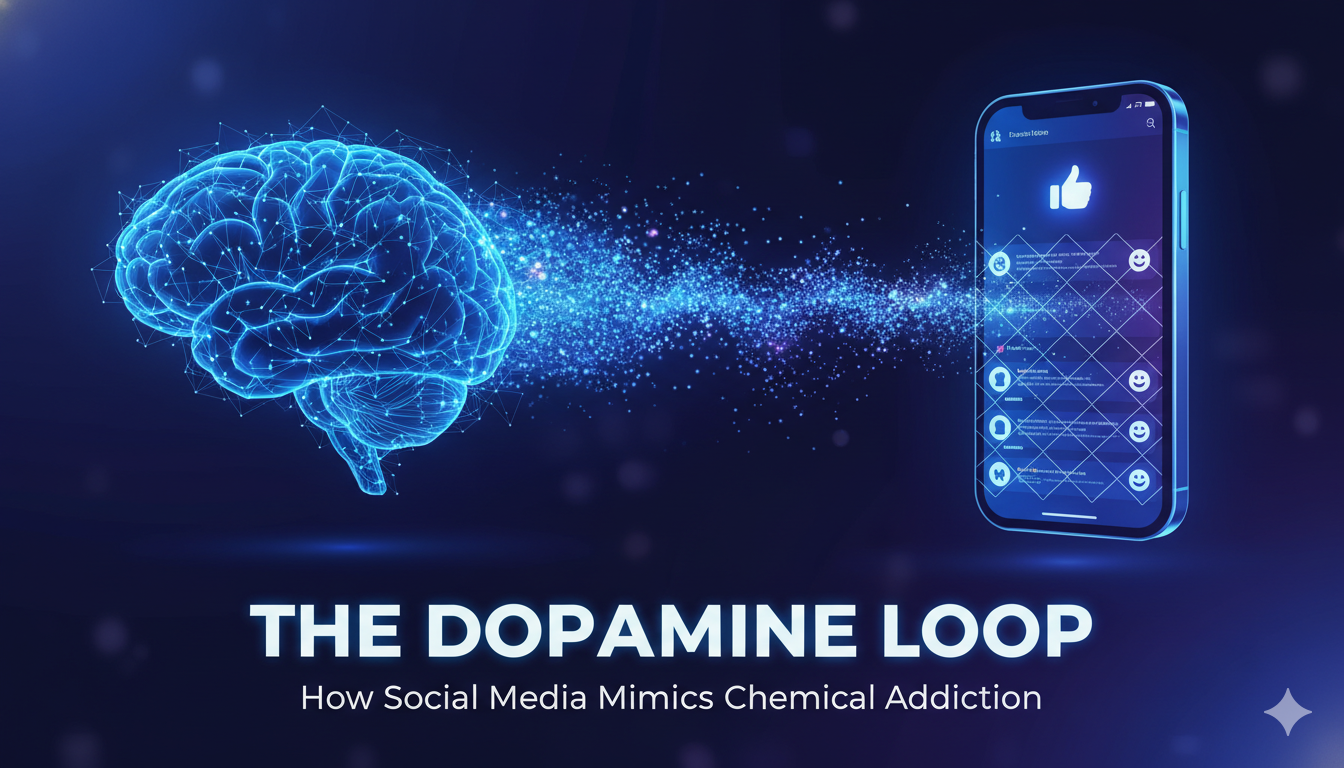
At the center of this phenomenon lies a powerful neurochemical: dopamine.
This article explores the concept of the dopamine loop, how social media platforms exploit it, and why excessive use can mirror the patterns seen in substance addiction. By understanding these mechanisms, we can better recognize unhealthy habits and move toward healthier digital behavior.
What Is Dopamine and Why Does It Matter?
Dopamine is often referred to as the brain’s “feel-good” neurotransmitter, but this description is incomplete. More accurately, dopamine is associated with motivation, reward, and learning. It reinforces behaviors by signaling that something is worth repeating.
When you eat your favorite meal, achieve a goal, or receive praise, dopamine is released. This release strengthens neural pathways, encouraging you to seek out similar experiences again.
However, dopamine does not just respond to rewards, it responds strongly to anticipation of rewards. This is where the concept of the dopamine loop becomes critical.
Understanding the Dopamine Loop
The dopamine loop is a cycle of behavior driven by anticipation, reward, and reinforcement. It typically follows this pattern:
- Trigger – A cue initiates behavior (e.g., notification sound).
- Action – You engage in the behavior (checking your phone).
- Reward – You receive a positive outcome (likes, comments, messages).
- Reinforcement – Dopamine strengthens the habit, making repetition more likely.
Over time, this loop becomes automatic. The brain begins to crave the reward, even before it occurs, leading to compulsive behavior.
Social media platforms are expertly designed to maximize this loop, making them incredibly engaging—and potentially addictive.
How Social Media Hijacks the Brain’s Reward System
1. Variable Reward Schedules
One of the most powerful psychological tools used by social media platforms is the concept of variable rewards. This is the same mechanism used in gambling.
You don’t get a reward every time you check your phone. Sometimes there are many likes or messages, sometimes none. This unpredictability keeps users hooked, because the brain becomes obsessed with the possibility of a reward.
This pattern mirrors slot machine behavior, where intermittent reinforcement leads to persistent engagement.
2. Infinite Scrolling and Endless Content
Unlike traditional media, social media has no natural stopping point. Features like infinite scrolling ensure that users are constantly exposed to new content.
Each scroll presents the possibility of something exciting, triggering dopamine anticipation. This keeps users engaged far longer than intended, often leading to hours of unconscious consumption.
3. Social Validation and Approval
Humans are inherently social beings. Approval from others activates the brain’s reward system in powerful ways.
Likes, shares, comments, and followers act as digital validation signals. Each notification becomes a mini reward, reinforcing the behavior of posting and checking updates.
For many users, this creates a dependency on external validation, similar to how substances create dependency on chemical rewards.
4. Personalized Algorithms
Social media platforms use sophisticated algorithms to curate content tailored to individual preferences.
By analyzing behavior, these algorithms deliver content that is more likely to trigger emotional responses—whether excitement, anger, curiosity, or amusement.
This constant stream of highly relevant content amplifies dopamine release, making it harder for users to disengage.
5. Fear of Missing Out (FOMO)
FOMO is a powerful psychological driver. The fear that you might miss something important or entertaining keeps you repeatedly checking your phone.
This creates a loop of anxiety and relief, checking reduces anxiety temporarily, reinforcing the behavior. Over time, this pattern becomes compulsive.
Social Media vs. Chemical Addiction: Are They Really Similar?
While social media does not involve ingesting substances, the behavioral patterns and neurological responses share striking similarities with chemical addiction.
1. Dopamine Dysregulation
In both substance use and excessive social media use, the brain’s reward system becomes overstimulated.
This leads to:
- Reduced sensitivity to normal rewards
- Increased craving for stimulation
- Difficulty experiencing pleasure from everyday activities
2. Tolerance
Just like drugs, social media use can lead to tolerance. Over time, users need more engagement—more scrolling, more likes, more content—to achieve the same level of satisfaction.
This explains why casual use can escalate into excessive use.
3. Withdrawal Symptoms
When individuals reduce or stop social media use, they may experience:
- Irritability
- Anxiety
- Restlessness
- Difficulty concentrating
These symptoms resemble withdrawal seen in substance addiction, though typically less severe.
4. Loss of Control
Many users report spending more time on social media than intended, even when they are aware of negative consequences.
This loss of control is a hallmark of addictive behavior.
5. Continued Use Despite Harm
Despite recognizing issues such as reduced productivity, sleep disruption, or mental health decline, users often continue excessive use.
This parallels the persistence seen in substance use disorders.
The Impact on Mental Health
1. Anxiety and Depression
Excessive social media use has been linked to increased rates of anxiety and depression. Constant comparison, exposure to curated lifestyles, and online validation cycles can distort self-perception.
2. Sleep Disruption
Late-night scrolling interferes with sleep patterns, particularly by suppressing melatonin due to screen exposure.
Poor sleep further disrupts dopamine regulation, creating a vicious cycle.
3. Reduced Attention Span
The rapid, high-stimulation environment of social media trains the brain to expect constant novelty. This can reduce the ability to focus on slower, more demanding tasks.
4. Emotional Dysregulation
Frequent exposure to emotionally charged content can lead to mood swings and decreased emotional resilience.
Why Some People Are More Vulnerable
Not everyone develops problematic social media habits. Certain factors increase vulnerability:
- Pre-existing mental health conditions
- Loneliness or social isolation
- Low self-esteem
- High stress levels
- Adolescent brain development
Teenagers, in particular, are at higher risk due to ongoing brain development and increased sensitivity to social feedback.
The Role of Neuroplasticity
The brain is highly adaptable. Repeated behaviors reshape neural pathways through a process called neuroplasticity.
Frequent engagement with social media strengthens the dopamine loop, making it more automatic over time.
However, this also means that healthy habits can rewire the brain in a positive direction.
Breaking the Dopamine Loop
Understanding the problem is only the first step. The next step is regaining control.
1. Awareness and Tracking
Start by monitoring your usage:
- How many hours per day?
- Which apps consume the most time?
Awareness reduces unconscious behavior.
2. Disable Notifications
Notifications are powerful triggers. Turning them off reduces impulsive checking and breaks the trigger-action cycle.
3. Set Intentional Limits
Use app timers or digital wellbeing tools to set boundaries. Define specific times for social media use rather than engaging randomly.
4. Replace, Don’t Remove
Simply quitting social media often fails. Instead, replace it with healthier activities:
- Exercise
- Reading
- Face-to-face interaction
- Mindfulness practices
5. Practice Dopamine Fasting
“Dopamine fasting” involves reducing exposure to high-stimulation activities to reset the brain’s reward system.
This doesn’t mean eliminating dopamine, but rather avoiding excessive artificial stimulation.
6. Cognitive Behavioral Strategies
Cognitive Behavioral Therapy (CBT) techniques can help:
- Identify triggers
- Challenge irrational beliefs
- Develop healthier coping mechanisms
The Role of Digital Responsibility
While individual responsibility is important, it is equally important to recognize that social media platforms are designed to maximize engagement.
Ethical questions arise:
- Should platforms limit addictive design features?
- Should there be regulation similar to gambling or substances?
- What responsibility do tech companies hold?
As awareness grows, there is increasing pressure for more transparent and ethical design practices.
A Balanced Perspective
It is important not to demonize social media entirely. These platforms offer:
- Connection across distances
- Access to information
- Opportunities for learning and growth
The goal is not elimination, but balance and conscious use.
The Future of Digital Wellbeing
As research into digital addiction expands, new approaches are emerging:
- Digital detox programs
- App design focused on wellbeing
- AI-driven usage monitoring
- Educational campaigns
Healthcare professionals, including those in addiction treatment, are beginning to incorporate behavioral addiction frameworks into their practice.
Conclusion
The dopamine loop provides a powerful framework for understanding why social media can feel so compelling, and why it can become difficult to control.
By mimicking the reward patterns seen in chemical addiction, social media platforms tap into fundamental aspects of human neurobiology. This does not mean that social media is inherently harmful, but it does mean that unregulated use can lead to significant psychological consequences.
Recognizing the signs of excessive use, understanding the underlying mechanisms, and adopting intentional habits are key steps toward healthier engagement.
In a world increasingly shaped by digital interaction, mastering the dopamine loop may be one of the most important skills for maintaining mental wellbeing.