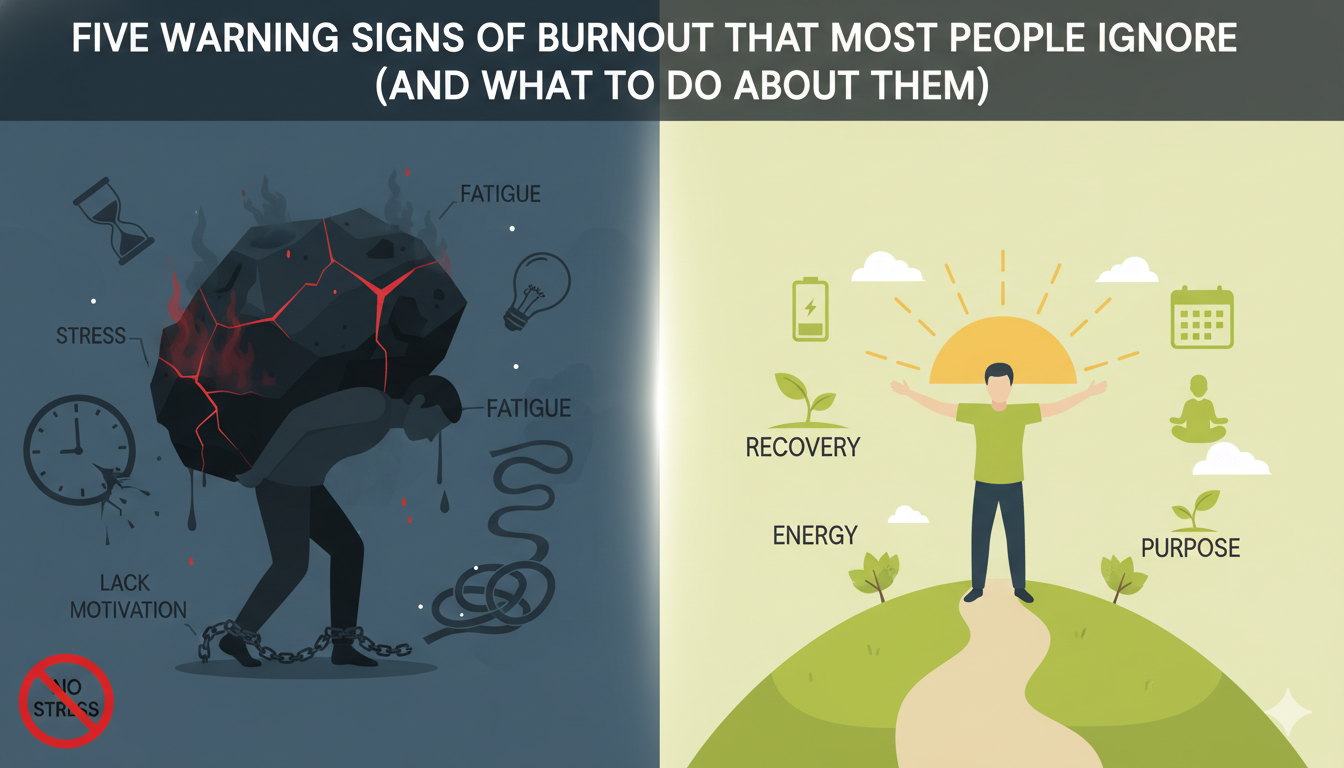
Burnout does not arrive overnight. It builds slowly, quietly, and often invisibly, until it starts affecting your productivity, relationships, and even your health. In today’s fast-paced, hyper-connected world, burnout has become increasingly common, yet many people fail to recognize its early warning signs.
What makes burnout particularly dangerous is not just its prevalence, but how easily it is dismissed. People often mistake it for temporary stress, fatigue, or lack of motivation. They push through, believing things will improve with time. Unfortunately, ignoring burnout symptoms only deepens the problem.
Whether you are a healthcare professional, business owner, corporate employee, or caregiver, understanding the warning signs of burnout can help you intervene early and protect your mental well-being. This article explores five commonly overlooked signs of burnout, why they occur, and what you can do to regain control.
Understanding Burnout: More Than Just Stress
Burnout is a state of chronic physical and emotional exhaustion caused by prolonged stress. According to the World Health Organization (WHO), burnout is classified as an occupational phenomenon characterized by three key dimensions: emotional exhaustion, depersonalization, and reduced personal accomplishment.
Unlike ordinary stress, burnout doesn’t just make you feel overwhelmed, it drains your energy, reduces your sense of purpose, and creates a disconnect between you and your work or life responsibilities.
The challenge is that burnout often disguises itself in subtle ways. Let’s explore the five warning signs that most people ignore.
1. Persistent Fatigue That Rest Doesn’t Fix
One of the earliest and most overlooked burnout symptoms is constant fatigue. This is not the kind of tiredness that goes away after a good night’s sleep. It’s a deeper, more persistent exhaustion that lingers no matter how much rest you get.
At first, you might feel slightly drained at the end of the day. Over time, this fatigue becomes your baseline. You wake up tired, struggle to get through the day, and rely on caffeine or stimulants to function.
This type of fatigue is often dismissed as a busy lifestyle or poor sleep habits. However, it is actually a sign of emotional exhaustion, one of the core components of burnout.
The body and mind are closely connected. When your brain is under constant stress, it keeps your body in a prolonged state of alertness. This disrupts sleep patterns, hormonal balance, and energy levels.
Ignoring this warning sign can lead to serious consequences, including weakened immunity, frequent illness, and chronic health issues.
What You Can Do:
Start by prioritizing recovery, not just rest. Recovery includes mental breaks, reduced workload, and activities that genuinely recharge you, such as spending time in nature, practicing mindfulness, or engaging in hobbies. If fatigue persists, it may be time to reassess your workload and boundaries.
2. Growing Cynicism and Detachment
Another subtle but significant warning sign of burnout is a growing sense of cynicism or detachment. You may begin to feel disconnected from your work, colleagues, or even loved ones.
Tasks that once felt meaningful now seem pointless. You might find yourself becoming more irritable, sarcastic, or emotionally distant. In professional settings, this often manifests as a lack of empathy or a negative attitude toward clients or coworkers.
This detachment is not a personality flaw, it’s a psychological defense mechanism. When the brain is overwhelmed, it tries to protect itself by creating emotional distance.
Unfortunately, this coping strategy can damage relationships and reduce job performance. It can also lead to feelings of isolation, further intensifying burnout.
What You Can Do:
Reconnecting with your sense of purpose is essential. Reflect on why you started your work in the first place. Small changes, such as taking meaningful breaks, engaging in team discussions, or seeking support from colleagues, can help rebuild connection. Therapy or counseling can also be beneficial in addressing emotional detachment.
3. Decline in Performance and Productivity
A drop in productivity is often misinterpreted as laziness or lack of discipline. In reality, it is one of the most common burnout symptoms.
You may notice that tasks take longer to complete, your concentration is weaker, and your decision-making becomes slower. Even simple responsibilities can feel overwhelming.
This happens because burnout affects cognitive functions such as memory, attention, and problem-solving. Chronic stress overloads the brain, making it harder to focus and process information efficiently.
Many people respond by working harder, staying longer hours, or pushing themselves even further. This creates a vicious cycle—more effort leads to more exhaustion, which further reduces productivity.
What You Can Do:
Instead of pushing harder, focus on working smarter. Break tasks into smaller steps, prioritize effectively, and allow yourself regular breaks. It may also be helpful to reassess unrealistic expectations and delegate tasks where possible. Remember, productivity is not about constant activity, it’s about sustainable performance.
4. Increased Irritability and Emotional Sensitivity
Burnout doesn’t just affect your energy levels, it also impacts your emotional regulation. One overlooked warning sign of burnout is increased irritability or emotional sensitivity.
You may find yourself reacting more strongly to minor inconveniences. Small issues that you once handled calmly now trigger frustration, anger, or even tears.
This heightened emotional response occurs because your mental resources are depleted. When you are already overwhelmed, even small stressors can feel like major challenges.
Over time, this can strain relationships with family, friends, and colleagues. It may also lead to feelings of guilt or self-criticism, further worsening your mental state.
What You Can Do:
Recognize that your emotional responses are signals, not failures. Practice stress management techniques such as deep breathing, mindfulness, or journaling. Creating space between stimulus and response can help you regain control. If emotional instability persists, professional support can provide valuable coping strategies.
5. Loss of Motivation and Sense of Purpose
Perhaps the most concerning burnout symptom is a loss of motivation. This goes beyond feeling unmotivated for a day or two, it’s a persistent lack of interest in activities that once mattered to you.
You may struggle to find meaning in your work or daily life. Goals that once inspired you now feel irrelevant or unattainable. This can lead to a sense of emptiness or hopelessness.
This loss of purpose is closely linked to the “reduced personal accomplishment” aspect of burnout. When your efforts no longer feel rewarding, it becomes difficult to stay engaged.
Many people ignore this sign, assuming it’s just a phase. However, prolonged loss of motivation can increase the risk of depression and other mental health conditions.
What You Can Do:
Reevaluate your goals and values. Sometimes burnout is a sign that your current path is misaligned with your deeper needs. Setting small, achievable goals can help rebuild momentum. Seeking guidance from a mentor, coach, or therapist can also provide clarity and direction.
Why People Ignore Burnout Symptoms
Understanding the warning signs of burnout is only part of the solution. The real challenge lies in recognizing why people ignore these signs in the first place.
Many individuals normalize stress, especially in high-pressure professions. There is often a cultural expectation to “push through” and prioritize productivity over well-being.
In some cases, people fear being perceived as weak or incapable. Others may not have the awareness or language to identify what they are experiencing.
Additionally, burnout can impair self-awareness, making it harder to recognize its own symptoms. This creates a dangerous cycle where the problem continues to grow unnoticed.
The Long-Term Consequences of Ignoring Burnout
Ignoring burnout does not make it disappear, it makes it worse. Chronic burnout can lead to serious physical and mental health issues, including anxiety, depression, cardiovascular problems, and weakened immune function.
It can also affect professional performance, leading to errors, absenteeism, and reduced job satisfaction. In healthcare settings, burnout has been linked to decreased quality of care and increased risk of medical errors.
Relationships often suffer as well. Emotional exhaustion and irritability can create distance between individuals and their loved ones.
Recognizing and addressing burnout early is essential for long-term health and well-being.
Practical Strategies for Burnout Recovery
Recovering from burnout requires more than just taking a vacation. It involves making sustainable changes to your lifestyle, mindset, and work environment.
Start by setting clear boundaries between work and personal life. Learn to say no to excessive demands and prioritize tasks that truly matter.
Incorporate regular physical activity into your routine, as exercise has been shown to reduce stress and improve mood. Mindfulness practices, such as meditation or deep breathing, can help calm the mind and restore balance.
Social support is also crucial. Talking to trusted friends, family members, or colleagues can provide emotional relief and perspective.
If burnout is severe, seeking professional help is highly recommended. Therapists and mental health professionals can offer tailored strategies for recovery.
Creating a Burnout-Resistant Lifestyle
Prevention is always better than cure. Building a lifestyle that supports mental well-being can help reduce the risk of burnout.
Focus on maintaining a healthy work-life balance. Ensure that your schedule includes time for rest, hobbies, and social connections.
Develop resilience by practicing self-awareness and emotional regulation. Regularly check in with yourself and assess your stress levels.
Organizations also play a role in preventing workplace burnout. Supportive leadership, reasonable workloads, and a positive work culture can make a significant difference.
Final Thoughts
Burnout is not a sign of weakness, it is a sign that something in your life needs attention and adjustment. The warning signs of burnout are often subtle, but they are powerful indicators that should not be ignored.
Persistent fatigue, emotional detachment, declining performance, increased irritability, and loss of motivation are all signals that your mind and body are under strain.
Recognizing these signs early gives you the opportunity to take action before burnout takes a deeper toll. By prioritizing your well-being, setting boundaries, and seeking support, you can regain balance and build a healthier, more sustainable life.