Introduction: The Power of Thoughts in Healing
Cognitive Behavioral Therapy (CBT) has become one of the most trusted and scientifically validated approaches in modern mental health care. From treating anxiety and depression to supporting addiction recovery, cognitive behavioral therapy offers a structured, practical way to reshape how individuals think, feel, and behave.
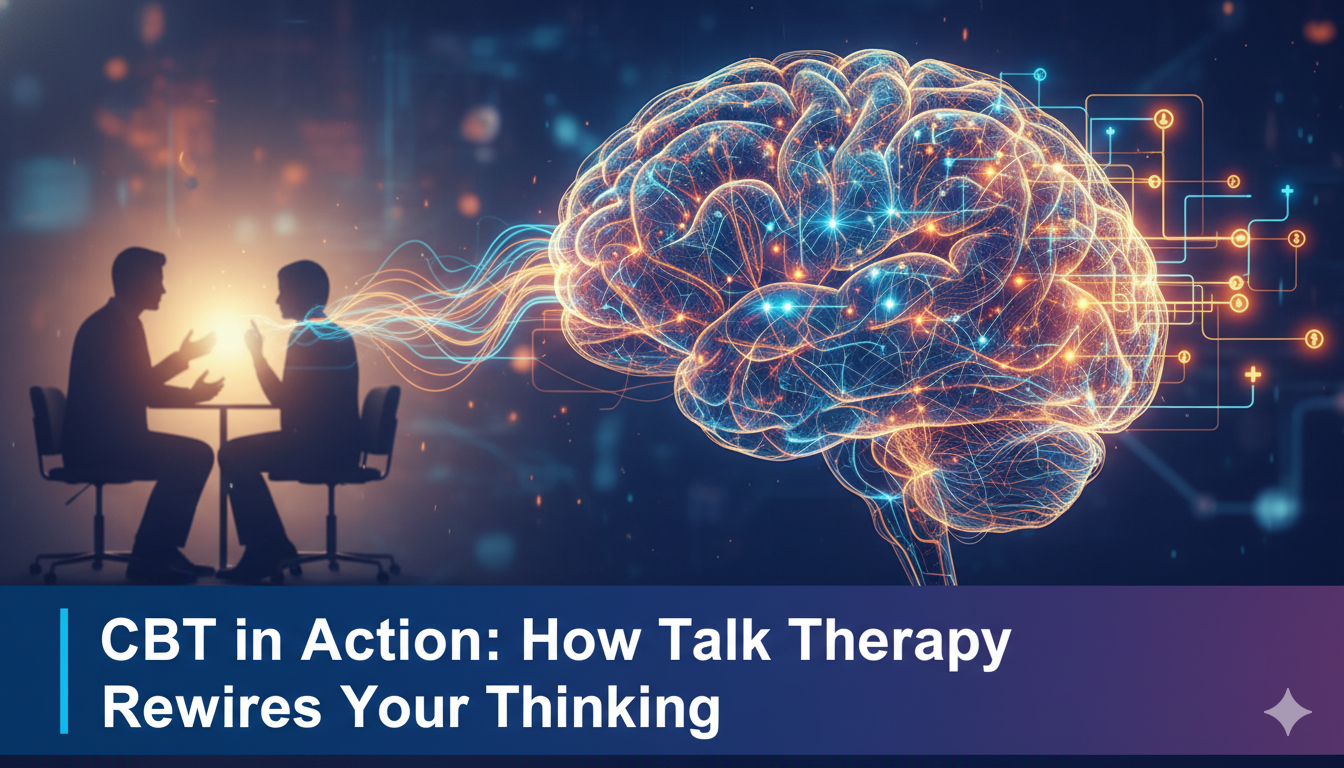
At its core, CBT operates on a powerful yet simple idea: our thoughts influence our emotions, and our emotions influence our actions. When thinking patterns become distorted or negative, they can trap individuals in cycles of distress. CBT breaks that cycle, not by ignoring emotions, but by rewiring the thought processes that fuel them.
In this article, we will explore how CBT works in real life, the science behind it, techniques used by therapists, and why it is such an effective tool for long-term mental wellness.
What Is Cognitive Behavioral Therapy?
Cognitive behavioral therapy is a structured, time-limited form of psychotherapy that focuses on identifying and changing unhelpful thinking patterns and behaviors. Developed in the 1960s by psychiatrist Aaron T. Beck, CBT has evolved into a gold-standard treatment for a wide range of psychological conditions.
Unlike traditional talk therapy, which may explore past experiences in depth, CBT is goal-oriented and present-focused. It emphasizes:
- Identifying negative automatic thoughts
- Challenging cognitive distortions
- Replacing them with balanced, realistic thinking
- Encouraging healthier behaviors
CBT is widely used for:
- Depression
- Anxiety disorders
- Substance use disorders
- PTSD
- Obsessive-compulsive disorder (OCD)
- Eating disorders
Its structured nature makes it particularly effective in clinical settings, including rehabilitation centers.
The Science Behind CBT: How the Brain Changes
CBT is not just a psychological theory, it is backed by neuroscience. Research shows that cognitive behavioral therapy can physically alter brain activity, especially in areas related to emotional regulation and decision-making.
Neuroplasticity: The Brain’s Ability to Rewire
The human brain is capable of change, a concept known as neuroplasticity. When individuals repeatedly challenge negative thoughts and replace them with healthier ones, they create new neural pathways.
For example:
- Repeated negative thinking strengthens fear circuits in the brain
- CBT interrupts this pattern
- New, balanced thinking strengthens healthier neural connections
Brain Regions Affected by CBT
Studies using brain imaging have shown that CBT impacts:
- Prefrontal Cortex – responsible for rational thinking and decision-making
- Amygdala – the emotional center, particularly fear and anxiety
- Hippocampus – involved in memory and learning
CBT helps strengthen the prefrontal cortex while calming the overactivity of the amygdala, leading to improved emotional control.
Understanding Cognitive Distortions
A key concept in cognitive behavioral therapy is cognitive distortions, irrational or exaggerated thought patterns that negatively influence perception.
Common Cognitive Distortions
- All-or-Nothing Thinking
Viewing situations in black-and-white terms. - Catastrophizing
Expecting the worst-case scenario. - Overgeneralization
Drawing broad conclusions from a single event. - Mind Reading
Assuming others think negatively about you. - Emotional Reasoning
Believing feelings are facts. - Labeling
Assigning negative labels to oneself or others.
CBT helps individuals identify, challenge, and replace these distortions, creating a more balanced mental framework.
CBT in Action: Step-by-Step Process
1. Identifying Negative Thoughts
The first step in CBT is awareness. Patients learn to recognize automatic negative thoughts that occur in response to situations.
For example:
“I failed once, so I will always fail.”
2. Challenging the Thought
Therapists guide patients to question these thoughts:
- Is this thought based on facts or assumptions?
- What evidence supports or contradicts it?
- Is there a more balanced way to view the situation?
3. Reframing
The negative thought is replaced with a more realistic one:
“I struggled before, but I can improve with effort.”
4. Behavioral Activation
CBT encourages action, not just thinking. Patients are guided to engage in activities that reinforce positive beliefs.
5. Practice and Repetition
Like physical exercise, mental restructuring requires repetition. Over time, new thinking patterns become automatic.
Techniques Used in Cognitive Behavioral Therapy
Cognitive Restructuring
This technique involves identifying distorted thoughts and replacing them with rational alternatives.
Behavioral Experiments
Patients test their beliefs in real-life situations to see if they hold true.
Exposure Therapy
Gradual exposure to feared situations helps reduce anxiety responses.
Journaling
Writing down thoughts and emotions helps increase awareness and track progress.
Mindfulness Integration
Modern CBT often incorporates mindfulness to help individuals stay present and reduce rumination.
CBT for Anxiety and Depression
Anxiety Disorders
CBT helps individuals:
- Challenge irrational fears
- Reduce avoidance behaviors
- Build coping strategies
For example, someone with social anxiety learns to gradually face social situations while reframing negative assumptions.
Depression
In depression, CBT focuses on:
- Breaking cycles of negative thinking
- Increasing engagement in rewarding activities
- Improving self-perception
Studies show CBT can be as effective as medication for mild to moderate depression.
CBT in Addiction Recovery
CBT plays a critical role in treating substance use disorders. In rehabilitation settings, it helps patients:
- Identify triggers for substance use
- Develop coping strategies
- Manage cravings
- Prevent relapse
Trigger Identification
Patients learn to recognize emotional, environmental, and social triggers.
Coping Skills
CBT equips individuals with tools such as:
- Stress management
- Problem-solving techniques
- Emotional regulation
Relapse Prevention
CBT reframes relapse not as failure, but as a learning opportunity, reinforcing long-term recovery.
Real-Life Example: CBT Transforming Lives
Consider a patient struggling with addiction and low self-worth. Their internal dialogue may include:
“I am weak. I will never recover.”
Through CBT:
- The thought is identified and challenged
- Evidence of strength is explored
- A new belief is formed: “Recovery is difficult, but I am capable of change.”
Over time, this shift leads to:
- Increased motivation
- Better decision-making
- Sustained recovery
Benefits of Cognitive Behavioral Therapy
Evidence-Based Effectiveness
CBT is supported by decades of research and is recommended by organizations such as the World Health Organization (WHO) and the American Psychological Association (APA).
Structured and Goal-Oriented
Patients can see measurable progress over time.
Short-Term Treatment
Many individuals experience improvement within 12–20 sessions.
Long-Lasting Results
CBT teaches skills that patients can use for life.
Adaptability
It can be tailored to individuals, groups, and even digital platforms.
Limitations of CBT
While cognitive behavioral therapy is highly effective, it is not a one-size-fits-all solution.
- Requires active participation
- May not address deep-rooted trauma fully
- Some individuals may need medication alongside therapy
Understanding these limitations helps in creating a comprehensive treatment plan.
CBT vs Other Therapies
CBT vs Psychodynamic Therapy
- CBT focuses on present thoughts and behaviors
- Psychodynamic therapy explores unconscious processes and past experiences
CBT vs Medication
- CBT teaches coping skills
- Medication manages symptoms
Often, a combination of both yields the best results.
The Role of the Therapist
In CBT, the therapist acts as a guide and collaborator, not just a listener. They:
- Help identify patterns
- Teach practical skills
- Provide structured feedback
- Encourage accountability
The therapeutic relationship is based on trust, empathy, and active participation.
How to Get Started with CBT
Seeking Professional Help
Consult a licensed psychologist or psychiatrist trained in CBT.
Online CBT Programs
Digital platforms now offer guided CBT sessions, making therapy more accessible.
Self-Help CBT Techniques
While professional guidance is ideal, individuals can begin with:
- Thought records
- Self-reflection exercises
- Mindfulness practices
CBT in Modern Healthcare
CBT is increasingly integrated into:
- Primary healthcare
- Rehabilitation centers
- Schools and universities
- Workplace wellness programs
Its versatility makes it a cornerstone of modern mental health treatment.
The Future of Cognitive Behavioral Therapy
Emerging trends include:
- Digital CBT (iCBT)
- AI-assisted therapy tools
- Integration with neuroscience and wearable technology
These innovations aim to make CBT more accessible and personalized.
Conclusion: Rewiring the Mind for a Better Life
Cognitive behavioral therapy is more than just talk, it is a scientifically grounded method for transforming the way individuals think and live. By addressing the root cause of emotional distress, distorted thinking, CBT empowers people to take control of their mental health.
Whether used for anxiety, depression, or addiction recovery, CBT provides practical tools that lead to lasting change. It teaches individuals that while they cannot always control external events, they can control how they interpret and respond to them.
In a world where mental health challenges are increasingly common, CBT stands out as a beacon of hope, offering not just relief but resilience.
References
- Beck, A. T. (1976). Cognitive Therapy and the Emotional Disorders. International Universities Press.
- Hofmann, S. G., et al. (2012). The efficacy of cognitive behavioral therapy: A review of meta-analyses. Cognitive Therapy and Research, 36(5), 427–440.
- American Psychological Association (APA). (2020). Clinical Practice Guideline for the Treatment of Depression.
- National Institute of Mental Health (NIMH). (2023). Psychotherapies.
- World Health Organization (WHO). (2021). Mental health interventions guidelines.
- Butler, A. C., et al. (2006). The empirical status of cognitive-behavioral therapy: A review. Clinical Psychology Review, 26(1), 17–31.
- Substance Abuse and Mental Health Services Administration (SAMHSA). (2020). Treatment Improvement Protocol (TIP) Series.
- Clark, D. A., & Beck, A. T. (2010). Cognitive Therapy of Anxiety Disorders. Guilford Press.